Electrónica Digital Bit a Bit: Aprendiendo fundamentos (Coursera)

Electrónica Digital Bit a Bit: Aprendiendo fundamentos (Coursera)

Es desafiante y hasta atemorizante entender un circuito digital cuando observamos la cantidad de transistores que puede contener, y aún más difícil diseñarlo eficientemente para su implementación en un circuito integrado o una FPGA. Sin embargo, saber diseñar circuitos digitales simples nos abre las puertas para diseñar sistemas digitales más complejos a partir de estos.

Class Deals by MOOC List - Click here and see Coursera's Active Discounts, Deals, and Promo Codes.

El curso "Electrónica digital bit a bit: Aprendiendo fundamentos" introduce al mundo de los circuitos digitales, empezando con el sistema de numeración binario y las compuertas lógicas, para luego poder diseñarlos utilizando Verilog. Finalmente, se entregarán herramientas para optimizar los circuitos digitales eficientemente y se presentarán los circuitos aritméticos fundamentales del mundo digital.
La metodología del curso trabaja con videolecciones acompañadas de pequeños cuestionarios te ayudarán a reforzar tu aprendizaje en cuanto a la comprensión del funcionamiento de los circuitos digitales, su implementación con compuertas lógicas, y las herramientas de optimización y diseño más utilizadas.

Syllabus

WEEK 1
Introducción a los circuitos lógicos
Las láminas y figuras presentadas en este módulo han sido elaboradas basándose en el libro "Fundamentals of Digital Logic with Verilog Design" de los autores Stephen Brown y Zvonko Vranesic.


WEEK 2
Introducción a Verilog
Las láminas y figuras presentadas en este módulo han sido elaboradas basándose en el libro "Fundamentals of Digital Logic with Verilog Design" de los autores Stephen Brown y Zvonko Vranesic.
WEEK 3
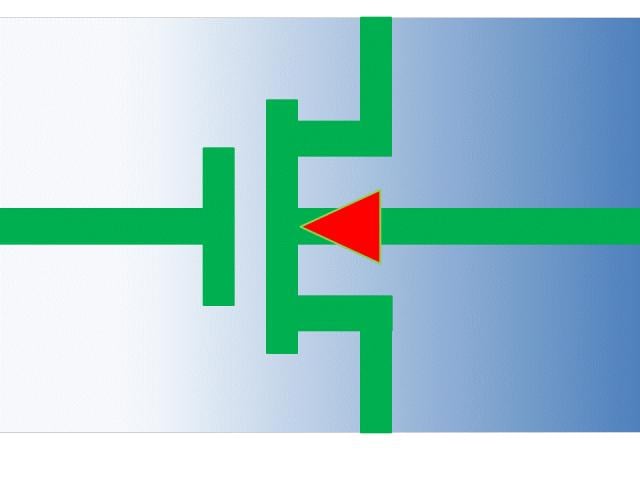
Tecnología
Las láminas y figuras presentadas en este módulo han sido elaboradas basándose en el libro "Fundamentals of Digital Logic with Verilog Design", de los autores Stephen Brown y Zvonko Vranesic, y el libro "CMOS VLSI Design A Circuits and Systems Perspective", de los autores Neil H. E. Weste y David Money Harris.

WEEK 4
Implementación optimizada de funciones lógicas
Las láminas y figuras presentadas en este módulo han sido elaboradas basándose en el libro "Fundamentals of Digital Logic with Verilog Design" de los autores Stephen Brown y Zvonko Vranesic.
WEEK 5
Representación numérica y circuitos de aritmética
Las láminas y figuras presentadas en este módulo han sido elaboradas basándose en el libro "Fundamentals of Digital Logic with Verilog Design" de los autores Stephen Brown y Zvonko Vranesic.

Go to Class
MOOC List is learner-supported. When you buy through links on our site, we may earn an affiliate commission.

Related Courses

Interfacing with the Arduino (Coursera) Coursera
University of California, Irvine

Interfacing with the Arduino (Coursera)

Arduino senses the environment by receiving inputs from add-on devices such as sensors, and can control the world around it by adjusting lights, motors, and other actuators. In this class you will learn how and when to use the different types of sensors and how to connect them to the Arduino. Since the external world uses continuous or analog signals and the hardware is digital you will learn how these signals are converted back-and-forth and how this must be considered as you program your device. You'll also learn about the use of Arduino-specific shields and the shields software libraries to interface with the real world.

Jun 22nd 2026
4 Weeks
Physics 102 - Electric Charges and Fields (Coursera) Coursera
Rice University

Physics 102 - Electric Charges and Fields (Coursera)

This course serves as an introduction to the physics of electricity and magnetism. Upon completion, learners will have an understanding of how the forces between electric charges are described by fields, and how these fields are related to electrical circuits. They will gain experience in solving physics problems with tools such as graphical analysis, algebra, vector analysis, and calculus. The course follows the typical progression of topics of a first-semester university physics course: charges, electric forces, electric fields potential, magnetic fields, currents, magnetic moments, electromagnetic induction, and circuits.

Jun 22nd 2026
4 Weeks
Converter Control (Coursera) Coursera
University of Colorado Boulder

Converter Control (Coursera)

This course teaches how to design a feedback system to control a switching converter. The equivalent circuit models derived in the previous courses are extended to model small-signal ac variations. These models are then solved, to find the important transfer functions of the converter and its regulator system. Finally, the feedback loop is modeled, analyzed, and designed to meet requirements such as output regulation, bandwidth and transient response, and rejection of disturbances.

Jun 22nd 2026
4 Weeks
Linux System Programming and Introduction to Buildroot (Coursera) Coursera
University of Colorado Boulder

Linux System Programming and Introduction to Buildroot (Coursera)

This course provides an overview of System Programming for the Linux operating system, or software which is interfacing directly with the Linux Kernel and C library. The basic components of a Linux Embedded System, including kernel and root filesystem details are discussed. The Buildroot build system is introduced, which students use to build their own custom Embedded Linux system through programming assignments.

Jun 15th 2026
4 Weeks
Adding Electronics to Rapid Prototypes (Coursera) Coursera
Arizona State University

Adding Electronics to Rapid Prototypes (Coursera)

Hello, everyone! Welcome to this course on Adding Electronics to Rapid Prototypes. This is part of the Rapid Prototyping and Tooling specialization. In this course, I’ll cover the basics of electric circuits, breadboards, and multimeters. I’ll then discuss different options for connecting electrical components as well as discuss different types of motors and actuators. Finally, I’ll end this course by discussing microcontrollers and how to use them to make even more sophisticated prototypes.

Jun 22nd 2026
5-12 Weeks
Electrodynamics: In-depth Solutions for Maxwell’s Equations (Coursera) Coursera
Korea Advanced Institute of Science and Technology - KAIST

Electrodynamics: In-depth Solutions for Maxwell’s Equations (Coursera)

This course is the fourth course in the Electrodynamics series, and is directly proceeded by Electrodynamics: Electric and Magnetic Fields. Previously, we have learned about visualization of fields and solutions which were not time dependent. Here, we will return to Maxwell's Equations and use them to produce wave equations which can be used to analyze complex systems, such as oscillating dipoles. We will also introduce AC circuits, and how they can be simplified, solved, and applied.

Jun 22nd 2026
5-12 Weeks
Physics 102 - Electric Potential and DC Circuits (Coursera) Coursera
Rice University

Physics 102 - Electric Potential and DC Circuits (Coursera)

This course serves as an introduction to the physics of electricity and magnetism. Upon completion, learners will have an understanding of how the forces between electric charges are described by fields, and how these fields are related to electrical circuits. They will gain experience in solving physics problems with tools such as graphical analysis, algebra, vector analysis, and calculus.

Jun 22nd 2026
3 Weeks
Developing FPGA-accelerated cloud applications with SDAccel: Practice (Coursera) Coursera
Politecnico di Milano

Developing FPGA-accelerated cloud applications with SDAccel: Practice (Coursera)

This course is for anyone passionate about learning how to develop FPGA-accelerated applications with SDAccel! The more general purpose you are, the more flexible you are and the more kinds of programs and algorithms you can execute on your underlying computing infrastructure. All of this is terrific, but there is no free food and this is happening, quite often, by losing in efficiency.

Jun 22nd 2026
4 Weeks
RF and millimeter-Wave Circuit Design (Coursera) Coursera
Eindhoven University of Technology

RF and millimeter-Wave Circuit Design (Coursera)

This unique Master-level course offered by the Center for Wireless Technology Eindhoven (CWT/e) of the Eindhoven University of Technology, The Netherlands, provides students with in-depth knowledge and hands-on experience on RF and mmWave circuit design. The course covers the topics on how to derive the RF wireless systems specifications, and how to design the main building blocks of a transceiver, i.e., low noise amplifier, power amplifier, RF mixers, oscillators, and PLL frequency synthesizers. It is divided into two parts: (1) theoretical lectures will cover the basis of RF and mmWave Circuit Design; and (2) design labs will include simulation and implementation of these circuits.

Jun 15th 2026
5-12 Weeks
Aplicaciones musicales con Arduino (Coursera) Coursera
Universidad Nacional Autónoma de México

Aplicaciones musicales con Arduino (Coursera)

En este curso nos adentraremos en el terreno del hardware. Concretamente, aprenderemos a utilizar la placa de desarrollo de hardware de código abierto, llamada Arduino, enfocándonos en las aplicaciones que esta ofrece para la experimentación musical. De manera más específica, aprenderemos en este curso a construir nuestros propios generadores de sonido, y a partir de ello haremos instalaciones sonoras que nos permitirán expandir nuestra creatividad hacia el terreno de las cosas materiales, y ya no solo de los datos informáticos.

Jun 22nd 2026
4 Weeks