Linear Circuits 2: AC Analysis (Coursera)

Linear Circuits 2: AC Analysis (Coursera)

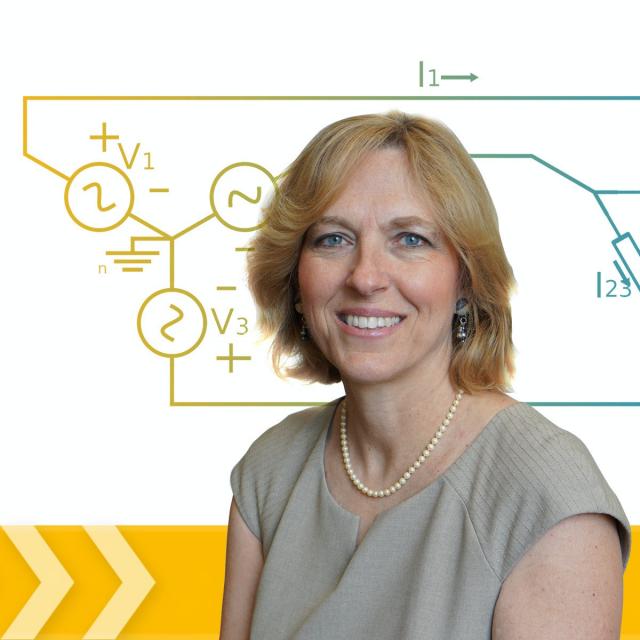
This course explains how to analyze circuits that have alternating current (AC) voltage or current sources. Circuits with resistors, capacitors, and inductors are covered, both analytically and experimentally. Some practical applications in sensors are demonstrated.

Class Deals by MOOC List - Click here and see Coursera's Active Discounts, Deals, and Promo Codes.

Syllabus

WEEK 1
AC Circuit Analysis
This module describes how to analyze circuits with sinusoidal inputs

WEEK 2
Frequency Reponse
The description goes here

WEEK 3
Filters

WEEK 4
Power
The description goes here

WEEK 5
Transformers

Go to Class
MOOC List is learner-supported. When you buy through links on our site, we may earn an affiliate commission.

Related Courses

Fundamentals of Audio and Music Engineering: Part 1 Musical Sound & Electronics (Coursera) Coursera
University of Rochester

Fundamentals of Audio and Music Engineering: Part 1 Musical Sound & Electronics (Coursera)

In this course students learn the basic concepts of acoustics and electronics and how they can applied to understand musical sound and make music with electronic instruments. Topics include: sound waves, musical sound, basic electronics, and applications of these basic principles in amplifiers and speaker design.

Aug 3rd 2026
5-12 Weeks
Digital Systems: From Logic Gates to Processors (Coursera) Coursera
Universitat Autònoma de Barcelona

Digital Systems: From Logic Gates to Processors (Coursera)

This course gives you a complete insight into the modern design of digital systems fundamentals from an eminently practical point of view. Unlike other more "classic" digital circuits courses, our interest focuses more on the system than on the electronics that support it. This approach will allow us to lay the foundation for the design of complex digital systems.

Aug 3rd 2026
5-12 Weeks
Interfacing with the Arduino (Coursera) Coursera
University of California, Irvine

Interfacing with the Arduino (Coursera)

Arduino senses the environment by receiving inputs from add-on devices such as sensors, and can control the world around it by adjusting lights, motors, and other actuators. In this class you will learn how and when to use the different types of sensors and how to connect them to the Arduino. Since the external world uses continuous or analog signals and the hardware is digital you will learn how these signals are converted back-and-forth and how this must be considered as you program your device. You'll also learn about the use of Arduino-specific shields and the shields software libraries to interface with the real world.

Jul 20th 2026
4 Weeks
Digital Signal Processing 1: Basic Concepts and Algorithms (Coursera) Coursera
École Polytechnique Fédérale de Lausanne

Digital Signal Processing 1: Basic Concepts and Algorithms (Coursera)

Digital Signal Processing is the branch of engineering that, in the space of just a few decades, has enabled unprecedented levels of interpersonal communication and of on-demand entertainment. By reworking the principles of electronics, telecommunication and computer science into a unifying paradigm, DSP is a the heart of the digital revolution that brought us CDs, DVDs, MP3 players, mobile phones and countless other devices.

Jul 20th 2026
4 Weeks
Fundamentals of particle accelerator technology (NPAP MOOC) (Coursera) Coursera
Lund University

Fundamentals of particle accelerator technology (NPAP MOOC) (Coursera)

Did you know that particle accelerators play an important role in many functions of todays society and that there are over 30 000 accelerators in operation worldwide? A few examples are accelerators for radiotherapy which are the largest application of accelerators, altogether with more than 11000 accelerators worldwide. These accelerators range from very compact electron linear accelerators with a length of only about 1 m to large carbon ion synchrotrons with a circumference of more than 50 m and a huge rotating carbon ion gantry with a weight of 600 tons!

Aug 10th 2026
5-12 Weeks
Physics 102 - Magnetic Fields and Faraday's Law (Coursera) Coursera
Rice University

Physics 102 - Magnetic Fields and Faraday's Law (Coursera)

This course serves as an introduction to the physics of electricity and magnetism. Upon completion, learners will have an understanding of how the forces between electric charges are described by fields, and how these fields are related to electrical circuits. They will gain experience in solving physics problems with tools such as graphical analysis, algebra, vector analysis, and calculus. The course follows the typical progression of topics of a first-semester university physics course: charges, electric forces, electric fields potential, magnetic fields, currents, magnetic moments, electromagnetic induction, and circuits.

Jul 20th 2026
4 Weeks
RF and millimeter-Wave Circuit Design (Coursera) Coursera
Eindhoven University of Technology

RF and millimeter-Wave Circuit Design (Coursera)

This unique Master-level course offered by the Center for Wireless Technology Eindhoven (CWT/e) of the Eindhoven University of Technology, The Netherlands, provides students with in-depth knowledge and hands-on experience on RF and mmWave circuit design. The course covers the topics on how to derive the RF wireless systems specifications, and how to design the main building blocks of a transceiver, i.e., low noise amplifier, power amplifier, RF mixers, oscillators, and PLL frequency synthesizers. It is divided into two parts: (1) theoretical lectures will cover the basis of RF and mmWave Circuit Design; and (2) design labs will include simulation and implementation of these circuits.

Aug 10th 2026
5-12 Weeks
Internet of Things: Multimedia Technologies (Coursera) Coursera
University of California, San Diego

Internet of Things: Multimedia Technologies (Coursera)

Content is an eminent example of the features that contributed to the success of wireless Internet. Mobile platforms such as the Snapdragon™ processor have special hardware and software capabilities to make acquisition, processing and rendering of multimedia content efficient and cost-effective.

Jul 20th 2026
3 Weeks