Medical Applications of Particle Accelerators (NPAP MOOC) (Coursera)

Offered by Lund University,
Medical Applications of Particle Accelerators (NPAP MOOC) (Coursera)

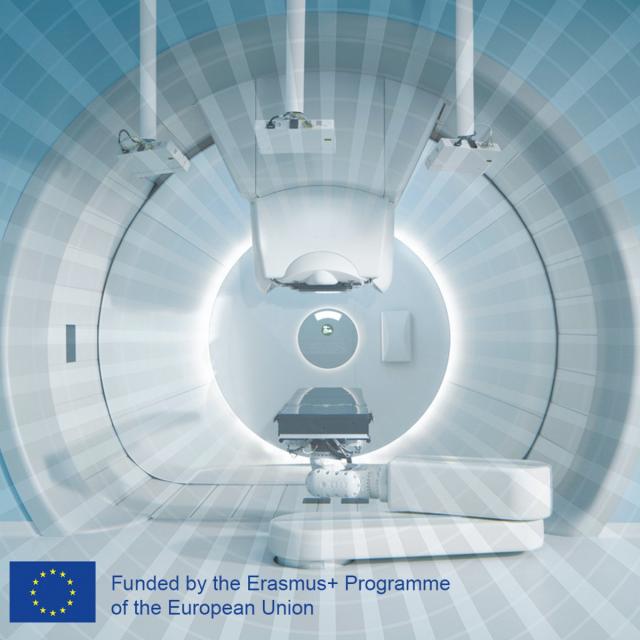
The NPAP - Medical Applications of Accelerators is one out of three courses in the Nordic Particle Accelerator Program (NPAP). Here you will be taken on a tour focusing on the medical applications of particle accelerators. You will see that there are two very important, but different, applications of accelerators in hospitals. The first application concerns radiotherapy of tumours and the other concerns the production of medical nuclides for diagnosis and treatment. Both will be included in this course and described through four modules.

Class Deals by MOOC List - Click here and see Coursera's Active Discounts, Deals, and Promo Codes.

The first module offers the basic principles of radiotherapy from a medical and physics point of view. You there learn about the main components of the machines used for radiotherapy and get to know why radiotherapy is important for cancer treatments.
The second module guides you through the different types of linear accelerators used in the machines for radiotherapy. It also describes the design of the treatment head. The design is important because it is the settings of the treatment head that determines the dose and the radiated region. It is also in the treatment head where the dose given to the patient is measured.
In the third module you are introduced to proton therapy. In this type of therapy protons are first accelerated and then guided down to the tumour by magnets. The machines are considerably larger and more expensive than machines used for radio therapy. The module also offers a description and comparison between different types of accelerators, and explains how the protons interact with tissue.
Also ions that are heavier than protons can be used in cancer therapy. This is described in the fourth module, where we also introduce you to the production of medical nuclides. You learn how the nuclides are produces in proton and ion accelerators and how the nuclides come into play at different places in hospitals. Medical nuclides are for instance used in Positron Electron Tomography, PET.
Enjoy!

Syllabus

WEEK 1
Introduction to the course and radiotherapy
Welcome to this course on medical applications of accelerators. The most important applications of accelerators in medicine are radiotherapy and diagnostic imaging using radionuclides, which both play a very important role in the treatment of cancer. Thus, the course focuses on these two applications of accelerators in medicine. In fact, accelerators for radiotherapy is the largest application of accelerators altogether with more than 11000 accelerators worldwide. These accelerators range from very compact electron linear accelerators with a length of only about 1 m to large carbon ion synchrotrons with a circumference of more than 50 m and a huge rotating carbon ion gantry with a weight of 600 tons. The course starts with an introduction to radiotherapy with focus on the biological properties of ionizing radiation. Subsequently, the electron linac for radiotherapy is presented. The main components of the electron linac are the multi-energy linac structure and the treatment head, which converts the electron beam to the desired dose distribution in the patient. Next, proton accelerators for radiotherapy are discussed with focus on the applied accelerator types and the treatment delivery technologies. Treatment with heavy ions and the challenges of proton and heavy ion therapy are also presented. Finally, the medical application of radionuclides are introduced and the production of radionuclides with cyclotrons is discussed.

WEEK 2
Electron linacs for radiotherapy

WEEK 3
Proton therapy I

WEEK 4
Proton therapy II and production of medical radionuclides
Go to Class
MOOC List is learner-supported. When you buy through links on our site, we may earn an affiliate commission.

Related Courses

The Social Context of Mental Health and Illness (Coursera) Coursera
University of Toronto

The Social Context of Mental Health and Illness (Coursera)

Learn how social factors promote mental health, influence the onset and course of mental illness, and affect how mental illnesses are diagnosed and treated. This course explores how our understanding of mental health and illness has been influenced by social attitudes and social developments in North America and around the world. The course begins by situating our contemporary mental health practices in historical context, then looks at different aspects of mental health, mental illness and mental health services and their connections to what’s going on in our social environment.

Aug 17th 2026
5-12 Weeks
Fundamentals of particle accelerator technology (NPAP MOOC) (Coursera) Coursera
Lund University

Fundamentals of particle accelerator technology (NPAP MOOC) (Coursera)

Did you know that particle accelerators play an important role in many functions of todays society and that there are over 30 000 accelerators in operation worldwide? A few examples are accelerators for radiotherapy which are the largest application of accelerators, altogether with more than 11000 accelerators worldwide. These accelerators range from very compact electron linear accelerators with a length of only about 1 m to large carbon ion synchrotrons with a circumference of more than 50 m and a huge rotating carbon ion gantry with a weight of 600 tons!

Aug 10th 2026
5-12 Weeks
COVID-19: Understanding the Research Behind the Pandemic (FutureLearn) FutureLearn
University of Leeds,National Institute for Health Research - NIHR

COVID-19: Understanding the Research Behind the Pandemic (FutureLearn)

Discover how scientists responded to the pandemic and how they conduct innovative research to develop treatments and vaccines. Explore the critical role of research in responding to the COVID-19 pandemic. The outbreak of the COVID-19 pandemic took the world by surprise, causing a global health crisis. Reducing the spread of the disease and treating patients relied on how rapidly we could harness our research capabilities. This has led to developments that will change how we conduct future research.

Oct 4th 2021
2 Weeks
What is Health Research? (FutureLearn) FutureLearn
University of Leeds,National Institute for Health Research - NIHR

What is Health Research? (FutureLearn)

Explore the world of health research and the role volunteers play in transforming treatments and improving health care. Learn about health research and explore opportunities to get involved. Have you ever wondered how doctors and nurses know what treatment or care to give? It’s only through health research that healthcare professionals find new and better ways of preventing, diagnosing and treating disease. Today’s research is tomorrow’s treatment.

Self Paced
3 Weeks
CareSearch My Learning Modules (OpenLearning) OpenLearning
Flinders University,CareSearch

CareSearch My Learning Modules (OpenLearning)

Have you ever been in a situation with a patient where you did not know what to say next? Do you feel that you have missed an opportunity to make a positive difference to a patient and their family? CareSearch can help you find the right answers. My Learning introduces you to resources in CareSearch and shows you how you can use them in your clinical practice.

Self-Paced
Self-Paced
Epidemiology: The Basic Science of Public Health (Coursera) Coursera
University of North Carolina

Epidemiology: The Basic Science of Public Health (Coursera)

Often called “the cornerstone” of public health, epidemiology is the study of the distribution and determinants of diseases, health conditions, or events among populations and the application of that study to control health problems. By applying the concepts learned in this course to current public health problems and issues, students will understand the practice of epidemiology as it relates to real life and makes for a better appreciation of public health programs and policies. This course explores public health issues like cardiovascular and infectious diseases – both locally and globally – through the lens of epidemiology.

Aug 17th 2026
5-12 Weeks
Genomics: Decoding the Universal Language of Life (Coursera) Coursera
University of Illinois at Urbana-Champaign

Genomics: Decoding the Universal Language of Life (Coursera)

What is a genome? A genome contains all of the information that a cell needs to develop, function, and reproduce itself, and all the information needed for those cells to come together to form a person, plant, or animal. Genomes contain an organism’s complete set of genes, and also the even tinier genetic structures that help regulate when and how those genes are used. The ability to regrow a torn ligament, the clues that might predict the onset of mental illness, the nutritional potential of crops, and even the history of life itself, are all encoded in genomes. By taking this course, you will discover how scientists are deciphering the language of genomes to learn how to develop sustainable food and fuel supplies, improve disease treatment and prevention, and protect our environment.

Aug 3rd 2026
5-12 Weeks
Data Management for Clinical Research (Coursera) Coursera
Vanderbilt University

Data Management for Clinical Research (Coursera)

This course presents critical concepts and practical methods to support planning, collection, storage, and dissemination of data in clinical research. Understanding and implementing solid data management principles is critical for any scientific domain. Regardless of your current (or anticipated) role in the research enterprise, a strong working knowledge and skill set in data management principles and practice will increase your productivity and improve your science. Our goal is to use these modules to help you learn and practice this skill set.

Aug 17th 2026
5-12 Weeks
Childbirth: A Global Perspective (Coursera) Coursera
Emory University

Childbirth: A Global Perspective (Coursera)

This course will review challenges for maternal and newborn health in the developing world, where a great many women and babies are suffering from complications during pregnancy, childbirth, and the days following birth. Themes covered include the epidemiology of maternal and newborn mortality and morbidity, relevant issues for the global health workforce, community-based interventions to improve maternal and newborn health and survival, and sociocultural dynamics surrounding birth.

Aug 24th 2026
5-12 Weeks
Foundations of Health Equity Research (Coursera) Coursera
Johns Hopkins University

Foundations of Health Equity Research (Coursera)

Introduces students to the core principles of health equity research. Covers topics such as defining health equity, engaging community and policy stakeholders, patient-centeredness, cultural competence, and dissemination of research findings. Content will recognize different geographic, cultural, and social contexts where health inequities occur.

Aug 17th 2026
5-12 Weeks
Introduction to Particle Accelerators (NPAP MOOC) (Coursera) Coursera
Lund University

Introduction to Particle Accelerators (NPAP MOOC) (Coursera)

Welcome to the Nordic Particle Accelerator Program's (NPAP) Massive Open Online Courses and to the fascinating world of particle accelerators! Did you know that in the year of 2000 there were more than 15 000 particle accelerators in the world? Yet, today it has grown to more than 30 000 of them! A third of the particle accelerators are dedicated to medical applications, such as radio therapy, and a half are used for ion implantation in semiconductor devices.

Aug 3rd 2026
5-12 Weeks
Diabetes - a Global Challenge (Coursera) Coursera
University of Copenhagen

Diabetes - a Global Challenge (Coursera)

Diabetes and obesity are growing health problems in rich and poor countries alike. With this course you will get updated on cutting-edge diabetes and obesity research including biological, genetic and clinical aspects as well as prevention and epidemiology of diabetes and obesity. All lectures are provided by high-profile scientists from one the world's leading universities in diabetes research.

Aug 17th 2026
5-12 Weeks