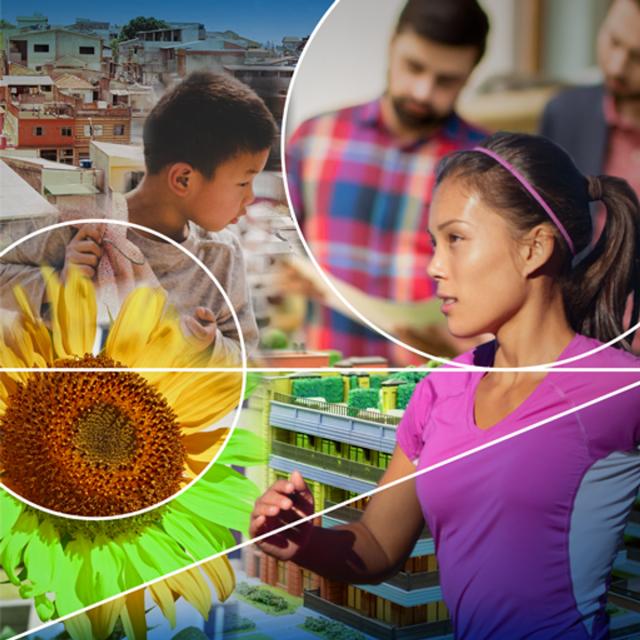
More than half of world’s population lives in cities while only 5% did so in the 18th century. The rapid urbanisation has resulted in for example inadequate infrastructure, physical inactivity, gentrification, air pollution, and growing numbers of slum dwellers. All factors challenging health and wellbeing of the people living in the cities. In addition, when addressing climate change it has become of paramount importance to look at mitigation and adaptation investments tailored to the urban context.
Class Deals by MOOC List - Click here and see Coursera's Active Discounts, Deals, and Promo Codes.
As stated in the Sustainable Development Goal 11 adopted by all United Nations member states in 2015, societies need to be at the forefront in the continuous management and design of urban spaces to secure that cities and human settlements are inclusive, safe, resilient and sustainable.
In this course, you will learn about the key determinants of urban health including demography, climate change, air pollution, noise, transport systems, public and blue and green spaces, and policies and investments affecting sense of community and public safety. You will get a historical overview of the major trends in urban planning and meet a range of stakeholders in urban planning who will provide examples of innovative methods and people-centered approaches to create sustainable solutions.
Finally, you will be provided with a series of resources to inspire you to help create awareness and action around an idea or sustainable solution in the field of urbanisation and health.
The course has been developed (with support from EIT Health) in a partnership between the University of Copenhagen, Universidad Politécnica de Madrid and University of Coimbra.
Researchers and stakeholders in urban planning will introduce you to cases from cities in Denmark, Spain, Portugal and many other urban settings across the world.
The aim of the course is to further interdisciplinary knowledge on urbanisation and health. We plan for the courses to reach citizens and activists as well planners, practitioners and decision-makers with a professional interest in sustainable urban planning from countries around the world.
Syllabus
WEEK 1
How Urbanisation, Health and Urban Planning Relate
This module will provide you with an overview of the key determinants of urban health. We will take you on a journey mainly through the European history of urbanisation and urban planning to reflect on the way health concerns and wellbeing have been considered and how general trends here have influenced the design of cities all across the world. Finally, we will dive into the causes and effects of air pollution and noise, two of the major health hazards in today’s urban settings. We hope the readings and resources will inspire you to begin exploring your own urban setting in terms of e.g. density and different kinds of pollution.
WEEK 2
Ageing and Gentrification
The world population is undergoing major changes. The share of urban population is increasing, as does that of people aged 65 or over. In this module we will focus on the concept of ageing across the lifecycle, and on how different features of urban environment influence health and the ageing process. Furthermore, we will explore the phenomenon of gentrification and its impact on health in different segments of our populations. In the reading and resources section you will find shortcuts to databases and cases from different cities.
WEEK 3
Nature-based Solutions
On many different levels evidence confirm how crucial the integration of elements of nature in the urban design is to sustain physical as well as mental health. In this module you will be introduced to blue and green planning as an instrument to promote health and mitigate and adapt to climate changes. We will look at the benefits of green space and small-scale urban farming from a community and health perspective. You will also meet examples of how new ways of designing public space motivates citizens to lead a daily physically active and healthy life. In the readings and resource section you will find more in depth material on nature based solutions and effects on climate change.
WEEK 4
Innovative Solutions
How can we align urban planning with UN’s Sustainable Development Goals? In an urban context, how can we bend the curve of obesity? How can we reduce mortality and disease associated with the layout of the urban space and namely the way we design our transport systems? In this module you will meet stakeholders who are globally engaged in the development and implementation of sustainable approaches to resolve some of the major health related challenges that cities are facing globally. Further, you will get access to tools and frameworks for your own use
WEEK 5
Innovation and Communication
Maybe you are already involved in activities that support a healthy and sustainable development in your own neighborhood or city, or even across cities. Or maybe you would like to get started or take action in a new way. Now is your chance to mature and consider how you can best convince others to engage in your idea! In the previous modules we have identified the key determinants to urban health and provided examples of prevailing methods to come up with sustainable solutions. We now add to the palette some overall principles and frameworks commonly used for innovation to improve health. You will also be introduced to some tools to effectively communicate your specific idea, including ways to visualize the data you build your arguments around. In the resource section you will find a variety of toolkits and design guides and we invite you to study each of them and consider which parts could be helpful to identify and come up with a suggestion for a sustainable solution to a specific problem you are engaged in.