Forensic Psychology: Witness Investigation (FutureLearn)

Offered by The Open University,
Forensic Psychology: Witness Investigation (FutureLearn)

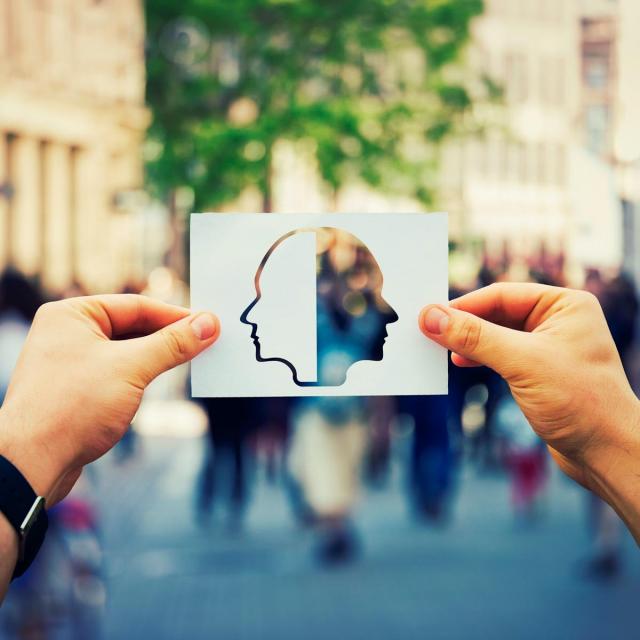
How important are eyewitness testimonies in police investigations? Discover how forensic psychology prevents criminal injustice. Become a forensic psychologist and help solve crimes using eyewitness evidence. Have you ever questioned how reliable your own mind is? In this 8-week forensic psychology course, you’ll learn how the mind plays tricks on us and how this can impact criminal investigations. You’ll discover how cautious the police have to be during eyewitness investigation, and you’ll step into the shoes of a forensic psychologist.

Class Deals by MOOC List - Click here and see FutureLearn's Active Discounts, Deals, and Promo Codes.

Explore eyewitness testimonies from a real criminal investigation
In this course, you’ll get the chance to watch real eyewitness testimonies from behind the scenes of a criminal investigation, and it’ll be your job to check how reliable they are.
You’ll start the investigation by learning about witness characteristics and taking witness statements with the police. Then you’ll learn about inattentional and change blindness and discover how to conduct a cognitive interview.

Discover the limits of facial recognition
Explore the psychology of how our minds recognise faces and challenge yourself on your own facial recognition abilities. Are you as good as you think you are?
In this section of the course, you’ll learn why it’s so hard to describe a face accurately and consider the best techniques to obtain an image of the criminal from the mind of the eyewitness.

Crack the case
By the end of the course, you’ll get the opportunity to solve the crime using everything you’ve learned about forensic psychology and eyewitness testimony.

What topics will you cover?

  • Eyewitness testimony
  • Witness memory
  • Inattentional blindness and observation of criminal incidents
  • Interviewing witnesses
  • Facial recognition
  • Visual identification

What will you achieve?
By the end of the course, you'll be able to...

  • Investigate and understand the psychology of eyewitness testimony
  • Develop your own investigative skills
  • Explore human cognition and discover the mistakes your own brain can make
  • Discuss concepts of criminal investigation
  • Explore and consider the relationship between limitations of the human brain and miscarriages of justice
Go to Class
MOOC List is learner-supported. When you buy through links on our site, we may earn an affiliate commission.

Related Courses

Introducción a la Neurociencia (Coursera) Coursera
Universidad de Palermo

Introducción a la Neurociencia (Coursera)

¿Qué es la neurociencia? ¿Cuáles son sus objetivos? ¿Cómo está compuesto y cómo funciona tu cerebro? ¿De qué modo incide sobre tus conductas y comportamientos? ¿Cómo se interrelacionan el cerebro y la mente? ¿Qué son los neurotransmisores y qué tipos de neurotransmisores existen? ¿Qué son las neuronas?

Aug 3rd 2026
3 Weeks
Introduction to Health Psychology (FutureLearn) FutureLearn
University of Padova

Introduction to Health Psychology (FutureLearn)

Learn about the importance of psychology in healthcare, how it can improve policymaking and patient outcomes. Discover why psychology in healthcare matters to both caregivers and patients. Psychology plays a vital role in healthcare services. From a patient learning to cope with a medical condition to a doctor delivering significant diagnostic news – the psychological impact and toll of healthcare are often overlooked.

Self Paced
4 Weeks
Introduction to Psychology (Coursera) Coursera
Yale University

Introduction to Psychology (Coursera)

What are people most afraid of? What do our dreams mean? Are we natural-born racists? What makes us happy? What are the causes and cures of mental illness? This course tries to answer these questions and many others, providing a comprehensive overview of the scientific study of thought and behavior. It explores topics such as perception, communication, learning, memory, decision-making, persuasion, emotions, and social behavior. We will look at how these aspects of the mind develop in children, how they differ across people, how they are wired-up in the brain, and how they break down due to illness and injury.

Aug 3rd 2026
5-12 Weeks
eHealth: Combining Psychology, Technology and Health (FutureLearn) FutureLearn
University of Twente

eHealth: Combining Psychology, Technology and Health (FutureLearn)

How can technology make you healthy? Learn about the design, application, implementation and evaluation of eHealth. eHealth refers to the use of technologies to improve well-being, health, and healthcare. It is an umbrella term that captures concepts about the health context, technology, and people. In this free online course, we will provide you with insight into the domain of eHealth, describe methods to develop eHealth, and explain theories that enable behaviour change and facilitate implementation.

Available now
5-12 Weeks
Research Methods in Psychology: Using Animal Models to Understand Human Behaviour (FutureLearn) FutureLearn
University of Padova

Research Methods in Psychology: Using Animal Models to Understand Human Behaviour (FutureLearn)

Learn how animal models can help us learn about human psychology, cognitive skills, and the neurobiology of learning and memory. Discover how animal research has helped us understand how we perceive and learn. Did you know that we can learn a lot about humans through animal research? Animal models derived from invertebrates have helped us to understand the neurobiology of learning and memory. From cats, we have learned how visual experience informs the human visual system, and recent research has identified fish as a promising model to understand the genetic bases of learning disabilities such as dyscalculia!

Self Paced
4 Weeks
Intelligent Systems: An Introduction to Deep Learning and Autonomous Systems (FutureLearn) FutureLearn
University of York

Intelligent Systems: An Introduction to Deep Learning and Autonomous Systems (FutureLearn)

Discover the benefits and risks of deep learning and its uses in systems such as assistive technology and facial recognition. Delve into the inner workings of deep learning. From Ada Lovelace until the first decade of this century, we have relied on expert computer programmers to design and write software.

Self Paced
3 Weeks
Gender and Sexuality: Diversity and Inclusion in the Workplace (Coursera) Coursera
University of Pittsburgh

Gender and Sexuality: Diversity and Inclusion in the Workplace (Coursera)

What is sex? What is gender? What is sexuality? What do we mean by LGBTQIA? How are these concepts related to the workplace? How have our understandings of these terms changed over time, and how have these changes impacted work and culture? To help you answer these important questions, this course will introduce you to the exciting field of gender, sexuality, and women's studies, and to LGBTQIA identities.

Aug 3rd 2026
4 Weeks
Music Moves: Why Does Music Make You Move? (FutureLearn) FutureLearn
University of Oslo

Music Moves: Why Does Music Make You Move? (FutureLearn)

Learn about the psychology of music and movement, and how researchers study music-related movements, with this free online course. Learn about why and how music makes you move. Music is movement. A bold statement, but one that we will explore together in this free online course. Together we will study music through different types of body movement. This includes everything from the sound-producing keyboard actions of a pianist to the energetic dance moves in a club.

Self Paced
5-12 Weeks
The Brain and Space (Coursera) Coursera
Duke University

The Brain and Space (Coursera)

This course is about how the brain creates our sense of spatial location from a variety of sensory and motor sources, and how this spatial sense in turn shapes our cognitive abilities. Knowing where things are is effortless. But “under the hood,” your brain must figure out even the simplest of details about the world around you and your position in it.

Jul 20th 2026
5-12 Weeks
Children Acquiring Literacy Naturally (Coursera) Coursera
University of California, Santa Cruz

Children Acquiring Literacy Naturally (Coursera)

In this short course you will explore the possibility that children might acquire written language in a way that is similar to how they acquire spoken language—without instruction. You will encounter various aspects of behavioral science and technology that are relevant to this proposition. You will have the opportunity to learn the the perceptual, cognitive, and neurological capacities of children during their first years of life. You will advance your understanding of children and how they learn language. You will also be more attuned to current advances in the technology of human machine interactions, and what these phenomena imply for learning to read at an early age.

Aug 3rd 2026
3 Weeks
Soul Beliefs: Causes and Consequences - Unit 3: How Does It All End? (Coursera) Coursera
Rutgers University

Soul Beliefs: Causes and Consequences - Unit 3: How Does It All End? (Coursera)

Throughout history, the vast majority of people around the globe have believed they have, however defined, a “soul.” While the question of whether the soul exists cannot be answered by science, what we can study are the causes and consequences of various beliefs about the soul and its prospects of surviving the death of the body. Why are soul and afterlife beliefs so common in human history? Are there adaptive advantages to assuming souls exist?

Aug 3rd 2026
5-12 Weeks