Fighting COVID-19 with Epidemiology: A Johns Hopkins Teach-Out (Coursera)

Fighting COVID-19 with Epidemiology: A Johns Hopkins Teach-Out (Coursera)

This free Teach-Out is for anyone who has been curious about how we identify and measure outbreaks like the COVID-19 epidemic and wants to understand the epidemiology of these infections. The COVID-19 epidemic has made many people want to understand the science behind pressing questions like: "How many people have been infected?" "How do we measure who is infected?" "How infectious is the virus?" "What can we do?" Epidemiology has the tools to tell us how to collect and analyze the right data to answer these questions.

Class Deals by MOOC List - Click here and see Coursera's Active Discounts, Deals, and Promo Codes.

In addition to a basic understanding of these essential tools, this Teach-Out provides a way for you to learn and connect with one another while continuing to practice the social distancing measures that will help keep us safe. We also hope to provide you with some tangible calls to action that will help you affect positive change for yourself, your community, and our society.

Syllabus

WEEK 1: How Do We Identify and Measure Outbreaks Like COVID-19?
WEEK 2: How Do We Investigate and Control Outbreaks?
Go to Class
MOOC List is learner-supported. When you buy through links on our site, we may earn an affiliate commission.

Related Courses

Extracellular Vesicles in Health and Disease (Coursera) Coursera
University of California, Irvine

Extracellular Vesicles in Health and Disease (Coursera)

This course aims to provide current understanding about extracellular vesicles (EVs) and their role in health and diseases. The EVs are known to be involved in cell to cell communication. Apart from maintaining normal cell physiology, EVs deliver messages that can drive or influence the progression of a disease. This course discusses recent advances made in the field to give an introduction on their function in health as well as in disease.

Sep 21st 2026
4 Weeks
Understanding Prostate Cancer (Coursera) Coursera
Johns Hopkins University

Understanding Prostate Cancer (Coursera)

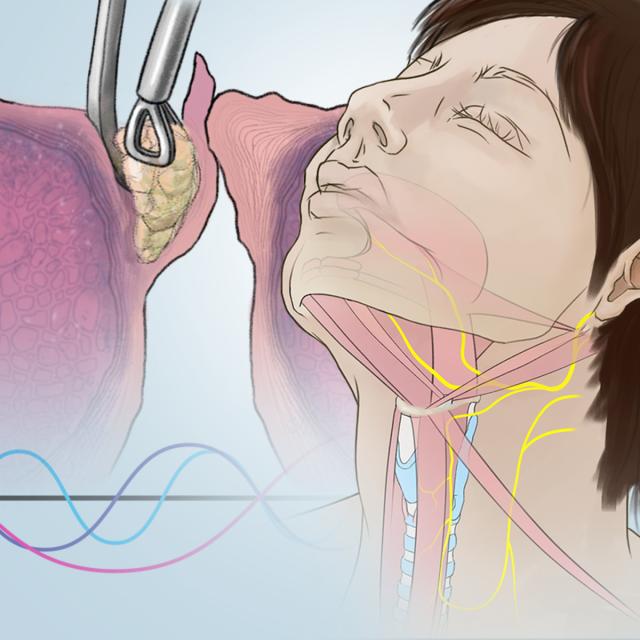
Welcome to Understanding Prostate Cancer. My name is Ken Pienta, Professor of Urology and Oncology at the Johns Hopkins School of Medicine. I have been studying prostate cancer and treating patients with prostate cancer for over 25 years. I've put together this course in order to introduce you to the essentials of prostate cancer. This Understanding Prostate Cancer Course should be helpful to anyone who wants to develop a deeper understanding of prostate cancer biology and treatment. It should be useful to students who are interested in a deeper understanding of the science of cancer.

Sep 21st 2026
3 Weeks
Instructional Methods in Health Professions Education (Coursera) Coursera
University of Michigan

Instructional Methods in Health Professions Education (Coursera)

This course provides those involved in educating members of the health professions an asynchronous, interdisciplinary, and interactive way to obtain, expand, and improve their teaching skills. These skills can then be applied within their own professional context, with a variety of learners, extending across many stages.

Sep 21st 2026
5-12 Weeks
Understanding Patient Perspectives on Medications (Coursera) Coursera
University of Copenhagen

Understanding Patient Perspectives on Medications (Coursera)

Inappropriate use of medicines harms patients’ health and increases healthcare costs. When healthcare professionals and patients engage together, healthcare can be based on the patient perspective, so the use of medicines is better tailored to each patients’ needs and preferences. The result is a better relationship between patients and healthcare professionals, more appropriate medicines use, improved patients’ outcomes, and reduced healthcare costs. In this course you will learn about the patient perspective on medicines use, and how to explore and apply it in healthcare and health policy.

Sep 21st 2026
4 Weeks
International Women's Health and Human Rights (Coursera) Coursera
Stanford University

International Women's Health and Human Rights (Coursera)

This course focuses on women’s health and human rights issues from infancy through old age, including information about positive interventions relating to those issues. Learners are encouraged to interact with each other through interactive discussions. It is important to us that this course be available to all learners. We encourage you to apply for Coursera's financial aid (see link to left) if the cost of the course certificate is difficult for you to afford. Please note that you may view all materials in this course, and participate in it, without purchasing a certificate.

Sep 21st 2026
5-12 Weeks
Antimicrobial resistance - theory and methods (Coursera) Coursera
Technical University of Denmark - DTU

Antimicrobial resistance - theory and methods (Coursera)

The course will cover the topics related to antimicrobial resistance with basic definitions and overview on antimicrobials their use and the emergence and spread of resistance. The course will guide you through the concepts and the importance of resistance spread and dissemination and how that happens. It will show you how bacteria become resistant and which mechanisms they might use for this. And as part of the course you will also receive some training in methods for antimicrobial susceptibility testing (AST) and detection of specific resistance in the microbiological laboratories with the basic methods available and with focus on the obtention of good quality results which can be interpreted and used for different purposes.

Sep 21st 2026
5-12 Weeks
Population Health: Panel Management Next Level (Coursera) Coursera
Leiden University

Population Health: Panel Management Next Level (Coursera)

How can you, as a healthcare professional, identify patients that share the same risk of an adverse event? How do you transform your healthcare practice in such a way that you are not only able to provide proactive care but you are also able to improve the health of populations at risk? In this course you will learn how to apply the panel management approach to tackle these questions in order to change from reactive to proactive care.

Sep 21st 2026
4 Weeks
Global Health at the Human-Animal-Ecosystem Interface (Coursera) Coursera
University of Geneva

Global Health at the Human-Animal-Ecosystem Interface (Coursera)

The University of Geneva, Institute Pasteur, University of Montreal and Centre Virchow-Villermé/University Paris Descartes welcome you to this new MOOC on "Global Health at the Human-Animal-Ecosystem Interface"! Over the next 5 weeks, you will explore and learn about some of the major and current Global Health Challenges at the Human-Animal-Ecosystem Interface: zoonotic emerging infections (e.g. Ebola, Nipah, MERS, Avian Influenza), antimicrobial resistance, neglected tropical diseases (e.g. rabies, leishmaniasis, zoonotic TB), snakebite and other human-animal conflicts etc.

Sep 21st 2026
5-12 Weeks
Prehospital care of acute stroke and patient selection for endovascular treatment using the RACE scale (Coursera) Coursera
University of Barcelona

Prehospital care of acute stroke and patient selection for endovascular treatment using the RACE scale (Coursera)

Acute stroke is a time-dependent medical emergency. In acute ischemic stroke, the first objective is to restore brain flow using sistemic thrombolytic treatment and, in patients with large vessel occlusion, by endovascular treatment. In hemorrhagic stroke there are also specific treatments that can improve the clinical outcome.

Sep 21st 2026
4 Weeks