Create video, audio and infographics for online learning (Coursera)

Offered by Macquarie University,
Create video, audio and infographics for online learning (Coursera)

Multimodal texts make learning interesting. Video, podcasts and infographics not only have the capability to excite and engage, but to reach a broader demography of learners who don’t thrive on verbal language knowledge acquisition and exchange alone. Multimodal texts provide a variety of ways in which to communicate and provide information to learners, as well as meet the needs of different learners’ preferences.

Class Deals by MOOC List - Click here and see Coursera's Active Discounts, Deals, and Promo Codes.

Using video, podcasts, infographics or images as well as text, directly impacts learning outcomes. Design decisions that incorporate multimodal learning objects – made by both educators and learners – can make learning memorable, meaningful and retainable.
Decisions we make about how we communicate should be done through a systematic and informed process, rather than via a random selection of tools. In this course, you’ll explore learning design principles associated with how, why and when to use multimodal texts. You’ll also explore and analyse the features and benefits of a range of text types, such as video, audio and infographics.
The course is designed for educators, teachers, learning designers, instructional designers, tutors, lecturers, course convenors and anyone else who may be interested in creating powerful and memorable learning experiences for learners of all ages.
Course 2 of 3 in the Online Learning Design for Educators Specialization.

Learning outcomes
By the end of this course, you’ll:

  1. Recognise best practice design principles and approaches for multimodal text creation
  2. Select, design and create a variety of multimodal text types, including video, audio and infographics
  3. Critically reflect on the strengths and weaknesses of the different multimodal text types

Syllabus

WEEK 1
The principles of good online learning design
Welcome to week 1! It is important to consider some design parameters before you start to create your own multimodal learning objects. This week, we’ll explore four key principle that will inform the design of the learning sequence in which your learning objects will sit. They are; time, space, purpose and the online instructor's role. We'll also explore the 'rapid-design process' and provide you with some tools and techniques for the weeks of multimodal learning object creation ahead. Get ready to design and create you very own multimodal text types!

WEEK 2
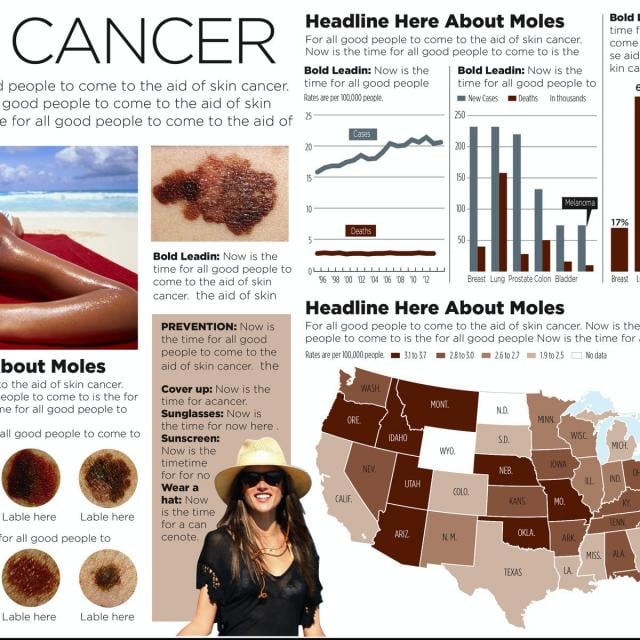
Designing infographic multimodal text types
Welcome to week 2! This week you will be given the opportunity to design and build your own infographic. Infographics can add real value to an online course when designed, developed and implemented well. As you will discover this week, there are many advantages of incorporating infographics into your own online course. We'd argue that infographics work best if they are paired with a 'friend'. What do we mean by this? Continue on to learn more!

WEEK 3
Designing audio multimodal text types
Welcome to Week 3! Audio resources and educational podcasts are growing in popularity. Do you listen to podcasts or e-books? This week we dive into audio text type creation. Creating your own podcast can be fun and simple. This week you will have the chance to listen to some experienced podcasters who have created their own podcasts specifically for their learners.

WEEK 4
Designing video multimodal text types
Welcome to week 4! Visual storytelling can help make complex stories easier to understand and, as a result, deliver a more impactful message. That is the power of video, as you will discover this week when you create your own video. Creating a powerful instructional video learning resource is a time consuming and intensive process. This week we'll share some tips and tricks with you that will save you time and energy when you make your own instructional videos. Lights! Camera! Action!

WEEK 5
Prototyping and the critical friend protocol
Welcome to week 5! We hope that you've enjoyed designing and creating your own learning objects. Now it's time to prototype and iterate the three learning objects you've made so far. To improve our learning objects we can ask our friends and colleagues for feedback. This week we will focus on the importance of both providing and receiving effective feedback, and share with you a structured way to give and receive meaningful and constructive feedback, which is called the 'critical friend protocol'.


Go to Class
MOOC List is learner-supported. When you buy through links on our site, we may earn an affiliate commission.

Related Courses

Python Fundamentals for Designers (Coursera) Coursera
University of Michigan

Python Fundamentals for Designers (Coursera)

Python Fundamentals for Designers is an introduction to programming using Python meant for students interested in how programming is applied to visual applications and design. The course introduces the foundations of programming through a visual and dynamic learning environment. You’ll cover the essential building blocks of Python programming, from basic syntax and data types to more advanced concepts like control structures, functions, and inputs/outputs.

Jun 1st 2026
5-12 Weeks
Job Success: Get Hired or Promoted in 3 Steps (Coursera) Coursera
The State University of New York

Job Success: Get Hired or Promoted in 3 Steps (Coursera)

This course, Job Success: Get Hired or Promoted in Three Steps, will prepare you to stand out in a crowded applicant pool so that you can get hired or promoted. In three steps you will leave this course with : an upgraded social media presence (one that you can be proud of); a visual, infographic resume that will get you noticed; a professional pitch that highlights your strengths and skills.

Jun 8th 2026
3 Weeks
Internet Giants: The Law and Economics of Media Platforms (Coursera) Coursera
University of Chicago

Internet Giants: The Law and Economics of Media Platforms (Coursera)

Law

This seven-week course will explore the relationship between law and technology with a strong focus on the law of the United States with some comparisons to laws around the world, especially in Europe. Tech progress is an important source of economic growth and raises broader questions about the human condition, including how culture evolves and who controls that evolution. Technology also matters in countless other ways as it often establishes the framework in which governments interact with their citizens, both in allowing speech and blocking it and in establishing exactly what the boundaries are between private life and the government. And technology itself is powerfully shaped by the laws that apply in areas as diverse as copyright, antitrust, patents, privacy, speech law and the regulation of networks.

Jun 8th 2026
5-12 Weeks
Uncommon Sense Teaching: Teaching Online (Coursera) Coursera
Deep Teaching Solutions

Uncommon Sense Teaching: Teaching Online (Coursera)

In Uncommon Sense Teaching: TEACHING ONLINE we’d like to help you to move toward fresh approaches to online teaching that build on the latest insights from scientific research. We’ll use insights from movie-making—not to mention from odd visual tricks in Barb’s kitchen—to see how students learn, both independently and together. We all know, for example, that social learning is valuable in helping students grapple with tough concepts as well as in making learning more fun. But if you understand what is happening in the brain during social learning, you can also understand why certain approaches commonly used in online learning, such as discussion forums, can sometimes pose a challenge. As you will see, we can use insights from neuroscience not only to motivate our students, but to help them change their very identity.

Jun 8th 2026
4 Weeks
Construction aspects of Steel Buildings (Coursera) Coursera
L&T EduTech

Construction aspects of Steel Buildings (Coursera)

The Construction Aspects of Steel Buildings course offers comprehensive insights into key construction components. It begins with detailed exploration of shear, moment, and splice connections, providing practical examples. Participants learn about industrial building types, structural framing, roofing, and wall materials, alongside load evaluation.

Jun 8th 2026
3 Weeks
Ready to Roll – The Video Production Process (Coursera) Coursera
University of Colorado Boulder

Ready to Roll – The Video Production Process (Coursera)

If you’ve done your pre-production thoroughly, then you should feel confident moving on to this next step — gathering the raw materials that you will use to build your visual story. These raw materials are your camera shots, including b-roll and interviews. The production stage is where you will finally collect the images and sound that will communicate directly to your audience. We’ll show you how to enhance your visual story by raising the quality of your shots: getting proper exposure, using the rule of thirds; and shooting sequences that promote continuity.

Jun 8th 2026
5-12 Weeks
Platform Thinking: designing a Platform (Coursera) Coursera
Politecnico di Milano

Platform Thinking: designing a Platform (Coursera)

Platforms changed the way we live and we do business. This module of the “Platform Thinking” series aims to help innovators in designing and building platforms. At first sight, it may seem that platforms "simply" connect different kinds of users, as Airbnb links travelers and hosts or as Uber links drivers and riders. Well, this is true: platforms link different kinds of users. Nevertheless, this is just the enabling factor to have a platform, definitely not enough to describe the wide range of activities they actually do.

Jun 1st 2026
4 Weeks
Creative Designing in Power BI (Coursera) Coursera
Microsoft

Creative Designing in Power BI (Coursera)

This course forms part of the Microsoft Power BI Analyst Professional Certificate. This Professional Certificate consists of a series of courses that offers a good starting point for a career in data analysis using Microsoft Power BI. In this course, you will learn how to creatively design dashboards, reports and charts that are easier for the audience to use.

Jun 1st 2026
4 Weeks
Designing Engaging Dashboards for Healthcare Analytics (Coursera) Coursera
Northeastern University

Designing Engaging Dashboards for Healthcare Analytics (Coursera)

Introduces processes and design principles for creating meaningful displays of information that support effective business decision-making. Studies how to collect and process data; create visualizations (both static and interactive); and use them to provide insight into a problem, situation, or opportunity. Introduces methods to critique visualizations along with ways to answer the elusive question: “What makes a visualization effective?” Discusses the challenges of making data understandable across a wide range of audiences.

Jun 8th 2026
4 Weeks