EdX

Engineering Drawing | 工程制图 (edX)

Engineering Drawing | 工程制图 (edX)

“Engineering Drawing” is a fundamental course of engineering technology, including two parts: basic theories and advanced practices. The first part will introduce the theory of projection and its application on drawings. The second part is to give students general experience in producing a variety of mechanical drawings.

Class Deals by MOOC List - Click here and see EdX's Active Discounts, Deals, and Promo Codes.

“Engineering Drawing” is a fundamental course of engineering technology, including two parts: basic theories and advanced practices. The first part will introduce the theory of projection and its application on drawings, focusing on training students with basic knowledge of engineering. The second part of the practice sessions is to give students general experience in producing a variety of mechanical drawings.
Based on the theory of projection, this course is to teach basic design representations such as 2D views, axonometric drawing of freehand and 3D solid modeling etc. It integrates various drawing skills such as freehand sketching, instrumental sketching and CAD modeling and design. The main objectives are to educate students with capabilities of engineering imaginations, and to train them to think with 3D images, to represent designs with 2D drawings, and to innovate with new shape constructions. This course also provides a prerequisite for further mechanical engineering courses such as machine design and manufacturing.

What you'll learn

  1. Two-dimensional view representations.
  2. Axonometric drawing and freehand drawing.
  3. Typical parts analysis and representation (Detailed drawing).
  4. Typical assemblies analysis and representation (Assembly drawing)
  5. Computer-aided design skills(2D drafting and 3D solid modeling)
Go to Class
MOOC List is learner-supported. When you buy through links on our site, we may earn an affiliate commission.

Related Courses

Software Engineering: Introduction (edX) EdX
The University of British Columbia,UBCx

Software Engineering: Introduction (edX)

Learn how to apply engineering principles, such as Agile, to build a full-stack software system. You will learn software engineering principles that are applicable to the breadth of large-scale software systems. The course explores topics such as agile development, REST and Async programming, software specification, design, refactoring, information security, and more.

Self Paced
Self-Paced
Solar Energy: Photovoltaic (PV) Technologies (edX) EdX
Delft University of Technology,DelftX

Solar Energy: Photovoltaic (PV) Technologies (edX)

Explore the main PV technologies in the current market. Get in-depth knowledge on the design and processing methods of solar cells. The technologies used to produce solar cells and photovoltaic modules are advancing to deliver highly efficient and flexible solar panels. In this course you will explore the main PV technologies in the current market.

Self Paced
5-12 Weeks
Viscoelasticidad y comportamiento mecánico-dinámico de materiales poliméricos. Modelización (edX) EdX
Universitat Politècnica de València,UPValenciaX

Viscoelasticidad y comportamiento mecánico-dinámico de materiales poliméricos. Modelización (edX)

Aprende sobre el comportamiento viscoelástico de polímeros para el diseño de componentes con materiales poliméricos. Los materiales poliméricos se caracterizan por tener un comportamiento viscoelástico lo cual implica que sus propiedades mecánicas surgen de la combinación de unas propiedades elásticas y viscosas.

Self Paced
Self-Paced
The Engineering of Structures Around Us (edX) EdX
DartmouthX,Dartmouth College

The Engineering of Structures Around Us (edX)

Explore how engineers design bridges and buildings in our communities and iconic structures around the world. In this introductory course, you’ll learn some engineering principles that can be applied to structural systems everywhere: in nature, in furniture, in mechanical and aerospace systems, and in any solid object that resists a load. Together we’ll explore how structures work, why they were designed the way they were designed, how they support loads, and where forces flow through them.

Self Paced
Self-Paced
Caer o No caer. El secreto de las estructuras (edX) EdX
Universidad Carlos III de Madrid - UC3M,UC3Mx

Caer o No caer. El secreto de las estructuras (edX)

Las estructuras están presentes en todos los sistemas que nos rodean. Descubrirlas y comprender cómo funcionan es sencillo y fascinante. Las estructuras están implicadas en nuestras vidas: las plantas, los animales, casi todo lo que fabrica el ser humano, incluso nuestro propio cuerpo, deben soportar una serie de fuerzas sin romperse, y por lo tanto prácticamente cualquier elemento de nuestro entorno es una estructura de una clase u otra.

Self Paced
Self-Paced
Modeling and Simulation of Multibody Systems - Part I (edX) EdX
LouvainX,Université Catholique de Louvain - UCL

Modeling and Simulation of Multibody Systems - Part I (edX)

Vehicles, bicycles, cranes, human body and robots are multibody systems. Learn how to model them and compute their kinematic and dynamic characteristics, such as velocities, accelerations and forces. This course aims at acquainting you with the modeling and simulation of complex articulated mechanical systems, denoted as multibody systems, such as vehicles, merry-go-rounds, motorbikes, cranes, human bodies, suspensions, robot manipulators, mechanical transmissions, etc.

Self Paced
Self-Paced
Forensic Engineering: Learning from Failures (edX) EdX
Delft University of Technology,DelftX

Forensic Engineering: Learning from Failures (edX)

Don’t let good failures go to waste! Identify the causes of failure and use this knowledge to enhance safety and improve performance. What do collapsed buildings, infected hospital patients, and crashed airplanes have in common? If you know the causes of these events and conditions, they can all be prevented. In this course, you will learn how to use the TU Delft mind-set to investigate the causes of such events so you can prevent them in the future.

Self Paced
Self-Paced
Fundamentos de Mecánica para Ingeniería (edX) EdX
Universitat Politècnica de València,UPValenciaX

Fundamentos de Mecánica para Ingeniería (edX)

Estudiaremos la cinemática y la dinámica del punto, los conceptos de trabajo y potencia y la energía mecánica. Se aborda el estudio del universo físico analizando objetos en movimiento. Se definen y analizan todas las magnitudes y leyes físicas que permiten describir geométrica y causalmente el movimiento de cuerpos representados por un punto.

Self Paced
Self-Paced
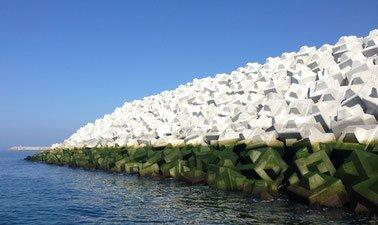
Diseño de diques rompeolas con cubípodos (edX) EdX
Universitat Politècnica de València,UPValenciaX

Diseño de diques rompeolas con cubípodos (edX)

El objetivo del curso esaprender a diseñar diques en talud para los estudios de viabilidad de proyectos que incluyan obras marítimas de abrigo, con especial atención al diseño con mantos de cubípodos. Este es un curso de ingeniería dirigido a profesionales de ingeniería marítima, portuaria y civil. En él se puede aprender a diseñar diques en talud para los estudios de viabilidad de proyectos que incluyan obras marítimas de abrigo, con especial atención al diseño con mantos de cubípodos.

Self Paced
Self-Paced
Railway Engineering: An Integral Approach (edX) EdX
Delft University of Technology,DelftX

Railway Engineering: An Integral Approach (edX)

Discover the science and complexity behind the exciting world of metro, tram and railway systems. Have you ever wondered what it takes to get your train on the right platform at the scheduled time every day? Understanding the complexity behind today’s sophisticated railway systems will give you a better insight into how this safe and reliable transportation system works. We will show you the many factors which are involved and how multiple people, behind the scenes, have a daily task that enables you to get from home to work. Journey with us into the world of rail - a complex system that connects people, cities and countries.

Apr 10th 2024
5-12 Weeks