Electrical Power Generation - An Industrial Outlook (Coursera)

Offered by L&T EduTech,
Electrical Power Generation - An Industrial Outlook (Coursera)

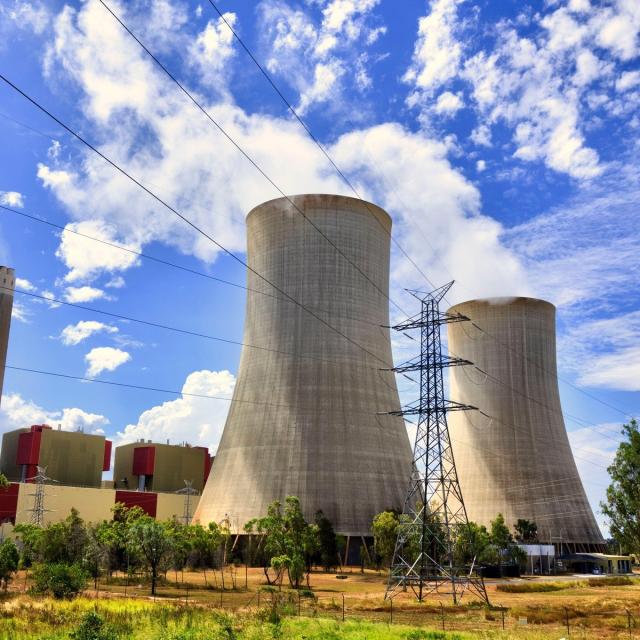
This course explains the complete Power Generation, extensively detailing about the various electrical equipment along with the process of power generation.

Class Deals by MOOC List - Click here and see Coursera's Active Discounts, Deals, and Promo Codes.

Course 1 of 3 in the Power System: Generation, Transmission and Protection Specialization.

Syllabus

WEEK 1
An Introduction to Power Sector Scenario - Generation, Transmission & Distribution of Power
By the end of this module on Distribution Substations, learners will be: history of power generation, methods of power generation, and its various types like sola, wind and nuclear.

WEEK 2
Overview of Electrical Generator and its Auxiliary Systems
Ability to understand and define electrical generator operation and components of various generator auxiliary systems.

WEEK 3
Overview of Electrical System for Power plant
Ability to understand and define components of electrical power generation, power evacuation and power distribution in a typical electrical distribution in a power plant. Students will also get an idea about emergency power.

WEEK 4
Power Plant Control System
To be able to decide right type of control system and other network components and be able to design the complete control system architecture for a power plant
• Able to understand various types of control system used in power plants and their applications. • Able to understand level of automation and control system hierarchy.


Go to Class
MOOC List is learner-supported. When you buy through links on our site, we may earn an affiliate commission.

Related Courses

Electrodynamics: Electric and Magnetic Fields (Coursera) Coursera
Korea Advanced Institute of Science and Technology - KAIST

Electrodynamics: Electric and Magnetic Fields (Coursera)

This course is a continuation of Electrodynamics: An Introduction and Electrodynamics: Analysis of Electric Fields. Here, we will introduce magnetostatics and relate it to the material we learned previously. In addition, we will cover the basics of the electromotive force and how it can be used to build different devices.

Nov 2nd 2026
5-12 Weeks
Mécanique du point matériel (Coursera) Coursera
École Polytechnique Fédérale de Lausanne

Mécanique du point matériel (Coursera)

Pour illustrer les concepts introduits dans la première partie, on traite ici des problèmes pour lesquels le système mécanique peut être considéré comme un point matériel. Cette partie couvre notamment les problèmes à traiter en coordonnées cylindriques ou sphériques, le problème des orbites des planètes et les référentiels accélérés.

Nov 2nd 2026
5-12 Weeks
Análisis de Sistemas de Transporte (Coursera) Coursera
Pontificia Universidad Católica de Chile

Análisis de Sistemas de Transporte (Coursera)

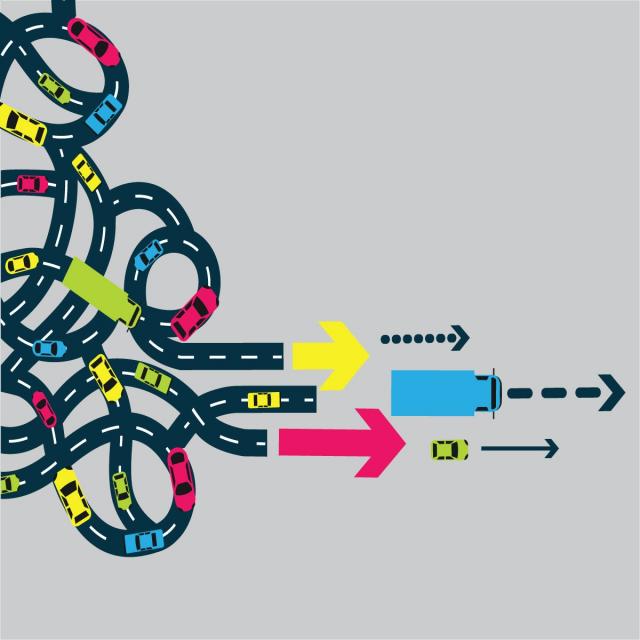
Este curso es una introducción a las metodologías fundamentales para la gestión, planificación y evaluación de sistemas de transporte de pasajeros. Se aprenderán técnicas usadas en la práctica para estimar la demanda, modelar la operación y realizar análisis económicos de proyectos de transporte.

Nov 2nd 2026
5-12 Weeks
Ingeniería de Tráfico (Coursera) Coursera
Pontificia Universidad Católica de Chile

Ingeniería de Tráfico (Coursera)

El curso presenta en primer lugar las principales relaciones que caracterizan la circulación de vehículos y que dan pie a la teoría de circulación de vehículos sobre redes de transporte. Posteriormente se discutirán aspectos relativos al control de tráfico en intersecciones, sean estas de prioridad o semaforizadas. Finalmente, discutiremos sobre las características que presentan algunos modelos dinámicos de tráfico bastante utilizados en la actualidad.

Nov 2nd 2026
4 Weeks
Mastering Statics (Coursera) Coursera
The Hong Kong University of Science and Technology - HKUST

Mastering Statics (Coursera)

Statics is the most fundamental course in Mechanics. In this course, you will learn the conditions under which an object or a structure subjected to time-invariant (static) forces is in equilibrium - i.e. the conditions under which it remains stationary or moves with a constant velocity-. You will also learn how to calculate the reaction forces as well as the internal forces experienced throughout the structure so that later you can properly design and size the foundation and the members of the structure to assure the structure’s safety and serviceability.

Nov 2nd 2026
5-12 Weeks
Silicon Thin Film Solar Cells (Coursera) Coursera
École Polytechnique

Silicon Thin Film Solar Cells (Coursera)

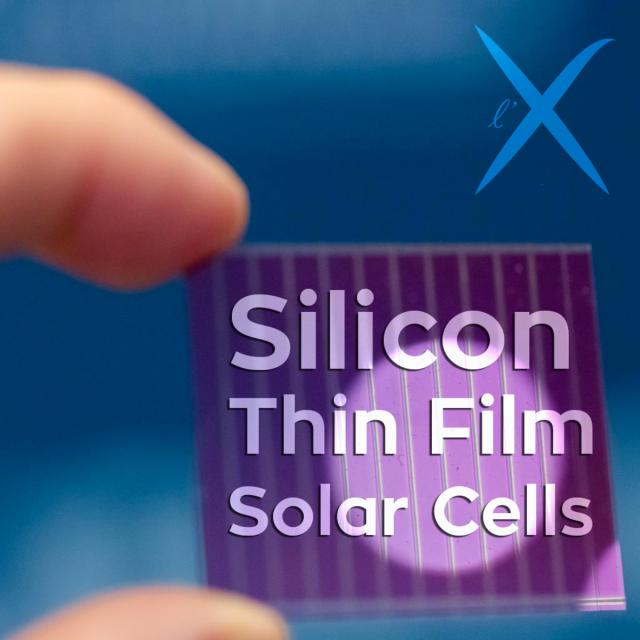
This course consists of a general presentation of solar cells based on silicon thin films. It is the third MOOC of the photovoltaic series of Ecole polytechnique on Coursera. The general aspects of the photovoltaic field are treated in "Photovoltaic Solar Energy". And the detailed description of the crystalline silicon solar cells can be found in "Physics of Silicon Solar Cells".

Nov 2nd 2026
3 Weeks
Applications in Engineering Mechanics (Coursera) Coursera
Georgia Institute of Technology

Applications in Engineering Mechanics (Coursera)

This course applies principles learned in my course “Introduction to Engineering Mechanics” to analyze real world engineering structures. You will need to have mastered the engineering fundamentals from that class in order to be successful in this course offering. This course addresses the modeling and analysis of static equilibrium problems with an emphasis on real world engineering systems and problem solving.

Nov 2nd 2026
5-12 Weeks
Nanotechnology and Nanosensors, Part 2 (Coursera) Coursera
Technion - Israel Institute of Technology

Nanotechnology and Nanosensors, Part 2 (Coursera)

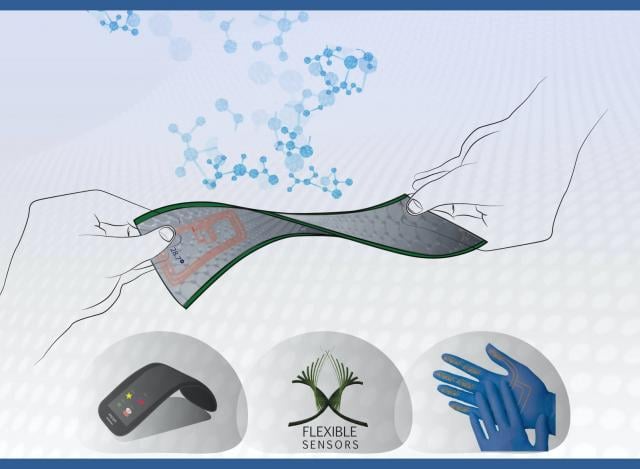
Learn about novel sensing tools that make use of nanotechnology to screen, detect and monitor various events in personal or professional life. Together, we will lay the groundwork for infinite innovative applications, starting from diagnosis and treatments of diseases, continuing with quality control of goods and environmental aspects, and ending with monitoring security issues.

Nov 2nd 2026
5-12 Weeks
Sustainability and the Circular Economy (Coursera) Coursera
University of Colorado Boulder,Siemens

Sustainability and the Circular Economy (Coursera)

As the world’s population continues to rise toward an expected 10 billion citizens by 2050, it is imperative that business practices change to ensure a high quality of life is possible for all of us, both human and non-human. Today’s learners are very aware of this. Moreover, they are highly motivated and have the extraordinary capacity to create a future that provides both economic success and a more enduring, resilient, and sustainable planet. If you are one of these learners, then Sustainability and the Circular Economy is a course for you.

Oct 12th 2026
5-12 Weeks
Material Behavior (Coursera) Coursera
Georgia Institute of Technology

Material Behavior (Coursera)

Have you ever wondered why ceramics are hard and brittle while metals tend to be ductile? Why some materials conduct heat or electricity while others are insulators? Why adding just a small amount of carbon to iron results in an alloy that is so much stronger than the base metal? In this course, you will learn how a material’s properties are determined by the microstructure of the material, which is in turn determined by composition and the processing that the material has undergone.

Nov 2nd 2026
5-12 Weeks
Nanotechnology: A Maker’s Course (Coursera) Coursera
Duke University,University of North Carolina,North Carolina State University

Nanotechnology: A Maker’s Course (Coursera)

How can we create nano-structures that are 10,000 times smaller than the diameter of a human hair? How can we “see” at the nano-scale? Through instruction and lab demonstrations, in this course you will obtain a rich understanding of the capabilities of nanotechnology tools, and how to use this equipment for nano-scale fabrication and characterization.

Nov 2nd 2026
5-12 Weeks
RF and millimeter-Wave Circuit Design (Coursera) Coursera
Eindhoven University of Technology

RF and millimeter-Wave Circuit Design (Coursera)

This unique Master-level course offered by the Center for Wireless Technology Eindhoven (CWT/e) of the Eindhoven University of Technology, The Netherlands, provides students with in-depth knowledge and hands-on experience on RF and mmWave circuit design. The course covers the topics on how to derive the RF wireless systems specifications, and how to design the main building blocks of a transceiver, i.e., low noise amplifier, power amplifier, RF mixers, oscillators, and PLL frequency synthesizers. It is divided into two parts: (1) theoretical lectures will cover the basis of RF and mmWave Circuit Design; and (2) design labs will include simulation and implementation of these circuits.

Nov 2nd 2026
5-12 Weeks