Sustainability and the Circular Economy (Coursera)

Sustainability and the Circular Economy (Coursera)

As the world’s population continues to rise toward an expected 10 billion citizens by 2050, it is imperative that business practices change to ensure a high quality of life is possible for all of us, both human and non-human. Today’s learners are very aware of this. Moreover, they are highly motivated and have the extraordinary capacity to create a future that provides both economic success and a more enduring, resilient, and sustainable planet. If you are one of these learners, then Sustainability and the Circular Economy is a course for you.

Class Deals by MOOC List - Click here and see Coursera's Active Discounts, Deals, and Promo Codes.

Sustainability and the Circular Economy is the first course in the Applied Sustainability for Technical Managers specialization. It aims to provide learners with the strategies and tools to realize their vision by integrating sustainability into everyday life, and in the companies where they work.
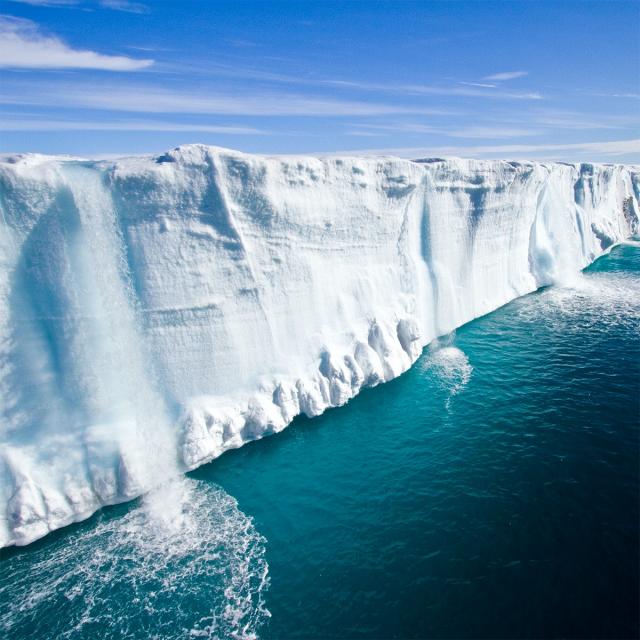
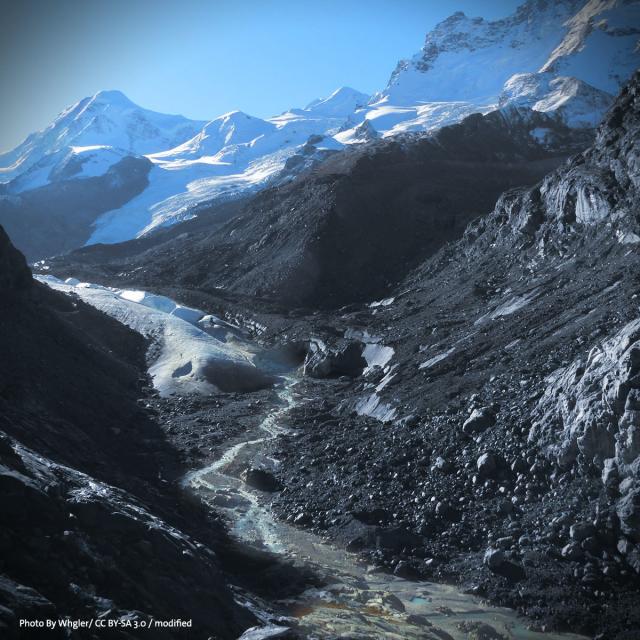
The course opens with an examination of climate change and human impact on the environment, and the opportunities created for innovative solutions that drive real change. We then explore the sources of many of our environmental challenges, and the need to transition to a zero-carbon energy future.
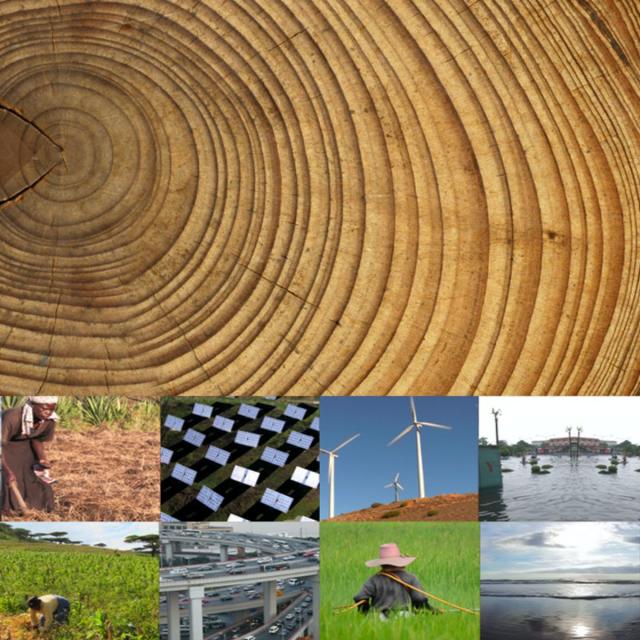
A sustainable future is more than just renewable energy, as we need to pay attention to our ever-growing desire for products that add value to our lives. Therefore, the course explores how we’re electrifying transportation, making our homes more energy efficient, eating more sustainable food grown with regenerative agricultural practices, and wearing clothes designed to last and made from more natural materials using fair and equitable labor.
It is important to recognize that many of the 10 billion global citizens will want the same products and lifestyles as citizens in wealthier industrialized nations. Yet products require materials - and our current extractive approach to resources will not meet this burgeoning demand. The course concludes with an overview of the Circular Economy, an innovative way of decoupling such economic growth from traditional resource extraction.
Sustainability and the Circular Economy provides the foundation for the next two courses in the Applied Sustainability specialization.

What you'll learn

  • Understand the reasons for climate change and its ramifications.
  • Explain how power is generated today, and its associated impact on global warming.
  • Recognize how sustainability applies to transportation, homes and cities, food and fashion.
  • Describe the principles of the Circular Economy, and how the Butterfly Diagram can be used in product design.

Syllabus

Global Challenges and Some Good News
Welcome to Sustainability and the Circular Economy! This first module introduces the course and how it operates. It then exposes you to the major challenges facing the world today, such as climate change, ocean acidification, biodiversity loss, plastic pollution and social inequity. We capture this with a discussion of planetary boundaries (Rockstrom) and the concept of the Anthropocene. The module ends on a high note with people and organizations that are making real change possible.

Sustainability Defined and How We Got Here
This module introduces the classic definition of sustainability and sustainable development (Brundtland Commission), along with contemporary concepts of regenerative and restorative practices. We discuss the IPAT equation as a means of providing a macro-view of environmental impacts as a function of population and affluence. The UN Sustainable Development Goals are covered, with a view to how business can impact these in a positive way. The module concludes with an overview of neoliberal economics and the resulting wealth inequality it led to, and a more positive, inclusive model proposed by Kate Raworth in her book, "Doughnut Economics".

The Science of Climate Change
This module opens with an overview of the greenhouse effect resulting from greenhouse gases, both good and bad. We then illustrate from the Keeling Curve that GHGs are increasing and have been markedly since the dawn of the industrial revolution. We then discuss the relationship between GHGs and anthropogenic sources, meaning mostly fossil fuels, and the evidence linking the two. We cover the Carbon Dioxide Equivalent, and how one calculates it from GHG emissions and their respective global warming potentials (GWP). The Albedo Effect is then covered as a reinforcing mechanism to climate change. Finally, the module covers the Paris Accord and the need for change.

GHGs and Electric Power Generation
This module is all about conventional power generation using coal, natural gas and nuclear energy. The module begins with how coal, oil and natural gas are formed millions of years ago. We then discuss basic units of heat, power and energy, using both English and International units to communicate in a bilingual way. We dive deeper into nuclear energy, its pros and cons, and whether it should be part of a zero-carbon future. The module wraps up with a discussion of the UN's initiatives called Conference of Parties, or COP, and the resulting outcome of the Paris Climate Accord to limit global warming to 2.0o Celsius.

Sustainable Solutions in Daily Life
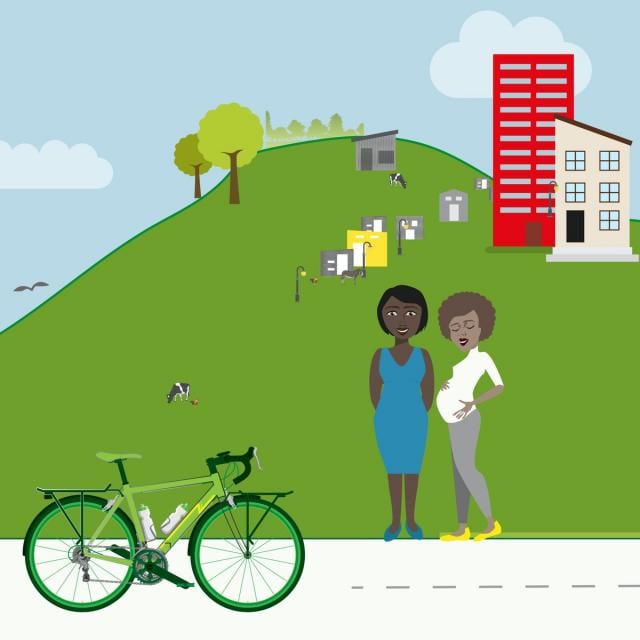
Now that you understand the global challenges facing all of us, this module showcases the emerging solutions demonstrating the value of sustainable products and to identify them. We cover the areas of transportation, noting the rapid transition to Electric Vehicles, and and developments in E-Planes. As billions of people across the globe migrate to the cities to live and work, there is considerable opportunity to design/redesign cities to be more livable, and this module highlights several successes across the world, including green building and retrofit techniques. We then explore sustainability in daily life, discussing the emerging area of Regenerative Agriculture, the process of growing more nutritious food with zero synthetic inputs, while benefitting the soil. How that food is distributed is changing as well, as consumers everywhere are paying attention not only to what they eat but who is providing it. The module then discusses the clothes that we wear, as consumers are becoming increasingly aware that what they put on their bodies is as important as what they put in their bodies. Apparel and the fashion industry are one of the greatest polluters of all industries, and consumers are demanding change. We wrap-up this module with a discussion of how Fast Fashion is giving way to a new model of Slow Fashion.

Introduction to the Circular Economy
In this final module, we transition from greenhouse gases, climate change and power generation to the product lifecycle, introducing the concept of the Circular Economy, and how it differs from today's linear economy. We begin with a brief overview of the linear economy, and how it is challenged to support 8 Billion people on the planet. We then show the three basic principles of the Circular Economy, and how it decouples economic growth from resource extraction. We emphasize the work of the Ellen MacArthur Foundation, going through the Circular Economy Butterfly Diagram in detail, with many examples highlighting how this is put into practice. We conclude with an overview of the recycling process, its successes and current challenges.
Go to Class
MOOC List is learner-supported. When you buy through links on our site, we may earn an affiliate commission.

Related Courses

Energy, Environment, and Everyday Life (Coursera) Coursera
University of Illinois at Urbana-Champaign

Energy, Environment, and Everyday Life (Coursera)

This course teaches you everything you need to know about energy, the environment, and at least a number of things in everyday life. It starts by talking about energy itself and where it comes from. This includes how much we have, who has it, who uses it, and what that all means. The video clips are produced in a fast-paced multimedia format during which Professor Ruzic throws in fun and demonstrations. There are multiple-choice questions to check your understanding and some more in-depth exercises to guide you deeper into the subject.

Jun 8th 2026
5-12 Weeks
Securing Investment Returns in the Long Run (Coursera) Coursera
University of Geneva

Securing Investment Returns in the Long Run (Coursera)

In this course, you will learn about the famous dichotomy between active and passive investing, how to appropriately measure and analyze investment performance and what the future trends in the investment management industry are. You will first learn about absolute and relative performance, risk-adjusted returns and how to decompose investment performance. The focus will then shift to the two main categories of investment vehicles, active and passive funds, and what they entail in terms of expected performance.

Jun 8th 2026
4 Weeks
Arctic Change & the Nexus of Governance, Economics & Culture (Coursera) Coursera
University of Colorado Boulder

Arctic Change & the Nexus of Governance, Economics & Culture (Coursera)

In this course, you will learn how the changing Arctic environment is tied to the growing economic and strategic importance of the North. After setting the stage through a review of the peoples of the Arctic and how they are dealing with change, Arctic governance, economies national defense, attention turns to marine use of the Arctic, oil and gas exploration, mining, fisheries and tourism.

Jun 8th 2026
4 Weeks
Climate Adaptation in Africa (Coursera) Coursera
University of Cape Town

Climate Adaptation in Africa (Coursera)

This course explores why climate change adaptation is important in the African context. Africa is considered one to be one of the most vulnerable regions to climate change. Historically, climate-related hazards such as drought, flooding, pest and disease outbreaks, coastal storms and heat waves have had devastating impacts on people and the environment in which they live.

Jun 8th 2026
5-12 Weeks
Transforming Communities (Coursera) Coursera
University of Colorado Boulder

Transforming Communities (Coursera)

This course focuses on communities and organizations in transition, and using the skills and new knowledge you have to lead change. In this course, we will discuss fundamentals of sustainability and resilience. We then go over the essentials of being a change maker. This course will provide further opportunity for skill building. We will go over asset mapping and needs assessments, two important skills that will be used for you to work with your clients so understand community and organizational needs, and have broad engagement, and use a systems-based approach to so that that the community can define its own needs and identify its own assets. This course will have three modules.

Jun 8th 2026
3 Weeks
The Arctic as a System (Coursera) Coursera
University of Colorado Boulder

The Arctic as a System (Coursera)

In this course you will first learn about the Arctic as a geographic region, the peoples the Arctic, and the long history of Arctic settlement and exploration. Attention then turns to key features of the Arctic environment – its climate and weather, features of the ocean, sea ice, lands and the Greenland Ice Sheet, and some of the rapid changes being observed.

Jun 8th 2026
5-12 Weeks
Natural Attenuation of Groundwater Contaminants: New Paradigms, Technologies, and Applications (Coursera) Coursera
Rice University

Natural Attenuation of Groundwater Contaminants: New Paradigms, Technologies, and Applications (Coursera)

Cleaning up the large number of groundwater contamination sites is a significant and complex environmental challenge. The environmental industry is continuously looking for remediation methods that are both effective and cost-efficient. Over the past 10 years there have been amazing, important developments in our understanding of key attenuation processes and technologies for evaluating natural attenuation processes, and a changing institutional perspective on when and where Monitored Natural Attenuation (MNA) may be applied.

Jun 8th 2026
5-12 Weeks
Climate change and Indigenous People and local communities (Coursera) Coursera
Universitat Autònoma de Barcelona

Climate change and Indigenous People and local communities (Coursera)

Climate change is a global phenomenon, but its impacts vary among different social groups, who perceive and adapt to climate change impacts in different ways. In this course, you will: a) understand the different debates around climate change impacts on Indigenous Peoples and local communities (IPLC); b) familiarize yourself with different impacts of climate change on IPLC, with the IPLC understanding of climate change impacts and with their strategies to adapt to climate change; and c) learn about different strategies to incorporate Indigenous peoples and local communities in climate change research and policy.

Jun 8th 2026
5-12 Weeks
Sharing Cities: Governance and Urban Sustainability (Coursera) Coursera
Lund University

Sharing Cities: Governance and Urban Sustainability (Coursera)

How can we govern the sharing economy in our cities? This course connects the sharing economy, cities, governance and urban sustainability to provide unique knowledge and insights into sharing cities. We utilize a diversity of leading examples of the emerging sharing economy in cities to bring this course to life. The sharing economy can contribute to social, environmental and economic sustainability, and sharing cities can unlock new opportunities and solve urban challenges by facilitating and applying the sharing economy in urban contexts. But it is imperative that the sharing economy is shaped and designed to advance urban sustainability.

Jun 8th 2026
5-12 Weeks
Hydro, Wind & Solar power: Resources, Variability & Forecast (Coursera) Coursera
École Polytechnique

Hydro, Wind & Solar power: Resources, Variability & Forecast (Coursera)

The development of hydro, wind and solar power is growing strongly with as one objective to limit and reduce greenhouse gas emissions. All these renewable energies are intermittent with more or less strong variability. This course provides the basis for estimating the resource of these different modes of production and understanding the physical causes of intermittency and seasonal variability. The different modes of electricity production are detailed as well as the sensitivity induced by meteorological variations.

Jun 8th 2026
5-12 Weeks
Oil & Gas Industry Operations and Markets (Coursera) Coursera
Duke University

Oil & Gas Industry Operations and Markets (Coursera)

The oil and gas industry has an enormous impact on all aspects of daily life. Individuals, corporations, and national governments make financial and policy decisions based on the cost, use, and availability of these two natural resources. This two-week course looks at the two most fundamental aspects of the oil and gas industry, its operations and markets, each of which is addressed as a separate module in the course.

Jun 10th 2026
2 Weeks
ODS y sostenibilidad: una mirada desde los colegios (Coursera) Coursera
Universidad de los Andes

ODS y sostenibilidad: una mirada desde los colegios (Coursera)

En este curso veremos cómo podemos generar cambios y transformaciones (a nivel individual, organizacional y social) para la sostenibilidad desde la educación formal y no-formal. Partiremos del concepto de los Objetivos de Desarrollo Sostenible (ODS) como un marco potente para generar reflexiones críticas, que nos lleven a generar acciones colectivas desde la escuela en pro de la sostenibilidad.

Jun 8th 2026
4 Weeks