Electric Vehicle Sensors (Coursera)

Electric Vehicle Sensors (Coursera)

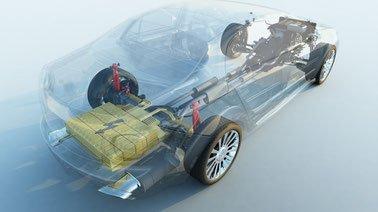
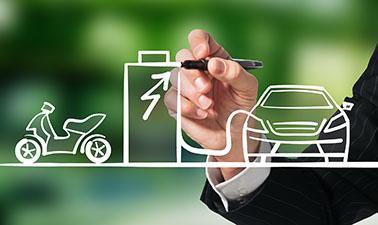
“Electric Vehicle Sensors” starts with a discussion on how electric vehicles work differently from gasoline or diesel fuel powered vehicles and the major types of electric vehicles. It then moves to the unique components of full electric and hybrid electric vehicles, and how in-vehicle and external battery charging systems work. We reference all the sensors that are used for in-vehicle and outside unique components. Then we do a deep dive into how each of these sensors work.

Class Deals by MOOC List - Click here and see Coursera's Active Discounts, Deals, and Promo Codes.

What You will Learn
· Understand traction motor, inverter, transmission and battery charging hardware
· Specify the correct sensor for an electric vehicle application

Syllabus

WEEK 1
How Electric Vehicles Work
In this module you will learn about the major categories of electric vehicles that have been developed so far

WEEK 2
Major Electrical Components
In this module you will learn about the major electrical components in electrical vehicles

WEEK 3
Battery Charging and Measurement
In this module you will learn about the battery chargers and modules and how high voltage and current is measured in these components

WEEK 4
Sensors Critical to EV Performance
In this module students will learn about the technology behind torque and speed sensors and thermistors

Go to Class
MOOC List is learner-supported. When you buy through links on our site, we may earn an affiliate commission.

Related Courses

Recent Advances in Freeform Electronics (Coursera) Coursera
Yonsei University

Recent Advances in Freeform Electronics (Coursera)

In this course, the learners will understand fundamental basic backgrounds of p-n junctions, diodes and MOSFETs (Metal Oxide Semiconductor Field Effect Transistors). Also, recent approaches on flexible / stretchable electronics, transparent optoelectronics, and printed electronics using one dimensional or two dimensional nanomaterials will be introduced.

Oct 5th 2026
5-12 Weeks
Hybrid Vehicles (edX) EdX
Chalmers University of Technology,ChalmersX

Hybrid Vehicles (edX)

Learn to design hybrid powertrains which meet the needs of modern vehicles, by combining the strengths of both electric motors and combustion engines. Why are hybrid vehicles still more common than battery electric ones? Why are electric vehicles still more expensive than conventional or hybrid ones? In this course, you will get the answers to this and much more.

Self Paced
Self-Paced
Electric Cars: Introduction (edX) EdX
Delft University of Technology,DelftX

Electric Cars: Introduction (edX)

Get a basic understanding of electric cars and learn about leading technologies, development of profitable business models and effective policies. Electric vehicles are the future of transportation. Electric mobility has become an essential part of the energy transition, and will imply significant changes for vehicle manufacturers, governments, companies and individuals.

Self Paced
Self-Paced
Powering the Drive: Unveiling EV Electronics (Coursera) Coursera
Coursera Instructor Network

Powering the Drive: Unveiling EV Electronics (Coursera)

In the rapidly advancing world of electric vehicles (EVs), understanding the application of power electronics is essential for both professionals and enthusiasts. Welcome to our comprehensive video course on the "Electric Vehicle Power Electronics " This course explores the pivotal role and significance of power electronics in the EV ecosystem. As EVs become a prominent part of the transportation landscape, understanding the intricacies of power electronics is crucial. This course equips you with the knowledge and skills to comprehend, utilize, and optimize power electronics for efficient and sustainable electric vehicle operation.

Oct 19th 2026
1 Week
Electrifying the Journey: On-Board Charging Systems for EVs (Coursera) Coursera
Starweaver

Electrifying the Journey: On-Board Charging Systems for EVs (Coursera)

Electrifying the Journey: On-Board Charging Systems for EVs offers a comprehensive dive into the intricate workings of the electric heart driving modern mobility. Throughout the course, participants will embark on a journey from the foundational principles of charging mechanisms to the nuanced complexities of system maintenance. By the end, they will emerge equipped with a profound understanding of the technological marvels propelling the EV revolution forward.

Oct 12th 2026
4 Weeks
Fundamentals of Robotics & Industrial Automation (Coursera) Coursera
L&T EduTech

Fundamentals of Robotics & Industrial Automation (Coursera)

The "Fundamentals of Robotics & Industrial Automation" course is tailored to provide a comprehensive understanding of essential concepts and practical skills necessary for excelling in the field of collaborative robotics. Through three dynamic modules, participants will explore the intricacies of sensors & transducers in machine tools & robots, servo systems, and interfacing and simulation techniques.

Oct 12th 2026
3 Weeks
Games, Sensors and Media (Coursera) Coursera
University of California, Irvine

Games, Sensors and Media (Coursera)

You will learn to make fluid digital interactive experiences that are suitable for gaming and use the advanced sensor hardware built into the iPhone and iPad. This includes drawing 2D graphics, playing sounds and music, integrating with Game Center, the iOS physics engine and detecting device orientation and location.

Oct 26th 2026
4 Weeks
Basic Robotic Behaviors and Odometry (Coursera) Coursera
University of Colorado Boulder

Basic Robotic Behaviors and Odometry (Coursera)

"Basic Robotic Behaviors and Odometry" provides you with an introduction to autonomous mobile robots, including forward kinematics (“odometry”), basic sensors and actuators, and simple reactive behavior. This course is centered around exercises in the realistic, physics-based simulator, “Webots”, where you will experiment in a hands-on manner with simple reactive behaviors for collision avoidance and line following, state machines, and basic forward kinematics of non-holonomic systems.

Oct 5th 2026
5-12 Weeks