3D Graphics in Android: Sensors and VR (Coursera)

3D Graphics in Android: Sensors and VR (Coursera)

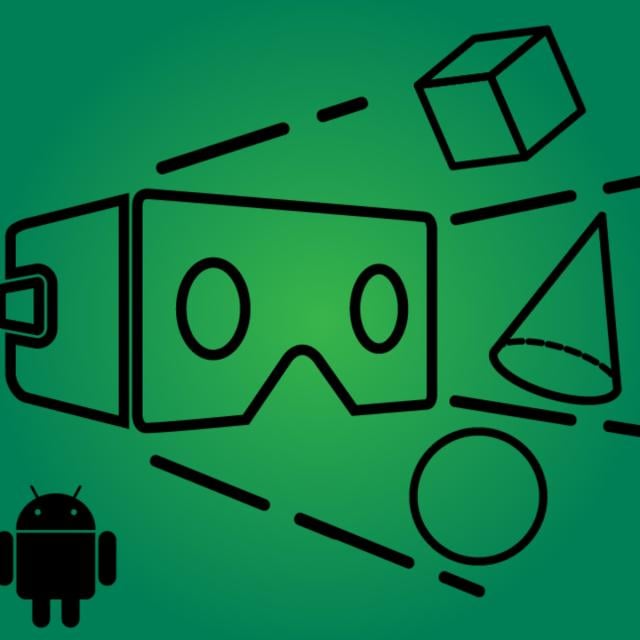
This course is an ideal introduction into creating virtual environments in Android. This course is unique as it covers a range of tools and techniques to create immersive 3D environments, giving you a rounded skill set in this growing field. By the end of this course, you will really be able to bring your VR ideas to life!

Class Deals by MOOC List - Click here and see Coursera's Active Discounts, Deals, and Promo Codes.

The first part of the course covers animation, lighting and reflection. We then move onto textures and handling multiple 3D objects. Finally, we'll look at housing all of this within a binocular view to create a VR experience.
There are practical exercises throughout the course to apply your understanding, and there is a summative project which can form part of your professional portfolio.
This course assumes a knowledge of Android programming and OpenGL. I recommend completing my two Coursera courses on these topics, as these are the perfect primer.

Course 3 of 4 in the Advanced App Development in Android Specialization.

Syllabus

WEEK 1
Animation, Touch Control and Lighting
In this first module, we're going to look at some core functions which we can use within Android to create 3D objects and scenes. We'll begin by looking at how we can add animation to 3D objects and make these interactive using touch control. We'll then look at using lighting and reflection to make our 3D objects look more realistic.

WEEK 2
Textures, Multiple Objects and Blending
In this module, we're going to look at making scenes and objects even more realistic. We'll begin by learning how to apply textures to objects. We'll then look at creating multiple 3D objects and how to combine these using transparency and blending.

WEEK 3
Creating a virtual environment
In this module, we'll build on the topics we've covered so far to create interactive virtual environments. We'll begin by looking at what sensors are available on Android phones and how we can use them. We'll then look at the frame buffer and the effects we can produce with it. Finally, we'll look at implementing the VR binocular view.

WEEK 4
Create a VR app
In this final module, you will apply everything you have learned into a summative assignment by creating a VR app which uses binocular view.
Go to Class
MOOC List is learner-supported. When you buy through links on our site, we may earn an affiliate commission.

Related Courses

3D Models for Virtual Reality (Coursera) Coursera
University of London,Goldsmiths, University of London

3D Models for Virtual Reality (Coursera)

This course will begin your journey to creating Virtual Reality experiences. A Virtual Reality experience is a new world that you step into and are entirely immersed in. Creating a VR experience means creating that world and all the objects in it. In this course you will learn the basics of 3D graphics: how we create objects and how to lay them out to create an environment. You will learn techniques like materials and texturing that make your objects appear realistic. You will also learn about audio techniques to ensure that your experiences sound great as well as looking great.

Jun 8th 2026
4 Weeks
Basic Robotic Behaviors and Odometry (Coursera) Coursera
University of Colorado Boulder

Basic Robotic Behaviors and Odometry (Coursera)

"Basic Robotic Behaviors and Odometry" provides you with an introduction to autonomous mobile robots, including forward kinematics (“odometry”), basic sensors and actuators, and simple reactive behavior. This course is centered around exercises in the realistic, physics-based simulator, “Webots”, where you will experiment in a hands-on manner with simple reactive behaviors for collision avoidance and line following, state machines, and basic forward kinematics of non-holonomic systems.

Jun 1st 2026
5-12 Weeks
Introduction to VR Programming, Design, and Unity (FutureLearn) FutureLearn
VR Voom

Introduction to VR Programming, Design, and Unity (FutureLearn)

Step into the world of VR game development, learn the basics of programming language, and even create your own 2D game. Learn how to design, program, and create your very own VR games. The gaming industry has grown exponentially, outperforming both movies and sports combined in 2020. And VR is the newest, exciting innovation taking the industry by storm.

Jun 27th 2022
5-12 Weeks
3D Graphics for Web Developers (FutureLearn) FutureLearn
Universitat Pompeu Fabra

3D Graphics for Web Developers (FutureLearn)

Use WebGL to develop high-quality, interactive 3D graphics applications that run natively in browsers. With the advent of WebGL, it is now possible to develop high-quality, interactive 3D graphics applications, which run natively in web browsers. However, to do this, you need to be proficient in both web development and 3D programming.

No sessions available
5-12 Weeks
Embedded Smart Home (openHPI) OpenHPI
Hasso-Plattner-Institut

Embedded Smart Home (openHPI)

Herzlich Willkommen zum interaktiven Kurs „Embedded Smart Home“. Wir freuen uns, Sie in die Welt des Smart Home zu entführen. Während des Kurses bekommen Sie Einblicke in die Umsetzung eines Smart Home Projekts auf Basis eines Raspberry Pi und unter Nutzung von Sensoren, Aktuatoren und Displays. Um für die Programmierung gewappnet zu sein, können Sie Ihr Wissen aus dem zurückliegenden Python Kurs ("Spielend Programmieren lernen") nutzen und vertiefen. Wer diesen Kurs noch nicht besucht hat, kann dies auch jetzt noch im Archivmodus machen.

Self Paced
Self-Paced
Quantum Detectors and Sensors (edX) EdX
Purdue University,PurdueX

Quantum Detectors and Sensors (edX)

Learn how to analyze and design quantum sensors and devices that extract maximal information from the world around us. Classical detectors and sensors are ubiquitous around us from heat sensors in cars to light detectors in a camera cell phone. Leveraging advances in the theory of noise and measurement, an important paradigm of quantum metrology has emerged. Here, ultra-precision measurement devices collect maximal information from the world around us at the quantum limit.

Aug 21st 2023
13-24 Weeks
Models in Architecture – design through physical & digital models (edX) EdX
Delft University of Technology,DelftX

Models in Architecture – design through physical & digital models (edX)

Learn to develop your architectural designs by using scale models as well as Virtual Reality representations. Physical and digital design skills are key to practitioners in art, design, and engineering, as well as many other creative professions. Models are essential in architecture. In design practice all kinds of physical scale models and digital models are used side by side.

No sessions available
5-12 Weeks
Introduction to Sensory Science (Coursera) Coursera
University of California, Davis

Introduction to Sensory Science (Coursera)

Did you know there's a science behind the flavors, textures, and aromas of the foods we eat, and why our favorite products look, feel, and smell the way that they do? In this course, we will provide a broad overview of the field of sensory science - its history, definition, and applications in academic research and in the consumer-packaged goods industry. We’ll also discuss how sensory science impacts other industries, including the medical sciences and information processing.

Jun 1st 2026
4 Weeks
Introduction to Virtual Reality (Coursera) Coursera
University of London,Goldsmiths, University of London

Introduction to Virtual Reality (Coursera)

This course will introduce you to Virtual Reality (VR). The course will teach you everything from the basics of VR- the hardware and the history of VR- to different applications of VR, the psychology of Virtual Reality, and the challenges of the medium. The course is designed for people who are new to VR as a medium. You may have experienced some virtual reality before, and may have some hardware- but this course is suitable to individuals who have never experienced VR and those who do not have much hardware- we will explain Mobile VR as well as devices such as the Oculus Rift and HTC Vive.

Jun 8th 2026
4 Weeks
Nanotechnology and Nanosensors, Part 2 (Coursera) Coursera
Technion - Israel Institute of Technology

Nanotechnology and Nanosensors, Part 2 (Coursera)

Learn about novel sensing tools that make use of nanotechnology to screen, detect and monitor various events in personal or professional life. Together, we will lay the groundwork for infinite innovative applications, starting from diagnosis and treatments of diseases, continuing with quality control of goods and environmental aspects, and ending with monitoring security issues.

May 18th 2026
5-12 Weeks