EdX

Hybrid Vehicles (edX)

Hybrid Vehicles (edX)

Learn to design hybrid powertrains which meet the needs of modern vehicles, by combining the strengths of both electric motors and combustion engines. Why are hybrid vehicles still more common than battery electric ones? Why are electric vehicles still more expensive than conventional or hybrid ones? In this course, you will get the answers to this and much more.

Class Deals by MOOC List - Click here and see EdX's Active Discounts, Deals, and Promo Codes.

While electric motors can improve vehicles regarding performance, energy consumption and emissions, they suffer from high cost and weight of batteries. Smart combinations of electric motors and combustion engines in a hybrid powertrain can combine these strengths with the advantages of combustion engines.
This course is aimed at learners with a bachelor's degree or engineers in the automotive industry who need to develop their knowledge about hybridpowertrains.

Inthis course, we willexamine different mechanical layouts of hybrid powertrains and how they influence the performance and complexity of the powertrain. Different sizing of powertrains in micro, mild, full hybrids, as well as plug-in hybrids, is also discussed and you'll learn how they can be modelled and analyzed for example by simulation of driving cycles. You will also learn about the Energy Management system and how this controls the hybrid powertrain modes and when to charge and discharge the battery.
This course is part of the Emerging Automotive Technologies MicroMasters® Program and part of the Battery Electric Vehicles and Hybrid Vehicles Professional Certificate.

What you'll learn

  • How to combine the strengths of electric and conventional powertrains
  • Pros and cons of different types of hybrid powertrains
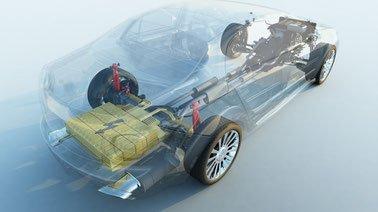
  • Sizing of theelectric machine, battery and combustion engine
  • How to control a hybrid powertrain
  • Simulate a hybrid powertrain and its controller
  • Analyze cost-effectiveness of different types of hybrid powertrains

Go to Class
MOOC List is learner-supported. When you buy through links on our site, we may earn an affiliate commission.

Related Courses

Sensor Fusion and Non-linear Filtering for Automotive Systems (edX) EdX
Chalmers University of Technology,ChalmersX

Sensor Fusion and Non-linear Filtering for Automotive Systems (edX)

Learn fundamental algorithms for sensor fusion and non-linear filtering with application to automotive perception systems. In this course, we will introduce you to the fundamentals of sensor fusion for automotive systems. Key concepts involve Bayesian statistics and how to recursively estimate parameters of interest using a range of different sensors.

Self Paced
Self-Paced
Electric Vehicles and Mobility (Coursera) Coursera
École des Ponts ParisTech

Electric Vehicles and Mobility (Coursera)

The purpose of Electric Vehicles and Mobility is to help you, whatever your profile, your training or your country, find your own answers to questions such as: - Will electric vehicles be the last to be allowed in megalopolises in the 21st century? - Does the environmental gain from vehicle electrification justify heavy investment in charging infrastructure? - Are electric vehicles only for wealthy people in developed countries?

Aug 24th 2026
5-12 Weeks
Multi-Object Tracking for Automotive Systems (edX) EdX
Chalmers University of Technology,ChalmersX

Multi-Object Tracking for Automotive Systems (edX)

Learn how to localize and track dynamic objects with a range of applications including autonomous vehicles. Autonomous vehicles, such as self-driving cars, rely critically on an accurate perception of their environment. In this course, we will teach you the fundamentals of multi-object tracking for automotive systems.

Self Paced
Self-Paced
Electric Two-and-Three-Wheelers: Steering the Mobility Revolution (FutureLearn) FutureLearn
RWTH Aachen,Transforming Urban Mobility Initiative - TUMI,GIZ,PEM Motion

Electric Two-and-Three-Wheelers: Steering the Mobility Revolution (FutureLearn)

Join this six-week course to explore the surging popularity of electric two-and-three-wheelers across the globe. The electric transportation sector is a rapidly changing industry that relies on innovative leaders to help shape policy and strive to create empowering solutions for the future. This six-week course offers an in-depth look into the surging popularity of electric two-and-three-wheelers across the globe, particularly in the Global South.

Mar 23rd 2026
5-12 Weeks
Electric Vehicle Operation and Diagnosis (Coursera) Coursera
Starweaver

Electric Vehicle Operation and Diagnosis (Coursera)

"Electric Vehicle Operation and Diagnosis" is a course tailored to meet the increasing demand for professionals skilled in troubleshooting electric vehicles (EVs). Participants will gain a solid understanding of EV fundamentals, system operations, and diagnostic techniques. The course emphasizes environmental benefits and sustainable practices in transportation.

Sep 14th 2026
4 Weeks
The Resilient and Renewable Grid: How Microgrids are Revolutionizing Energy Systems (edX) EdX
University of Alaska Fairbanks,AlaskaX

The Resilient and Renewable Grid: How Microgrids are Revolutionizing Energy Systems (edX)

A foundational course on microgrid systems design with an emphasis on community-based projects and non-grid connected remote systems. The electric grid of the future will need to be more resilient, decentralized, and capable of integrating more distributed energy resources including on-site renewable energy technologies, energy storage and even electric vehicle (EV) charging. Microgrids are an important building block in designing this sustainable grid architecture of the future. This course covers fundamental concepts of microgrid design from a community-centric perspective and emphasizes a holistic approach to energy systems management.

Self Paced
Self-Paced
Decision-Making for Autonomous Systems (edX) EdX
Chalmers University of Technology,ChalmersX

Decision-Making for Autonomous Systems (edX)

Learn effective tactics for making key decisions when working with autonomous, self-driving vehicles. In autonomous vehicles such as self-driving cars, we find a number of interesting and challenging decision-making problems. Starting from the autonomous driving of a single vehicle, to the coordination among multiple vehicles. This course will teach you the fundamental mathematical model for many of these real-world problems.

Self Paced
Self-Paced
Model-Based Automotive Systems Engineering (edX) EdX
Chalmers University of Technology,ChalmersX

Model-Based Automotive Systems Engineering (edX)

Learn how to model and simulate system dynamics in automotive engineering. Modeling, control design, and simulation are important tools supporting engineers in the development of automotive systems, from the early study of system concepts (when the system possibly does not exist yet) to optimization of system performance. This course provides a theoretical basis to model-based control design with the focus on systematically develop mathematical models from basic physical laws and to use them in control design process with specific focus on automotive applications.

Self Paced
Self-Paced
Electric Cars: Introduction (edX) EdX
Delft University of Technology,DelftX

Electric Cars: Introduction (edX)

Get a basic understanding of electric cars and learn about leading technologies, development of profitable business models and effective policies. Electric vehicles are the future of transportation. Electric mobility has become an essential part of the energy transition, and will imply significant changes for vehicle manufacturers, governments, companies and individuals.

Self Paced
Self-Paced
Electric Vehicle Sensors (Coursera) Coursera
University of Colorado Boulder

Electric Vehicle Sensors (Coursera)

“Electric Vehicle Sensors” starts with a discussion on how electric vehicles work differently from gasoline or diesel fuel powered vehicles and the major types of electric vehicles. It then moves to the unique components of full electric and hybrid electric vehicles, and how in-vehicle and external battery charging systems work. We reference all the sensors that are used for in-vehicle and outside unique components. Then we do a deep dive into how each of these sensors work.

Aug 24th 2026
4 Weeks