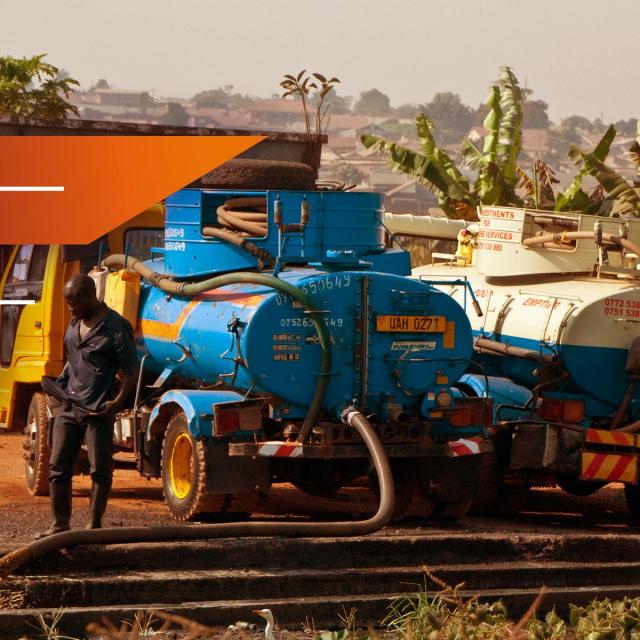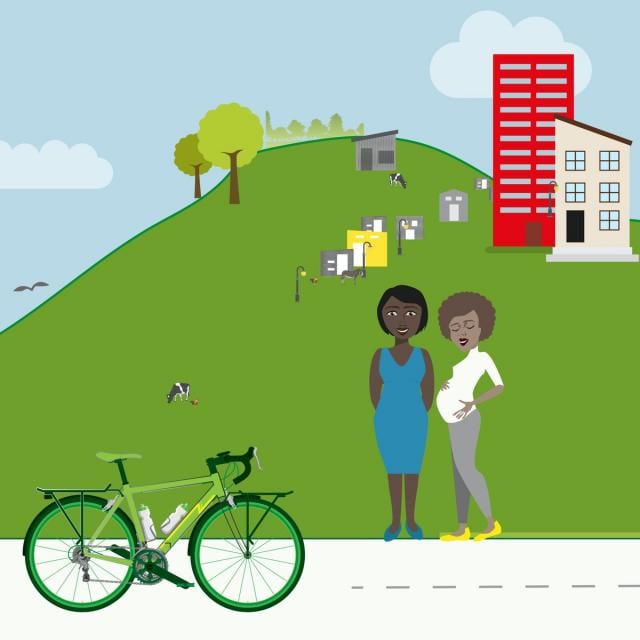
The purpose of Electric Vehicles and Mobility is to help you, whatever your profile, your training or your country, find your own answers to questions such as: - Will electric vehicles be the last to be allowed in megalopolises in the 21st century? - Does the environmental gain from vehicle electrification justify heavy investment in charging infrastructure? - Are electric vehicles only for wealthy people in developed countries?
Class Deals by MOOC List - Click here and see Coursera's Active Discounts, Deals, and Promo Codes.
This course will allow you to acquire elements from engineering science, sociology, environmental science, political science, economics, management science, in order to evaluate, analyze and implement the diffusion of electric vehicles where their use is relevant.
This MOOC is the English version of Mobilités et véhicules électriques; in the lecture videos, the teachers speak in French, nevertheless their presentation is in English and English subtitles are available.
Groupe Renault and ParisTech schools have been working together for almost 15 years on topics related to sustainable mobility. Together, they created two Master programs (Transport and Sustainable Development in 2004, Mobility and Electric Vehicles in 2010) and the Sustainable Mobility Institute Renault-ParisTech in 2009, to support ongoing changes. Electric Vehicles and Mobility is the result of this shared history and was developed from a course delivered within the Master Mobility and Electric Vehicles, led by Arts et Métiers ParisTech in partnership with Ensta ParisTech, Mines ParisTech and École des Ponts ParisTech.
Syllabus
Welcome
A few words about the course and how it works.
We kick off this course with a video presentation of Electric Vehicles and Mobility. We then detail the course overview and give the syllabus, explain the genesis of this MOOC: the partnership between École des Ponts ParisTech and Groupe Renault Corporate Foundation. Finally, we introduce the members of the technical, educational and scientific team.
The second section gives you the floor: you can introduce yourself to other learners through the forum.
Chapter 1 - Understand Mobility and its evolutions
In this first chapter we will focus on mobility, we will characterize it according to urban forms and lifestyles. Then, we will study more specifically electric mobility and its evolution over time, which will allow us to analyze the changes induced by the electric vehicle on the mobility system.
In this chapter, each “class” (video Lecture) is preceded by a video More on method that defines a tool or concept used in the lecture and is followed by a video Do you know that? which widens the horizon of the course or enlights it from a particular angle.
Finally, you will be able to test your understanding in the following section devoted to the assessment of the week in a graded quiz (some single-answer questions, some multiple-answer questions). This evaluation concerns only the videos Lecture and is required to obtain the certificate.
Week 1 Assessment
Chapter 2 – Electric Mobility and Environmental Impact Reduction
In this chapter, we will study the issues of climate change and then conduct a prospective analysis of the evolution of greenhouse gases emissions throughout the 21st century.We will then examine the role of transport in terms of local air pollution and noise.To determine the environmental performance of different types of vehicles, we will present life-cycle analysis and then mobilize this method to compare the performance of thermal and electric vehicles in terms of preservation of the local and global environment.
The chapter consists of 6 videos Lecture and one More on method to define what life-cycle analysis is. It is supplemented by an interview of an expert from Groupe Renault to deal specifically with the subject of batteries from the point of view of their impact on the environment.
The evaluation of this chapter, in the form of a graded quiz, is in the following section. This evaluation concerns only the videos Lecture and is required to obtain the certificate.
Week 2 Assessment
Chapter 3 – Economic Analysis
We will use in this chapter the economic analysis to shed light on the choice between thermal and electric car.
After presenting a few tools and concepts of economic analysis in the video More on method, we will use this analytical framework to evaluate the costs and benefits associated with the electrification of the fleet, from the point of view of the buyers as well as that of the producer, taking into account the cost of batteries and charging infrastructure, but also the environmental gains and tax revenue changes for the State.Then we will discuss the macroeconomic issues of the electric vehicle before looking at the demand and potential demand for electric vehicles at the micro level.
The evaluation of this chapter, in the form of a graded quiz, is in the following section. This evaluation concerns only the videos Lecture and is required to obtain the certificate.
Week 3 Assessment
Chapter 4 – Electric Mobility and Infrastructures: Technical and Economic Dimensions
Although electric vehicles run on the same roads as thermal vehicles, they require some specific infrastructures. We will discuss here the technical and economic dimensions of these infrastructures in France, in Europe and worldwide. This analysis will lead us to take an interest in the various business models of the electric vehicle.
The course will be completed by a video More on method explaining the balance of supply and demand on electricity networks.
This chapter also includes two Do you know that?, one on the charging stations, the other on electricity storage, as well as interviews of experts from Groupe Renault to complete our knowledge of infrastructure.
As with all chapters, you will have the opportunity in the next session to test your understanding of the material through a quiz. This evaluation concerns only the videos Lecture and is required to obtain the certificate.
Week 4 Assessment
Chapter 5 – Electric Mobility Today
So far, we have discussed environmental issues, the macro and microeconomic effects of electric mobility, infrastructure needs of the electric vehicle and various business models associated with it. We can now look at electric vehicle markets.
In this chapter, we will first draw up an inventory of electric vehicle markets in France, in Europe and worldwide. Then, we will study the supporting public policies that could accompany the take-off of these markets at the French, European and global levels.
This chapter also includes three videos Do you know that? that will improve our knowledge of the different types of electric vehicles.
The graded assessment for chapters 5 and 6 will be found in the section following chapter 6.
Chapter 6 - Prospective: The Road to Electrification
In this chapter we will explore how the electric vehicle may be deployed over the course the 21st century. To do this, we will explicitly use a prospective approach aimed at exploring the future rather than predicting it.
We will begin by decomposing the main instruments to reduce the environmental impacts of transport through the ASIF (Activity Structure Intensity Fuel) approach, then study the crucial issue of the deployment of charging infrastructures. Finally, we will examine the role of hybridization as a transition technology to the electric vehicle.
The course is followed by an interview of an expert from AVERE-France to broaden our point of view on hybridization and to discover advances in battery life.
You will find in the following session the graded assessment for both chapter 5 and 6. This evaluation concerns only the videos Lecture and is required to obtain the certificate.
Week 5 Assessment
Chapter 7 – Electric Mobility, Connected Mobility, Autonomous Mobility
In this chapter we will explore how the deployment of the electric vehicle is combined with other ongoing developments in the field of mobility, particularly in connection with the digital transformation of mobility systems.
We will begin with a discussion of the ongoing development of shared mobility services and the strengths and limitations of electric vehicles as regards their use in such services. We will then discuss the evolution of vehicle connectivity and explore the opportunities that it presents for the deployment of the electric vehicle. We will clarify the distinction among the different levels of vehicle automation through a video Do you know that?.
The course is enriched by an interview of an expert from Groupe Renault who discusses various examples of experiments with automated electric vehicles.
The graded assessment for chapters 7 and 8 will be found in the section following chapter 8.
Chapter 8 - Electric Mobility for All: Utopia or Obviousness
Introducing this MOOC, we asked whether electric vehicle is only for rich people in 'the North'. This chapter explicitly aims to help you to build your answers to this question. It will first discuss the possible diffusion of the electric vehicle in the Bottom-Of-Pyramid markets, that is to say the poorest (though, unfortunately, most numerous) population categories. It will then discuss the possibility for the countries in 'the South' to go straight to electric mobility, without going through the same historical development of thermal mobility as the one that countries in the North have experienced. We will therefore analyze the conditions of a leapfrogging in the field of mobility like that which has been operated in the telecommunications field where the cellular phone has been deployed in countries that have never deployed an extensive wired network.
A last interview of an expert from Groupe Renault will conclude this course on a discussion of the business model of the electric vehicle that would allow mobility for all.
Finally, you will find the graded assessment for both chapter 7 and 8 in the following section. This evaluation concerns only the videos Lecture and is required to obtain the certificate.
Week 6 Assessment
Conclusion
It's time to conclude!