The Road to Autonomy: Exploring EV Technologies (Coursera)

The Road to Autonomy: Exploring EV Technologies (Coursera)

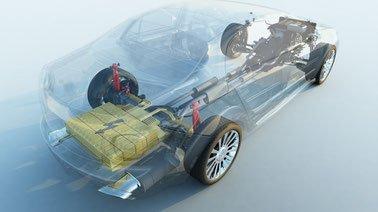
Electric Vehicle Autonomous Technologies is a dynamic and forward-looking course that covers the transformative realm of autonomous electric vehicles (AEVs). In an era where transportation is on the brink of a revolution, this course provides a setting to analyze the fusion of electric propulsion and autonomous driving. It explores the convergence of cutting-edge technologies that are reshaping the automotive landscape, offering learners a journey into the future of mobility.

Class Deals by MOOC List - Click here and see Coursera's Active Discounts, Deals, and Promo Codes.

In the first part of this course, we embark on an exploration of the foundations of AEVs. We take a deep dive into the history and evolution of autonomous electric vehicles, tracing their roots from early experiments to the present day. Learners will gain an appreciation of the importance of AEVs in reducing emissions, enhancing safety, and revolutionizing transportation in urban environments.
The second segment of the course immerses learners in the heart of AEV technology—the sensor systems, perception algorithms, and decision-making processes that enable vehicles to navigate autonomously. In the final part of the course, we confront the critical aspects of safety and the challenges that lie ahead for AEVs. Safety is paramount in autonomous driving, as we explore the regulatory frameworks and measures in place to ensure the well-being of passengers and pedestrians alike.
This course is designed for electric vehicle (EV) enthusiasts interested in the future of electric and autonomous vehicles.
It is recommended to complete the basic course on electric vehicle technology before taking this course.

What you'll learn

  • Evaluate the basic concepts, design elements, and performance of autonomous electric vehicles.
  • Explore the features of sensor systems and perception as applied for autonomous driving.
  • Evaluate the principal safety measures required to facilitate mobility in autonomous electric vehicles.
  • Identify common challenges in AEV technology and what industry stakeholders are identifying as potential solutions.

Syllabus

The Road to Autonomy: Exploring Electric Vehicle Technologies
Electric Vehicle Autonomous Technologies is a dynamic and forward-looking course that covers the transformative realm of autonomous electric vehicles (AEVs). In an era where transportation is on the brink of a revolution, this course provides a setting to analyze the fusion of electric propulsion and autonomous driving. It explores the convergence of cutting-edge technologies that are reshaping the automotive landscape, offering learners a journey into the future of mobility.

Go to Class
MOOC List is learner-supported. When you buy through links on our site, we may earn an affiliate commission.

Related Courses

Verification and Synthesis of Autonomous Systems (Coursera) Coursera
University of Colorado Boulder

Verification and Synthesis of Autonomous Systems (Coursera)

This course will provide different techniques on the verification of autonomous systems against stability, regular, or omega-regular properties. Such techniques include Lyapunov theories, reachability analysis, barrier certificates, and model checking. Finally, it will introduce several techniques on designing controllers enforcing properties of interest over the original autonomous systems.

Aug 31st 2026
4 Weeks
Decision-Making for Autonomous Systems (edX) EdX
Chalmers University of Technology,ChalmersX

Decision-Making for Autonomous Systems (edX)

Learn effective tactics for making key decisions when working with autonomous, self-driving vehicles. In autonomous vehicles such as self-driving cars, we find a number of interesting and challenging decision-making problems. Starting from the autonomous driving of a single vehicle, to the coordination among multiple vehicles. This course will teach you the fundamental mathematical model for many of these real-world problems.

Self Paced
Self-Paced
Intelligent Systems: An Introduction to Deep Learning and Autonomous Systems (FutureLearn) FutureLearn
University of York

Intelligent Systems: An Introduction to Deep Learning and Autonomous Systems (FutureLearn)

Discover the benefits and risks of deep learning and its uses in systems such as assistive technology and facial recognition. Delve into the inner workings of deep learning. From Ada Lovelace until the first decade of this century, we have relied on expert computer programmers to design and write software.

Self Paced
3 Weeks
Electric Cars: Introduction (edX) EdX
Delft University of Technology,DelftX

Electric Cars: Introduction (edX)

Get a basic understanding of electric cars and learn about leading technologies, development of profitable business models and effective policies. Electric vehicles are the future of transportation. Electric mobility has become an essential part of the energy transition, and will imply significant changes for vehicle manufacturers, governments, companies and individuals.

Self Paced
Self-Paced
Creating EV Charging Hubs: Innovative Design (Coursera) Coursera
Coursera Instructor Network

Creating EV Charging Hubs: Innovative Design (Coursera)

Creating EV Charging Hubs - Innovative Infrastructure Design is a comprehensive course aimed at equipping learners with the knowledge and skills necessary to identify key design and implementation elements, of effective charging infrastructure for electric vehicles. As the world shifts towards sustainable transportation, the demand for efficient, accessible, and intelligent charging solutions is on the rise.

Aug 31st 2026
1 Week
Motion Planning for Self-Driving Cars (Coursera) Coursera
University of Toronto

Motion Planning for Self-Driving Cars (Coursera)

Welcome to Motion Planning for Self-Driving Cars, the fourth course in University of Toronto’s Self-Driving Cars Specialization. This course will introduce you to the main planning tasks in autonomous driving, including mission planning, behavior planning and local planning. By the end of this course, you will be able to find the shortest path over a graph or road network using Dijkstra's and the A* algorithm, use finite state machines to select safe behaviors to execute, and design optimal, smooth paths and velocity profiles to navigate safely around obstacles while obeying traffic laws.

Sep 7th 2026
5-12 Weeks
Electric Vehicle Sensors (Coursera) Coursera
University of Colorado Boulder

Electric Vehicle Sensors (Coursera)

“Electric Vehicle Sensors” starts with a discussion on how electric vehicles work differently from gasoline or diesel fuel powered vehicles and the major types of electric vehicles. It then moves to the unique components of full electric and hybrid electric vehicles, and how in-vehicle and external battery charging systems work. We reference all the sensors that are used for in-vehicle and outside unique components. Then we do a deep dive into how each of these sensors work.

Aug 31st 2026
4 Weeks
CPS Design for Mechatronics, Healthcare, EV & Robotics (Coursera) Coursera
L&T EduTech

CPS Design for Mechatronics, Healthcare, EV & Robotics (Coursera)

This course covers diverse aspects of mechatronics, electric vehicles (EVs), medical devices, and Cyber-Physical Systems (CPS). The Automotive Mechatronics module provides participants with a deep understanding of essential components, emphasizing the analysis of Electronic Control Units (ECUs) and the application of various sensor types and Advanced Driver Assistance Systems in critical automotive functions.

Sep 7th 2026
4 Weeks
Autonomous Aerospace Systems (Coursera) Coursera
University of Naples Federico II

Autonomous Aerospace Systems (Coursera)

The course aims to provide the knowledge needed to design and develop efficient driving and navigation solutions for autonomous vehicles. Driving can be strategic or tactical while navigation is the function that provides information about the position, speed and orientation of the vehicle. It is made by integrating measurement from different sources, such as sensors and receivers.

Aug 31st 2026
5-12 Weeks