EdX

Electric and Conventional Vehicles (edX)

Electric and Conventional Vehicles (edX)

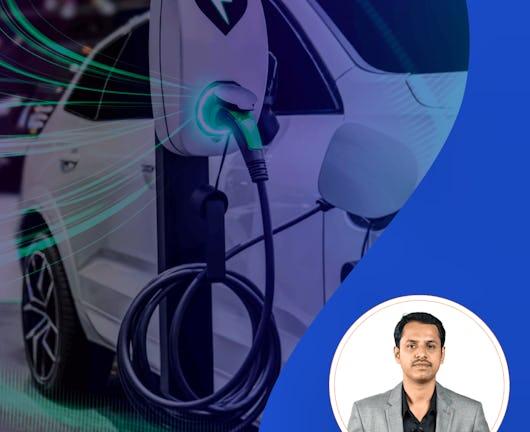
Learn how electric and conventional powertrains work and methods to analyse their performance and energy consumption. Electric powertrains are estimated to propel a large part of road vehicles in the future, due to their high efficiency and zero tailpipe emissions. But, the cost and weight of batteries and the time to charge them are arguments for the conventional powertrain in many vehicles.

Class Deals by MOOC List - Click here and see EdX's Active Discounts, Deals, and Promo Codes.

This makes it important for engineers working with vehicles to understand how both these powertrains work, and how to determine their performance and energy consumption for different type of vehicles and different ways of driving vehicles.
This course is aimed at learners with a bachelor's degree or engineers in the automotive industry who need to develop their knowledge about electric powertrains.

In this course, you will learn how electric and conventional combustion engine powertrains are built and how they work. You will learn methods to calculate their performance and energy consumption and how to simulate them in different driving cycles. You will also learn about the basic function, the main limits and the losses of:

  • Combustion engines,
  • Transmissions
  • Electric machines,
  • Power electronics
  • Batteries.

This knowledge will also be a base for understanding and analysing different types of hybrid vehicles, discussed in the course, Hybrid Vehicles.
As a result of support from MathWorks, students will be granted access to MATLAB/Simulink for the duration of the course.
This course is part of theEmerging Automotive Technologies MicroMasters® Program and part of the Battery Electric Vehicles and Hybrid Vehicles Professional Certificate.

What you'll learn

  • Formulate vehicle performance requirements
  • Translate vehicle requirements to powertrain requirements
  • Sizing powertrain components
  • Strengths and weaknesses of electric and conventional powertrains
  • Driving cycle simulation
  • Determine electricity- or fuel consumption of different powertrains
Go to Class
MOOC List is learner-supported. When you buy through links on our site, we may earn an affiliate commission.

Related Courses

Electric Cars: Technology (edX) EdX
Delft University of Technology,DelftX

Electric Cars: Technology (edX)

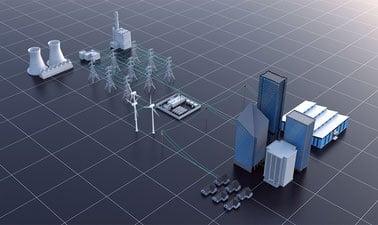
Get an in-depth understanding of the technology behind electric cars. Electric cars are more than a novel means of mobility. They have been recognized as an essential building block of the energy transition. Fulfilling their promise will imply a significant change in the technical, digital and social dimensions of transport and energy infrastructure. If you are interested in learning about the state-of-the-art technology behind electric cars, then this is the course for you!

Self Paced
Self-Paced
Current-Mode Control (Coursera) Coursera
University of Colorado Boulder

Current-Mode Control (Coursera)

This is Course #4 in the Modeling and Control of Power Electronics course sequence. The course is focused on current-mode control techniques, which are very frequently applied in practical realizations of switched-mode. Practical advantages of peak current mode control are discussed, including built-in overcurrent protection, simpler and more robust dynamic responses, as well as abilities to ensure current sharing in parallel connected converter modules.

Jun 22nd 2026
4 Weeks
Converter Control (Coursera) Coursera
University of Colorado Boulder

Converter Control (Coursera)

This course teaches how to design a feedback system to control a switching converter. The equivalent circuit models derived in the previous courses are extended to model small-signal ac variations. These models are then solved, to find the important transfer functions of the converter and its regulator system. Finally, the feedback loop is modeled, analyzed, and designed to meet requirements such as output regulation, bandwidth and transient response, and rejection of disturbances.

Jun 22nd 2026
4 Weeks
Introducción a la programación en Java: estructuras de datos y algoritmos (edX) EdX
Universidad Carlos III de Madrid - UC3M,UC3Mx

Introducción a la programación en Java: estructuras de datos y algoritmos (edX)

¡Aprende a mejorar tu código en Java utilizando estructuras de datos fundamentales y potentes algoritmos de programación! En este curso introductorio de java aprenderás programación en Java de forma fácil e interactiva. Trabajarás con estructuras de datos fundamentales, tales como listas, pilas, colas y árboles, sobre las cuales se presentarán algoritmos para insertar, eliminar, buscar y ordenar información de una manera eficiente.

Self Paced
Self-Paced
Converter Circuits (Coursera) Coursera
University of Colorado Boulder

Converter Circuits (Coursera)

This course introduces more advanced concepts of switched-mode converter circuits. Realization of the power semiconductors in inverters or in converters having bidirectional power flow is explained. Power diodes, power MOSFETs, and IGBTs are explained, along with the origins of their switching times. Equivalent circuit models are refined to include the effects of switching loss. The discontinuous conduction mode is described and analyzed. A number of well-known converter circuit topologies are explored, including those with transformer isolation.

Jun 22nd 2026
4 Weeks
Electric Vehicle Operation and Diagnosis (Coursera) Coursera
Starweaver

Electric Vehicle Operation and Diagnosis (Coursera)

"Electric Vehicle Operation and Diagnosis" is a course tailored to meet the increasing demand for professionals skilled in troubleshooting electric vehicles (EVs). Participants will gain a solid understanding of EV fundamentals, system operations, and diagnostic techniques. The course emphasizes environmental benefits and sustainable practices in transportation.

Jun 22nd 2026
4 Weeks
Introduction to Power Semiconductor Switches (Coursera) Coursera
University of Colorado Boulder

Introduction to Power Semiconductor Switches (Coursera)

This course can also be taken for academic credit as ECEA 5721, part of CU Boulder’s Master of Science in Electrical Engineering. This course is primarily aimed at first year graduate students interested in engineering or science, along with professionals with an interest in power electronics and semiconductor devices .

Jun 22nd 2026
4 Weeks
Mastering EV Cooling: Advanced Thermal Management (Coursera) Coursera
Coursera Instructor Network

Mastering EV Cooling: Advanced Thermal Management (Coursera)

Electric Vehicle Thermal Management is a foundational course designed to provide learners with a comprehensive overview of the crucial aspects of managing thermal conditions in electric vehicles (EVs). As the EV industry continues to grow, optimizing thermal performance becomes paramount for safety, efficiency, and overall vehicle performance.

Jun 8th 2026
1 Week
Modeling and Control of Single-Phase Rectifiers and Inverters (Coursera) Coursera
University of Colorado Boulder

Modeling and Control of Single-Phase Rectifiers and Inverters (Coursera)

This is Course #5 in the Modeling and Control of Power Electronics Specialization. The course is focused on modeling and control of grid-tied power electronics. Upon completion of the course, you will be able to understand, analyze, model, and design low-harmonic rectifiers and inverters interfacing dc loads or dc power sources, such as photovoltaic arrays, to the single-phase ac power grid.

Jun 22nd 2026
3 Weeks