EdX

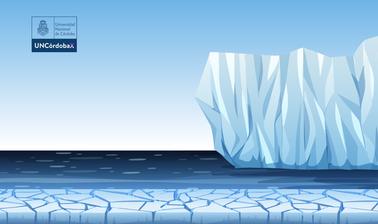
El Antártico, un continente asombroso (edX)

El Antártico, un continente asombroso (edX)

En este curso en línea conocerás diferentes aspectos sobre el continente blanco, de la mano de un grupo de científicos que trabajaron allí. Se tratarán aspectos físicos, históricos, biológicos, ambientales y geopolíticos.

Class Deals by MOOC List - Click here and see EdX's Active Discounts, Deals, and Promo Codes.

Son muchos los aspectos en el que Antártida se revela de un modo diferente al resto del planeta, los que despiertan nuestro interés. Cada disciplina del conocimiento encuentra en este singular ámbito, una particularidad, ya sea esta la biología, la geología, la geofísica, la geodesia, su historia, y la particular presencia humana.

Es el continente de mayor altura media del planeta. Se trata de una gran meseta, cubierta mayoritariamente de hielo. El Polo Sur se encuentra en la gran meseta polar de 2835 metros de altura, en donde el espesor de la capa de hielo alcanza mas de 2700 msnm. Si los hielos que la cubren desaparecieran el continente emergería 900 metros por sobre los niveles actuales de su suelo.
Es el continente en el que se registran las temperaturas más bajas del planeta, con una mínima de casi -90° C.
En Antártida viven especies con particularidades como mamíferos que nadan o aves que no vuelan. Focas, elefantes, lobos, ballenas, y una gran variedad de pingüinos.
La configuración del campo magnético terrestre convierte al Antártico en una ventana abierta la física solar. Esta configuración del campo magnético, con sus líneas de fuerza entrantes en los polos, posibilitan el ingreso de partículas cargadas eléctricamente, o plasma, proveniente del sol. Esta es la causa de una serie de fenómenos propios de altas latitudes, como las grandes variaciones magnéticas, las perturbaciones ionosféricas y las auroras polares.
En este curso en línea, conocerás que El Antártico es además el mayor reservorio de agua dulce del planeta. Los icebergs son verdaderos depósitos flotantes de agua dulce.
Se identifican cinco polos, el geográfico, el magnético, el geomagnético, el polo de frío y el de inaccesibilidad relativa. En el curso de biología conocerás su significado y porque hay una línea en la que la brújula funciona al revés.
El problema del ozono.
El vórtice polar o corriente del jet polar, explica el confinamiento de la depresión estacional de ozono, diferente a la del polo Norte.
Antártida es el único continente sin población permanente y el único en donde no existe el concepto de espacio nacional, tal como lo conocemos. Se rige por un tratado ejemplar, el Tratado Antártico. El Comité Científico del Tratado Antártico (SCAR.), es su componente de ciencia y aprenderás como funciona esta norma singular.

What you'll learn

  • Los estudiantes explorarán en los diversos y característicos aspectos del lugar de la mano de científicos que trabajaron en la zona en diferentes áreas del conocimiento
  • Sobre los aspectos físicos, históricos, biológicos, ambientales y geopolíticos del lugar
  • Características del territorio. El Antártico es el mayor reservorio de agua dulce; se registran las temperaturas más bajas del planeta tierra, por debajo de los 90°C

Syllabus

Introducción: El Antártico
Unidad 1: Generalidades
Unidad 2: Aspectos Geofísicos generales.
Unidad 3: Campo Magnético y alta atmósfera
Unidad 4: Aspectos geológicos
Unidad 5: Aspectos biológicos
Unidad 6: Primeras exploraciones
Unidad 7: Presencia humana


Go to Class
MOOC List is learner-supported. When you buy through links on our site, we may earn an affiliate commission.

Related Courses

Planetary Boundaries (edX) EdX
SDGAcademyX,SDG Academy

Planetary Boundaries (edX)

Can our planet continue to support the current scope of human activity? A thriving global society relies on the stability of the Earth and its resilience across oceans, forests, waterways, biodiversity, the atmosphere and more. So how do we shape sustainability at a global scale? The boundaries set by the planet’s natural resources, the resilience of those resources, and the human activities that impact sustainability all come into play.

Self Paced
Self-Paced
Industrial Biotechnology (edX) EdX
Delft University of Technology,DelftX

Industrial Biotechnology (edX)

Learn the basics of sustainable processing for biobased products to further understand their impact on global sustainability. As fossil-based fuels and raw materials contribute to climate change, the use of renewable materials and energy as an alternative is increasingly important and common. This transition is not a luxury, but rather a necessity.

Self Paced
Self-Paced
Advanced Transport Phenomena (edX) EdX
Delft University of Technology,DelftX

Advanced Transport Phenomena (edX)

Learn how to tackle complex mass and heat transfer problems and apply the results in your own environment. How can you reduce the energy loss of your home? What is the underlying science of energy loss in pipes? Which heat and mass transfer problems do we have to tackle to make consumer products? In this engineering course, you will learn about the engineering principles that play an important role in all of these and more phenomena. You will learn about microbalances, radiation, convection, diffusion and more and their applications in everyday life.

Self Paced
Self-Paced
Antarctica in a Changing Climate (edX) EdX
University of Canterbury,UCx

Antarctica in a Changing Climate (edX)

Explores the exceptional aspects of the Antarctic climate and its ecosystems, looking at the current and future impacts of environmental change, including climate change. This course introduces participants to the ecological and physical characteristics of the Antarctic environment and Antarctic governance.

Self Paced
Self-Paced
Cellular Mechanisms of Brain Function (edX) EdX
École Polytechnique Fédérale de Lausanne,EPFLx

Cellular Mechanisms of Brain Function (edX)

This course aims for a mechanistic description of mammalian brain function at the level of individual nerve cells and their synaptic interactions. Brain and behavior are inextricably linked in neuroscience. The function of the brain is to govern behavior, and the aim of this course is to causally link biophysical mechanisms with simple behaviors studied in mice.

Self Paced
Self-Paced
How We See the World: Visual Function and Eye Health (edX) EdX
The Hong Kong Polytechnic University,HKPolyUx

How We See the World: Visual Function and Eye Health (edX)

Develop your understanding of vision and discover how visual functions relate to your daily life. Learn and apply techniques to help you take better care of your eyes. How do we see the world? How do we see details at different viewing distances? How do we see in three dimensions? How do we see colour? How can we avoid getting cataracts or prevent short-sightedness? This course will help you develop your understanding of vision, how visual functions relate to your daily life, and how you can better take care of your eyes.

Aug 31st 2026
5-12 Weeks
Statistical Inference and Modeling for High-throughput Experiments (edX) EdX
HarvardX,Harvard University

Statistical Inference and Modeling for High-throughput Experiments (edX)

A focus on the techniques commonly used to perform statistical inference on high throughput data. In this course you’ll learn various statistics topics including multiple testing problem, error rates, error rate controlling procedures, false discovery rates, q-values and exploratory data analysis. We then introduce statistical modeling and how it is applied to high-throughput data. In particular, we will discuss parametric distributions, including binomial, exponential, and gamma, and describe maximum likelihood estimation.

Self Paced
Self-Paced
Calculus Applied! (edX) EdX
HarvardX,Harvard University

Calculus Applied! (edX)

Apply tools of single-variable calculus to create and analyze mathematical models used by real practitioners in social, life, and physical sciences. In this course, we go beyond the calculus textbook, working with practitioners in social, life and physical sciences to understand how calculus and mathematical models play a role in their work.

Self Paced
Self-Paced
Cell Biology: Mitochondria (edX) EdX
HarvardX,Harvard University

Cell Biology: Mitochondria (edX)

A human-centered approach to the fundamentals of cell biology with a focus on the power plants of the cell - mitochondria. The cell is a powerful case study to help us explore the functional logic of living systems. All organisms, from single-celled algae to complex multicellular organisms like us, are made up of cells. In this course, you will learn the how and why of biology by exploring the function of the molecular components of cells, and how these cellular components are organized in a complex hierarchy.

Self Paced
Self-Paced
Advanced Bioconductor (edX) EdX
HarvardX,Harvard University

Advanced Bioconductor (edX)

Learn advanced approaches to genomic visualization, reproducible analysis, data architecture, and exploration of cloud-scale consortium-generated genomic data. In this course, we begin with approaches to visualization of genome-scale data, and provide tools to build interactive graphical interfaces to speed discovery and interpretation. Using knitr and rmarkdown as basic authoring tools, the concept of reproducible research is developed, and the concept of an executable document is presented.

Self Paced
Self-Paced
Introduction to Clinical Psychology (edX) EdX
University of Queensland,UQx

Introduction to Clinical Psychology (edX)

Learn about the principles underlying psychological therapy and the features and treatment of common mental disorders, including anxiety, depression and schizophrenia. Have you ever wondered what causes mental illness, or why we react to stress the way we do? Or what to expect as you get older? Clinical psychology is the study of psychological disorders and the treatments designed to improve the day-to-day lives of people suffering from them.

Self Paced
Self-Paced