FUN

Eco-Concevoir Demain (FUN)

Eco-Concevoir Demain (FUN)

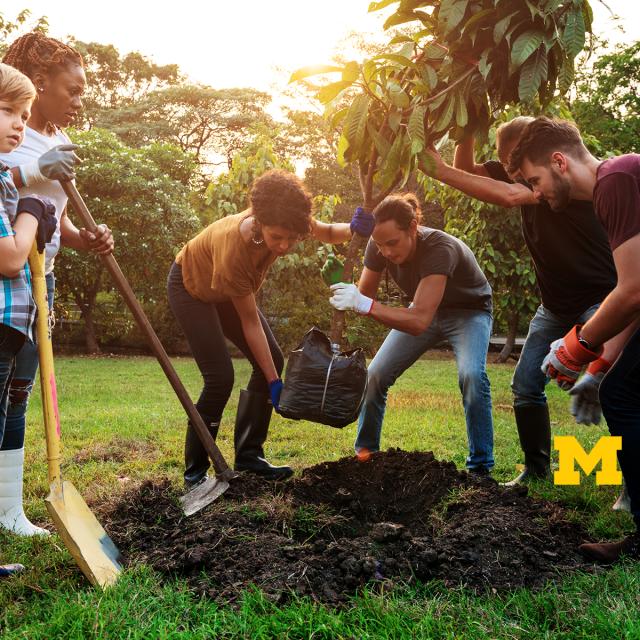
Nous utilisons une multitude de produits, de biens et de services dans notre vie quotidienne et professionnelle. Pour faire face à une demande croissante en ressources (minerais, énergie) et pour répondre aux grands enjeux environnementaux tels que le changement climatique, il est possible de concevoir des produits plus respectueux de l’environnement. Ce MOOC d’introduction à l’éco-conception vous propose de découvrir comment réduire les impacts sur l’environnement des produits (biens ou services) tout en conservant leurs qualités et leurs performances intrinsèques. Les participants pourront acquérir les bases théoriques de l’éco-conception et apprendre à manipuler quelques outils simples pour évaluer les impacts sur l’environnement d’un produit et l’améliorer.

Ce MOOC est destiné à toutes les personnes qui s’intéressent de près ou de loin aux produits durables ou écoproduits :

  • les professionnels de l’industrie, qui souhaitent s’appuyer sur une démarche d’éco-conception pour innover et réduire les impacts sur l’environnement de leurs produits ;
  • les enseignants et formateurs qui cherchent des ressources et des activités pour enrichir le contenu de leurs cours ;
  • les étudiants qui veulent acquérir des connaissances supplémentaires sur le management environnemental des produits ;
  • le grand public, curieux de connaître l’envers du décor des produits qu’il utilise.
Go to Class
MOOC List is learner-supported. When you buy through links on our site, we may earn an affiliate commission.

Related Courses

Strategy and Sustainability (Coursera) Coursera
IESE Business School

Strategy and Sustainability (Coursera)

Business and environmental sustainability are not natural bedfellows. Business is about making money. Sustainability is about protecting the planet. Business is measured in months and quarters. Sustainability often requires significant short term costs to secure a sometimes uncertain long-term benefit. To some activists, all executives are exploitative, selfish one percenters. To some executives, all activists are irresponsible, unyielding extremists.

Sep 14th 2026
5-12 Weeks
Environmental Challenges: Hierarchy in Property Rights (FutureLearn) FutureLearn
University of Leeds

Environmental Challenges: Hierarchy in Property Rights (FutureLearn)

How does language help us develop our relationship with nature and determine the rights of access and ownership? Increasing populations and social changes are pressurising our relationship with the environment. Property rights are embedded in power structures and land management. This course explores the different ways that nature is perceived by different types of societies and the impact of property rights on natural resource management.

Self Paced
2 Weeks
Dynamiques des paysages (FUN) FUN
Université de Rennes 1

Dynamiques des paysages (FUN)

Le paysage désigne "une partie de territoire telle que perçue par les populations, dont le caractère résulte de l'action de facteurs naturels et/ou humains et de leurs interrelations" (convention européenne du paysage). Partout sur la planète, les paysages peuvent évoluer rapidement. On parle de dynamiques des paysages. Artificialisation des sols, urbanisation, pratiques agricoles, fonte des glaciers, élévation du niveau de la mer, avancées des déserts, etc. sont autant de changements qui imposent la prise en compte du paysage dans les politiques publiques au niveau international.

No sessions available
5-12 Weeks
Environmental Challenges: Scarcity and Conflict in the Natural Environment (FutureLearn) FutureLearn
University of Leeds

Environmental Challenges: Scarcity and Conflict in the Natural Environment (FutureLearn)

War and conflict can severely disrupt the governance of the environment. What is the impact on both people and the environment? This course explores three aspects of conflict and resource scarcity, and applies these to explore decision making and negotiation skills. Human conflict has both short and long term effects on the natural world.

Self Paced
2 Weeks
Entreprendre dans l'économie circulaire (FUN) FUN
Phenix

Entreprendre dans l'économie circulaire (FUN)

Dans un contexte de raréfaction des ressources naturelles et de prise de conscience de l’impact des activités humaines sur l’environnement, l’engagement dans une démarche écologique est souvent perçue comme un frein à la performance économique. A travers ce MOOC, nous présentons l’économie circulaire comme un levier d’innovation et de création de valeur économique à fort impact positif.

Oct 15th 2021
4 Weeks
Energy Within Environmental Constraints (edX) EdX
HarvardX,Harvard University

Energy Within Environmental Constraints (edX)

A quantitative introduction to the energy system and its environmental impacts. Humanity faces an immense challenge: providing abundant energy to everyone without wrecking the planet. If we want a high-energy future while protecting the natural world for our children, we must consider the environmental consequences of energy production and use. But money matters too: energy solutions that ignore economic costs are not realistic, particularly in a world where billions of people currently can’t afford access to basic energy services. How can we proceed?

Self Paced
Self-Paced
Introduction to Environmental Science (edX) EdX
DartmouthX,Dartmouth College

Introduction to Environmental Science (edX)

A scientific study of the natural world and how it is influenced by people. Major topics include: food, energy, human population, biodiversity and global change. Environmental science is the study of patterns and processes in the natural world and their modification by human activity. To understand current environmental problems, we need to consider physical, biological and chemical processes that are often the basis of those problems.

Self Paced
4 Weeks
Introduction to the Arctic: Climate (Coursera) Coursera
University of Alberta

Introduction to the Arctic: Climate (Coursera)

The University of Alberta, the University of Tromso and the University of the Arctic invite you to explore this four week course that examines the environment and climate of the circumpolar North. This course is the result of an international collaboration and provides you with an insight into our planet's North. Following an overview of regional geography, we will focus on the cryosphere (ice), as well as the atmosphere and ocean of the region.

Aug 24th 2026
4 Weeks
The Effect of Fires on People, Property and the Environment (Coursera) Coursera
University of Maryland, College Park

The Effect of Fires on People, Property and the Environment (Coursera)

Fires impact people, property and the environment in all countries around the world. In some cases, the resulting losses are extraordinary, causing hundreds of deaths, widespread damage to property and contents and significant impacts on the environment. More often, fires may cause a single casualty or affect a single home, though the effects are still highly significant to those affected and collectively are substantial. This course will provide an overview of the challenges posed by fire as well as the fire safety solutions that are available to meet those challenges.

Sep 14th 2026
5-12 Weeks
An Introduction to Global Health (Coursera) Coursera
University of Copenhagen

An Introduction to Global Health (Coursera)

This course will provide you with an overview of the most important health challenges facing the world today. You will gain insight into how challenges have changed over time, we will discuss the likely determinants of such changes and examine future projections. Successful international strategies and programs promoting human health will be highlighted and global health governance structures will be mapped and the role of the key actors explored.

Aug 31st 2026
5-12 Weeks