Basics of Extracellular Vesicles (Coursera)

Basics of Extracellular Vesicles (Coursera)

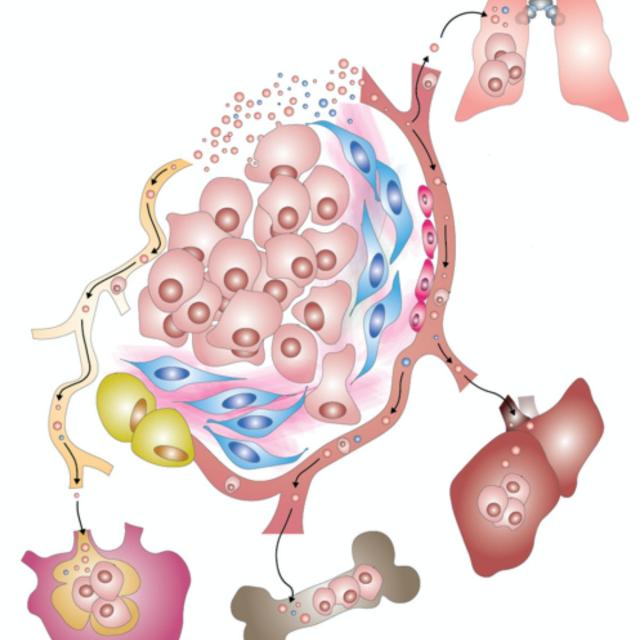
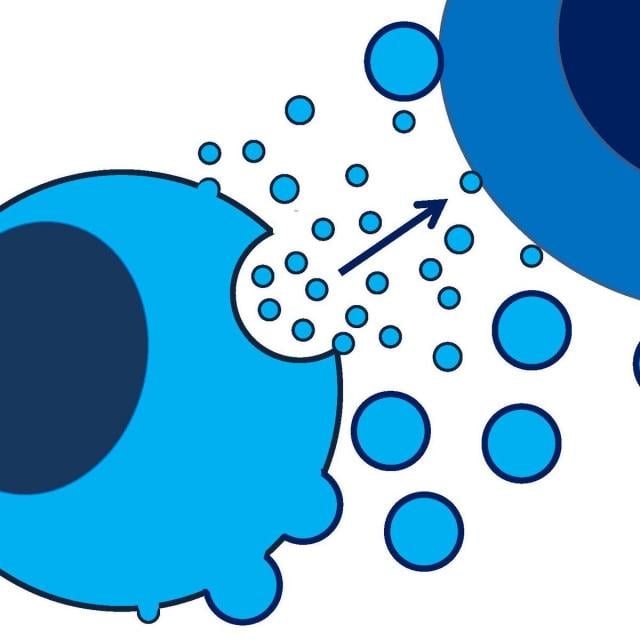
This course aims to provide the basic knowledge about extracellular vesicles (EV) a generic term including exosomes, microvesicles, microparticles, ectosomes, oncosomes, prostasomes, and many others. It covers areas such as EV history, nomenclature, biogenesis, EV cargo as well as the release and uptake mechanisms, collection and processing prior to isolation, different isolation methods, characterization and quantification techniques.

Class Deals by MOOC List - Click here and see Coursera's Active Discounts, Deals, and Promo Codes.

This course is divided into five modules. Module 1 is an introduction to the field and will cover the nomenclature and the history of EVs. Module 2 will focus on the biogenesis, release and uptake mechanisms of EVs as well as the different EV cargos (RNA, protein, lipids). In Module 3, we will focus on the collection and processing of cell culture media and body fluids such as blood, breast milk, cerebrospinal fluid and urine prior to isolation of EVs. Module 4 and 5 will present different isolation methods and characterization/quantification techniques, respectively. Here differential ultracentrifugation, size exclusion chromatography, density gradient, kit based precipitation, electron microscopy (EM), cryo-TEM, flow cytometry, atomic-force microscopy and nanoparticle tracking analysis will be presented.
The recommended prerequisites are college-freshman-level biology and biochemistry.
After a completed course you should be able to:
+ Discuss the nomenclature and subgroups of extracellular vesicles.
+ Describe the RNA, protein and lipid content of extracellular vesicles.
+ Describe the basic concepts about the most common isolation and characterization techniques and how these techniques are used in the EV field.
+ State the benefits and limitations of the most common isolation and characterization techniques for extracellular vesicles. + Explain the considerations that are important during the collection and isolation of EVs from different body fluid.
+ Describe the release and uptake mechanisms of extracellular vesicles
All lectures are given in English.
Each of the five modules will be followed by an exam. All exams will be in the format of multiple choice questions.
The course is organized in collaboration between the International Society for Extracellular Vesicles (ISEV), University of California Irvine (USA), University of Gothenburg (Sweden) and Pohang University of Science and Technology (South Korea).

Syllabus

WEEK 1
Introduction to the Course and the Field of Extracellular Vesicles
In this module, we will introduce the course and the field of extracellular vesicles. We will discuss the nomenclature and the history of extracellular vesicles as well as the organisms and places that have been shown to release/contain extracellular vesicles.

WEEK 2
Biogenesis, Cargo and Uptake of Extracellular Vesicles
In this module, we will focus on the biogenesis and release of extracellular vesicles as well as the uptake mechanisms of extracellular vesicles when they are encountered by a recipient cell. This module also covers the different RNA, protein and lipid types present in extracellular vesicles as well as a brief overview what the functions of these molecules are. Furthermore, the techniques that are commonly used to detect these molecules as well as databases that can be useful to use when analyzing the cargo of extracellular vesicles will be highlighted.

WEEK 3
Collection and Processing of Cell Culture Media and Body Fluids Prior to Isolation of Extracellular Vesicles
In this module, we will focus on the collection and processing of cell culture media and body fluids prior to isolation of extracellular vesicles. We will discuss some of the considerations and guidelines that are important during the collection of staring material and isolation of extracellular vesicles. This module will help you with the different choices, such as anticoagulants, collection time points and protein inhibitors, which are important for the outcome when working with a particular body fluid compared to conditional media or other body fluids. This module will also illustrate some example of studies on extracellular vesicles from body fluid such as blood, urine, breast milk and cerebrospinal fluid and why it is of interest to analyse extracellular vesicles from these body fluids.

WEEK 4
Methods for Isolating Extracellular Vesicles
This module highlights some of the different methods used to isolate extracellular vesicles. Here the basic concepts for methods such as differential ultracentrifugation, density gradient, size exclusion and kit-based precipitation will be covered and some guidelines will be presented. Furthermore, this module will cover how the techniques are used in the field of extracellular vesicles as well as their limitations and benefits.
WEEK 5
Techniques for Characterization and Quantification of Extracellular Vesicles
This module highlights some of the different techniques used to characterize extracellular vesicles. Here the basic concepts for techniques such as electron microscopy (EM), cryo-TEM, flow cytometry, atomic-force microscopy and nanoparticle tracking analysis will be covered and some guidelines will be presented. Furthermore, this module will cover how the techniques are used in the field of extracellular vesicles as well as their limitations and benefits.
Go to Class
MOOC List is learner-supported. When you buy through links on our site, we may earn an affiliate commission.

Related Courses

生物演化 (Coursera) Coursera
Peking University

生物演化 (Coursera)

本课程以达尔文的“自然选择”和“生命之树”为主线,将重点介绍达尔文演化理论的要点,以及后人对达尔文理论的修订、补充和完善;介绍一些推动生物演化的主要力量,如遗传变异、自然选择、中性选择、遗传漂变等。同时还将介绍生物演化研究领域的各种方法和技术,并在此基础上通过很多实例对从远古的化石到现今多姿多彩的生物世界、从生物的形态改变到遗传物质的变化、从生物分子的起源到人类的起源等现象和问题进行解释。本课程将以大量的事实告诉大家:生物演化不仅仅是理论,而且是事实,它就发生在我们的身边。

Jun 15th 2026
13-24 Weeks
Engineering Genetic Circuits: Design (Coursera) Coursera
University of Colorado Boulder

Engineering Genetic Circuits: Design (Coursera)

This course gives an introduction to the biology and biochemistry necessary to understand genetic circuits. It starts by providing an engineering viewpoint on genetic circuit design and a review of cells and their structure. The second module introduces genetic parts and the importance of standards followed by a discussion of genetic devices used within circuit design. The last two modules cover experimental techniques and construction methods and principles applied during the design process.  

Jun 22nd 2026
5-12 Weeks
The Science of the Solar System (Coursera) Coursera
Caltech

The Science of the Solar System (Coursera)

Learn about the science behind the current exploration of the solar system in this free class. Use principles from physics, chemistry, biology, and geology to understand the latest from Mars, comprehend the outer solar system, ponder planets outside our solar system, and search for habitability in our neighborhood and beyond. This course is generally taught at an advanced level assuming a prior knowledge of undergraduate math and physics, but the majority of the concepts and lectures can be understood without these prerequisites.

Jun 22nd 2026
5-12 Weeks
Biology Everywhere Foundations (Coursera) Coursera
University of Colorado Boulder

Biology Everywhere Foundations (Coursera)

In this course, we will explore the nature of science and biology. We will discuss what the “biology everywhere” philosophy means and the history of the “biology everywhere” project. We will also discuss what science (and biology) are as a discipline of inquiry and how chemistry is foundational to understanding biology.

Jun 15th 2026
4 Weeks
Charles Darwin: El origen del evolucionismo moderno (Coursera) Coursera
Universidad Nacional Autónoma de México

Charles Darwin: El origen del evolucionismo moderno (Coursera)

Este curso está dirigido a cualquier persona que desee conocer de manera general qué es y cómo se ha explicado la evolución de las especies. Será de gran interés para alumnos, profesores y profesionales del área de ciencias biológicas y de la salud que deseen conocer los antecedentes históricos, así como los fundamentos centrales de la teoría de Charles Darwin, que configuraron el pensamiento evolutivo moderno.

Jun 15th 2026
4 Weeks
Agroforestry II: Major Systems of the World (Coursera) Coursera
University of Florida

Agroforestry II: Major Systems of the World (Coursera)

Welcome to Agroforestry II: Major Systems of the World. A focused exploration of agroforestry practices from around the world. This is the second module of the five-module course covering the various aspects of agroforestry including the global distribution of the practices, their underlying principles, and major scientific advances during the past nearly five decades, presented by leading experts in the field.

Jun 22nd 2026
2 Weeks
Bugs 101: Insect-Human Interactions (Coursera) Coursera
University of Alberta

Bugs 101: Insect-Human Interactions (Coursera)

Of all the animals on earth, which are the strongest for their size? What about the fastest? Who were the first animals to evolve flight? Insects take all of these titles and more! As the most abundant animals on the planet, insects and other arthropods affect our lives in so many ways. From beneficial interactions like pollination and biological pest control, to the transmission of life threatening diseases; this course will teach you about the big ways that these little arthropods impact our lives.

Jun 22nd 2026
13-24 Weeks
Introduction to the Biology of Cancer (Coursera) Coursera
Johns Hopkins University

Introduction to the Biology of Cancer (Coursera)

Over 500,000 people in the United States and over 8 million people worldwide are dying every year from cancer. As people live longer, the incidence of cancer is rising worldwide and the disease is expected to strike over 20 million people annually by 2030. This open course is designed for people who would like to develop an understanding of cancer and how it is prevented, diagnosed, and treated.

Jun 22nd 2026
5-12 Weeks
Specialty Topics: Biology Across Disciplines (Coursera) Coursera
University of Colorado Boulder

Specialty Topics: Biology Across Disciplines (Coursera)

In this course, we will explore the applicability and relationship of biology to the arts, business, and psychology. First, we’ll discuss art as a foundational practice to biology and how biology as a science can explain how we interact with the arts, in particular, our experiences making and listening to music. Next, we will discuss the business of biology and how research is funded and the process of clinical trials and human subjects research.

Jun 22nd 2026
5-12 Weeks
Finding Hidden Messages in DNA (Bioinformatics I) (Coursera) Coursera
University of California, San Diego

Finding Hidden Messages in DNA (Bioinformatics I) (Coursera)

This course begins a series of classes illustrating the power of computing in modern biology. Please join us on the frontier of bioinformatics to look for hidden messages in DNA without ever needing to put on a lab coat. In the first half of the course, we investigate DNA replication, and ask the question, where in the genome does DNA replication begin? We will see that we can answer this question for many bacteria using only some straightforward algorithms to look for hidden messages in the genome.

Jun 22nd 2026
5-12 Weeks
Epidemics - the Dynamics of Infectious Diseases (Coursera) Coursera
Pennsylvania State University

Epidemics - the Dynamics of Infectious Diseases (Coursera)

Not so long ago, it was almost guaranteed that you would die of an infectious disease. In fact, had you been born just 150 years ago, your chances of dying of an infectious disease before you've reached the tender age of 5 would have been extremely high. Since then, science has come a long way in understanding infectious diseases - what they are, how they spread, and how they can be prevented. But diseases like HIV/AIDS, Malaria, Tuberculosis, or the flu are still major killers worldwide, and novel emerging diseases are a constant threat to public health. In addition, the bugs are evolving. Antibiotics, our most potent weapon against bacterial infections, are losing their power because the bacteria are becoming resistant. In this course, we'll explore the major themes of infectious diseases dynamics.

Jun 22nd 2026
5-12 Weeks