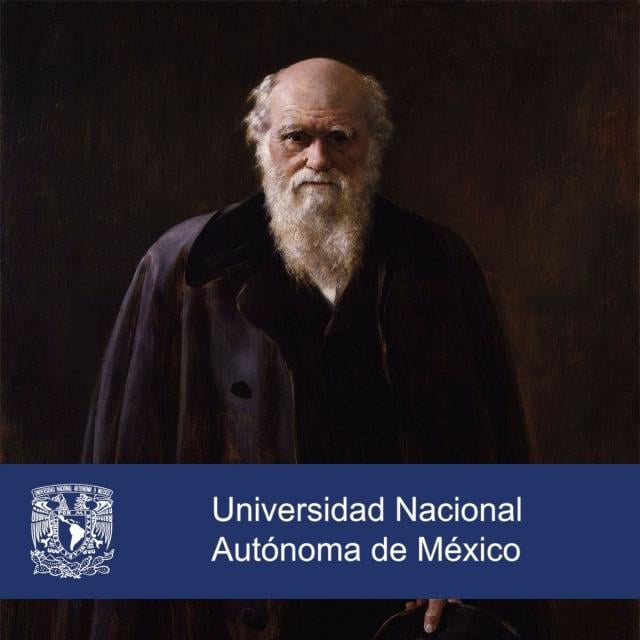
Charles Darwin: El origen del evolucionismo moderno (Coursera)

Charles Darwin: El origen del evolucionismo moderno (Coursera)

Este curso está dirigido a cualquier persona que desee conocer de manera general qué es y cómo se ha explicado la evolución de las especies. Será de gran interés para alumnos, profesores y profesionales del área de ciencias biológicas y de la salud que deseen conocer los antecedentes históricos, así como los fundamentos centrales de la teoría de Charles Darwin, que configuraron el pensamiento evolutivo moderno.

Class Deals by MOOC List - Click here and see Coursera's Active Discounts, Deals, and Promo Codes.

What You Will Learn

  • Introducir a los alumnos en el estudio de la evolución biológica y mostrar la relevancia de Charles Darwin en relación con el evolucionismo moderno.

Syllabus

WEEK 1
Introducción y antecedentes
El objetivo de este curso es introducir a los participantes en el estudio de la evolución biológica, así como mostrar la relevancia de Charles Darwin en el origen del evolucionismo moderno. En este módulo analizaremos los antecedentes históricos del evolucionismo; conocerás las aportaciones de naturalistas que posibilitaron la configuración del pensamiento evolutivo; y, de manera particular, te hablaremos sobre los planteamientos centrales de la teoría de Lamarck, un brillante naturalista francés, que a principios del siglo XIX propuso una explicación coherente y racional sobre la transformación de los seres vivos.

WEEK 2
Charles Darwin y el viaje del Beagle
En este módulo te hablaremos sobre la vida de Charles Darwin, quien en el siglo XIX argumentó con claridad el hecho de la evolución; te mostraremos las experiencias que fueron relevantes para proponer su modelo de evolución por selección natural y las condiciones que influyeron en la publicación de El origen de las especies. También conocerás la importancia que tuvo el viaje del Beagle en la formación de Darwin como naturalista y su influencia en la construcción de la teoría de la selección natural.

WEEK 3
Construcción de la selección natural
En este módulo te hablaremos sobre cómo se construyó la teoría de la selección natural y estudiaremos las influencias que posibilitaron su elaboración.

WEEK 4
El origen de las especies y el impacto de Charles Darwin
En este módulo te hablaremos sobre los conceptos centrales de la concepción darwiniana de la evolución y revisaremos las principales diferencias entre las visiones evolutivas de Darwin y Wallace. También conocerás el significado de la visión darwiniana y el impacto que ha tenido en la conformación de la biología como ciencia, en el pensamiento evolutivo moderno y en diversos campos del saber humano.
Go to Class
MOOC List is learner-supported. When you buy through links on our site, we may earn an affiliate commission.

Related Courses

Introduction to Genetics and Evolution (Coursera) Coursera
Duke University

Introduction to Genetics and Evolution (Coursera)

Introduction to Genetics and Evolution is a college-level class being offered simultaneously to new students at Duke University. The course gives interested people a very basic overview of some principles behind these very fundamental areas of biology. We often hear about new "genome sequences," commercial kits that can tell you about your ancestry (including pre-human) from your DNA or disease predispositions, debates about the truth of evolution, why animals behave the way they do, and how people found "genetic evidence for natural selection." This course provides the basic biology you need to understand all of these issues better, tries to clarify some misconceptions, and tries to prepare students for future, more advanced coursework in Biology (and especially evolutionary genetics). No prior coursework is assumed.

Sep 28th 2026
5-12 Weeks
Chemical Biology (Coursera) Coursera
University of Geneva

Chemical Biology (Coursera)

Chemical biology is a burgeoning field that has rapidly risen to prominence. This surge of interest has been fuelled by chemical biology’s applicability to understanding critical processes in live cells or model organisms in real time. This success has arisen because chemical biology straddles a nexus between chemistry, biology, and physics. Thus, chemical biology can harness rapid chemistry to observe or perturb biological processes, that are in turn reported using physical assays, all in an otherwise unperturbed living entity. Although its boundaries are endless, the multidisciplinary nature of chemical biology can make the field seem daunting; we beg to differ! Here, we deconstruct chemical biology into its core components, and repackage the material.

Sep 28th 2026
5-12 Weeks
Emergence of Life (Coursera) Coursera
University of Illinois at Urbana-Champaign

Emergence of Life (Coursera)

How did life emerge on Earth? How have life and Earth co-evolved through geological time? Is life elsewhere in the universe? Take a look through the 4-billion-year history of life on Earth through the lens of the modern Tree of Life. This course will evaluate the entire history of life on Earth within the context of our cutting-edge understanding of the Tree of Life. This includes the pioneering work of Professor Carl Woese on the University of Illinois Urbana-Champaign campus which revolutionized our understanding with a new "Tree of Life."

Oct 5th 2026
5-12 Weeks
Введение в биоинформатику (Introduction to Bioinformatics) (Coursera) Coursera
Saint Petersburg State University

Введение в биоинформатику (Introduction to Bioinformatics) (Coursera)

Курс «Введение в биоинформатику» адресован тем, кто хочет получить расширенное представление о том, что такое биоинформатика и как она помогает биологам и медикам в их работе. The course is aimed at those who would like to have a better idea of what bioinformatics is and how it helps biologists and medical scientists in research and clinical work.

Sep 21st 2026
5-12 Weeks
Nanotechnology and Nanosensors, Part 1 (Coursera) Coursera
Technion - Israel Institute of Technology

Nanotechnology and Nanosensors, Part 1 (Coursera)

Nanotechnology and nanosensors are broad, interdisciplinary areas that encompass (bio)chemistry, physics, biology, materials science, electrical engineering and more. The present course will provide a survey on some of the fundamental principles behind nanotechnology and nanomaterials and their vital role in novel sensing properties and applications. The course will discuss interesting interdisciplinary scientific and engineering knowledge at the nanoscale to understand fundamental physical differences at the nanosensors.

Oct 5th 2026
5-12 Weeks
Evolution Today (Coursera) Coursera
Leiden University,Naturalis Biodiversity Center

Evolution Today (Coursera)

In this course you will learn how evolution works. You will develop an understanding of evolutionary processes and their formative power. You will see how evolution has shaped biodiversity, and continuously influences our daily life. Evolution impacts human endeavors as varied as medicine, agriculture, psychology, economy, and culture. It is the major unifying principle for biology and a fundamental natural law.

Sep 21st 2026
5-12 Weeks
Bioinformatic Methods II (Coursera) Coursera
University of Toronto

Bioinformatic Methods II (Coursera)

Large-scale biology projects such as the sequencing of the human genome and gene expression surveys using RNA-seq, microarrays and other technologies have created a wealth of data for biologists. However, the challenge facing scientists is analyzing and even accessing these data to extract useful information pertaining to the system being studied. This course focuses on employing existing bioinformatic resources – mainly web-based programs and databases – to access the wealth of data to answer questions relevant to the average biologist, and is highly hands-on.

Sep 28th 2026
5-12 Weeks
Basics of Extracellular Vesicles (Coursera) Coursera
University of California, Irvine

Basics of Extracellular Vesicles (Coursera)

This course aims to provide the basic knowledge about extracellular vesicles (EV) a generic term including exosomes, microvesicles, microparticles, ectosomes, oncosomes, prostasomes, and many others. It covers areas such as EV history, nomenclature, biogenesis, EV cargo as well as the release and uptake mechanisms, collection and processing prior to isolation, different isolation methods, characterization and quantification techniques.

Sep 28th 2026
5-12 Weeks
Lactation Biology (Coursera) Coursera
University of Illinois at Urbana-Champaign

Lactation Biology (Coursera)

Lactation and especially milk, which is the product of that unique mammalian process, are routinely encountered within our daily lives. Nevertheless, they often are poorly understood by many, even including many who are engaged in the business of producing milk. The overall course goal is to introduce fundamental concepts that form the basis for understanding the biology of lactation, the biology of the mammary gland, and the products of that important physiological process.

Sep 21st 2026
5-12 Weeks
The Science of the Solar System (Coursera) Coursera
Caltech

The Science of the Solar System (Coursera)

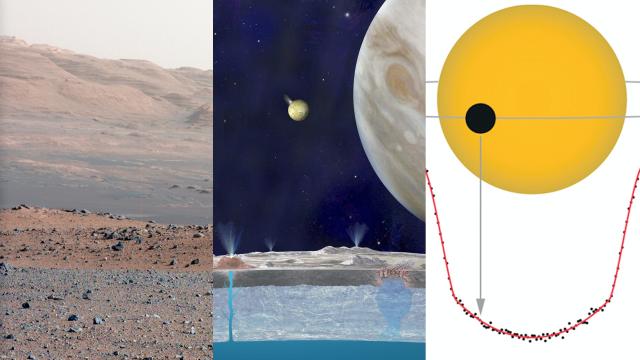
Learn about the science behind the current exploration of the solar system in this free class. Use principles from physics, chemistry, biology, and geology to understand the latest from Mars, comprehend the outer solar system, ponder planets outside our solar system, and search for habitability in our neighborhood and beyond. This course is generally taught at an advanced level assuming a prior knowledge of undergraduate math and physics, but the majority of the concepts and lectures can be understood without these prerequisites.

Sep 21st 2026
5-12 Weeks