Translation in Practice (Coursera)

Offered by Nanjing University,
Translation in Practice (Coursera)

This course offers you basic but valuable techniques used by a good translator in the translation between English and Chinese. We’ll discuss what is translation, what is good translation, and learn about how to produce good translations. All the examples used in this course are taken from the course instructor's own translations of various genres and topics of writing.

Class Deals by MOOC List - Click here and see Coursera's Active Discounts, Deals, and Promo Codes.

These examples are elaborated on to show you how to understand the idea, style and tone of the writer, the historical and cultural context of the writing, as well as the explicit and implied meanings of words, the grammatical structures of sentences, and the logic of sentences and paragraphs in order to achieve faithfulness, expressiveness, and elegance in the translation.
After completing this course, you will know what makes a qualified professional translator and acquire the abilities and skills that such a translator needs

Syllabus

WEEK 1
A Brief Introduction to Translation
This module discusses why translation matters, what is translation, and what is good translation. It also gives an overview of the content of the entire course.

WEEK 2
The Process of Translation
This module discusses the four-step process of translation. Each step is discussed in detail.

WEEK 3
Understanding and Expressing Word Meaning
This module discusses how to understand word meaning in the source language and how to express word meaning in the target language.

WEEK 4
Sentence Translation: Word Order, Division, and Combination
This module discusses the techniques often used in the translation of sentences: keeping/changing the original word order and dividing/combining sentences.

WEEK 5
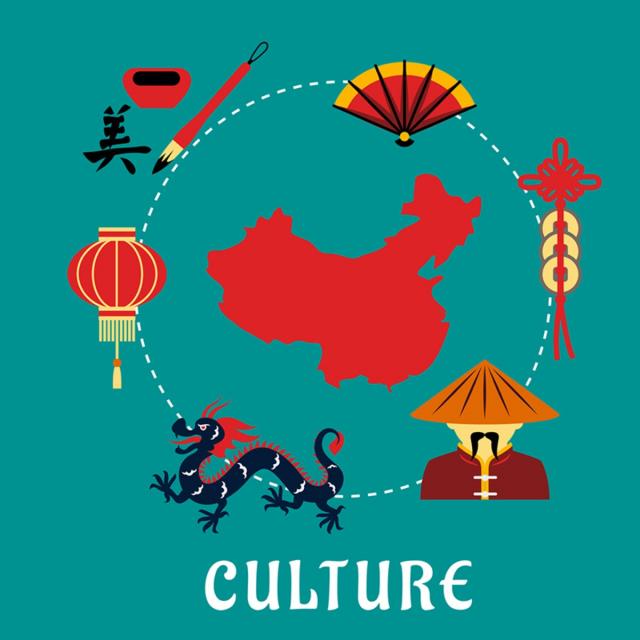
Cultural Elements in Translation
This module discusses the awareness of cultural elements in the source language and the translation of these cultural elements.

WEEK 6
Translation of Different Genres of Writing
This module discusses the translation of different genres of writing, including scientific writings, legal documents, public speeches, and literary works.


Go to Class
MOOC List is learner-supported. When you buy through links on our site, we may earn an affiliate commission.

Related Courses

Writing your World: Finding yourself in the academic space (Coursera) Coursera
University of Cape Town

Writing your World: Finding yourself in the academic space (Coursera)

Throughout the world, writing serves to express, record and even create meaningful moments. In academic spaces, writing becomes the bridge between ourselves and the world of ideas. In this course, we provide practical insights into how to write an academic essay. We show you how to develop the academic skills needed to be a competent academic writer. You will have an opportunity to engage with texts written by academics, and to see how some of the ideas in these texts are used by students in constructing an academic essay.

Sep 28th 2026
4 Weeks
Inglés Empresarial: Gestión y Liderazgo (Coursera) Coursera
Arizona State University

Inglés Empresarial: Gestión y Liderazgo (Coursera)

¿Es usted un ejecutivo de negocios o gerente que utiliza inglés en su profesión? Entonces Ud. sabe que la buena comunicación empresarial en inglés exige los enfoques, el vocabulario y las estructuras lingüísticas específicas. En este curso, Ud. seguirá, a lo largo con un gerente recién promovido, como ella construye y conduce a su equipo hacia el éxito.

Sep 21st 2026
5-12 Weeks
Machine Translation (Coursera) Coursera
Karlsruhe Institute of Technology - KIT

Machine Translation (Coursera)

Welcome to the CLICS-Machine Translation MOOC. This MOOC explains the basic principles of machine translation. Machine translation is the task of translating from one natural language to another natural language. Therefore, these algorithms can help people communicate in different languages. Such algorithms are used in common applications, from Google Translate to apps on your mobile device.

Sep 28th 2026
5-12 Weeks
First Step Korean (Coursera) Coursera
Yonsei University

First Step Korean (Coursera)

This is an elementary-level Korean language course, consisting of 5 lessons with 4 units, and covers 4 skills: reading, writing, listening and speaking. The main topics include basic expressions used in everyday life, such as greetings, introducing yourself, talking about your family and a daily life and so on. Each lesson covers dialogues, pronunciation, vocabulary, grammar, quizzes and role-plays.

Oct 5th 2026
5-12 Weeks
Arranging for Songwriters (Coursera) Coursera
Berklee College of Music

Arranging for Songwriters (Coursera)

You've created a song. You wrote the lyrics, decided on the melody, and maybe even recorded a simple demo. Now what? If you have a basic knowledge of how to use a digital audio workstation (DAW) and are passionate about being a songwriter, this course will help you take your song from a simple recording on your phone to a fully arranged song ready for the recording studio.

Oct 5th 2026
4 Weeks
English and Academic Preparation - Pre-Collegiate (Coursera) Coursera
Rice University

English and Academic Preparation - Pre-Collegiate (Coursera)

The English and Academic Preparation - Pre-Collegiate course is for students with a (minimum) high-intermediate level of English. It is designed to help international students develop the academic skills necessary for success in undergraduate studies at an American university while strengthening their English proficiency. Ideally, prospective students have completed or are near completion of a high school diploma in their country and would like to come to the United States to study for a bachelor’s degree.

Oct 5th 2026
4 Weeks
Questionnaire Design for Social Surveys (Coursera) Coursera
University of Michigan

Questionnaire Design for Social Surveys (Coursera)

This course will cover the basic elements of designing and evaluating questionnaires. We will review the process of responding to questions, challenges and options for asking questions about behavioral frequencies, practical techniques for evaluating questions, mode specific questionnaire characteristics, and review methods of standardized and conversational interviewing.

Sep 21st 2026
5-12 Weeks