The DMAIC Framework - Define and Measure Phase (Coursera)

Offered by SkillUp EdTech,
The DMAIC Framework - Define and Measure Phase (Coursera)

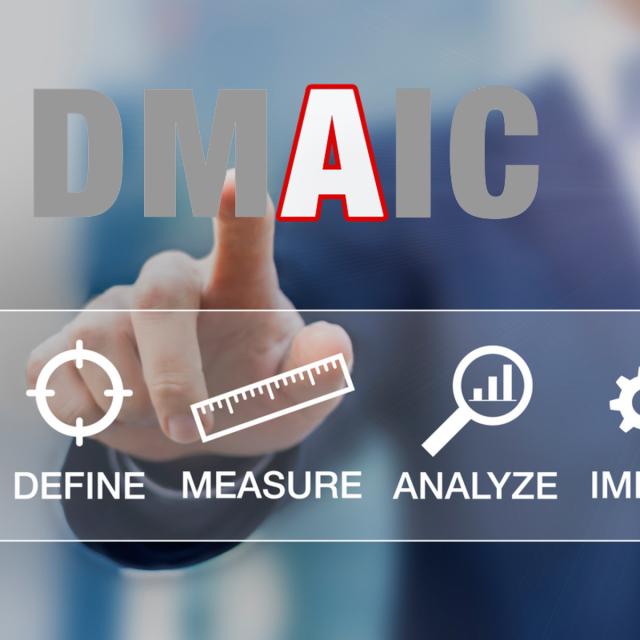
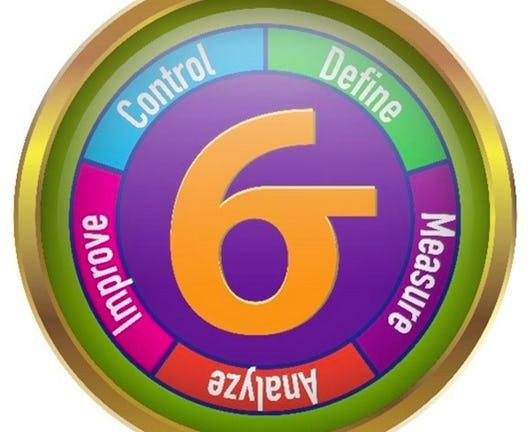
The course is designed for Lean Six Sigma professionals to excel in the American Society for Quality (ASQ) Certified Six Sigma Green Belt (CSSGB) exam. The course focuses specifically on the first two phases of the define, measure, analyze, improve, and control (DMAIC) framework.

Class Deals by MOOC List - Click here and see Coursera's Active Discounts, Deals, and Promo Codes.

In the define phase, you will learn to define a problem statement and project scope, whereas in the measure phase, you will learn about effective data collection strategies and measurement system analysis (MSA).
By the end of this course, you will be able to:

  • Define specific, measurable, achievable, relevant, and time-bound (SMART) project goals and objectives.
  • Analyze the voice of the customer (VOC) data to translate it to critical to quality (CTQ) parameters.
  • Explain process mapping and define key performance metrics.
  • Plan data collection activities to quantify the performance of the process.

The course is best suited for individuals who analyze and solve quality problems and work on quality improvement projects. It is recommended that you complete the first course in the ASQ-Certified Six Sigma Green Belt Exam Prep Specialization, Overview: Six Sigma and the Organization, before starting this course.
This course is part of the ASQ-Certified Six Sigma Green Belt (CSSGB) Exam Prep Specialization.

What you'll learn

  • Define specific, measurable, achievable, relevant, and time-bound (SMART) project goals and objectives.
  • Analyze the voice of the customer (VOC) data to translate it to critical to quality (CTQ) parameters.
  • Explain process mapping and define key performance metrics.
  • Plan data collection activities to quantify the performance of the process.

Syllabus

Define: Project Identification, Voice of the Customer (VoC), and Project Management Basics
In this module, you will learn the essential foundations for project initiation. The focus is on project identification, understanding the voice of the customer (VoC), and grasping fundamental project management principles. You’ll discover how to select projects effectively, comprehend customer needs through the VoC, and the basics of project management. You’ll also learn about project selection processes, process components, benchmarking concepts, and stakeholder analysis. The module also delves into VoC data collection, how to translate it into critical to quality (CTQ) factors, applying the KANO model, crafting project charters, defining project scopes, and tracking key project metrics. Finally, this module is your gateway to understanding project commencement and customer-centric project initiation.

Define: Project Management and Planning Tools
In this module, you will learn about the fundamental tools crucial for effective project planning. You will gain insight into the work breakdown structure (WBS), Gantt charts, critical path method (CPM), and program evaluation and review technique (PERT. Additionally, the module discusses project documentation essentials, elements of project risk analysis, management and planning tools, and strengths, weaknesses, opportunities, and threats (SWOT) analysis. You will also learn about the benefits of decision matrices, quality metrics such as DPU, DPO, DPMO, Sigma level, and cost of poor quality. Finally, the module explores stages of team evolution, role management, and decision-making aids and offers a comprehensive insight into essential techniques vital for successful project management and planning.

Measure: Probability and Statistics and Collecting and Summarizing Data 
In this module, you will focus on important statistical concepts and data-gathering techniques. You will learn about process analysis, probability basics, and various statistical distributions like normal, binomial, and Poisson. You will also gain insight into different data types, planning data collection, sampling methods, and operational definition worksheets. Next, the module delves into measures of central tendency and dispersion, and graphical representation. You will be introduced to statistical ideas such as probability, diverse data types, and effective data collection strategies, empowering you to summarize, analyze, and interpret data confidently in project scenarios.

Measure: Measurement System Analysis (MSA) 
In this module, you will gain insight into measurement system analysis (MSA), which is an in-depth evaluation of a measurement process to assess the quality and reliability of measurement systems used in data collection. You will also learn to evaluate and improve the existing measurement systems in a process or organization, identify sources of measurement error, assess measurement system performance, and implement strategies to enhance measurement accuracy and precision. Finally, this module also focuses on evaluating and assessing the performance and capability of a process to meet customer requirements and specifications.  

Peer-Reviewed Assignment
This is a peer-review assignment based on the concepts taught in The DMAIC Framework: Define and Measure Phase course. In this assignment, you will be able to explain how to apply the define and measure phases of the DMAIC framework in a real-life scenario.


Go to Class
MOOC List is learner-supported. When you buy through links on our site, we may earn an affiliate commission.

Related Courses

The Define Phase for the 6 σ Black Belt (Coursera) Coursera
University System of Georgia

The Define Phase for the 6 σ Black Belt (Coursera)

This course is designed for professionals interested in learning the principles of Lean Sigma, the DMAIC process and DFSS. This course is number 3 of 8 in this specialization dealing with topics in the Define Phase of Six Sigma. Professionals with some completed coursework in statistics and a desire to drive continuous improvement within their organizations would find this course and the others in this specialization appealing.

Jun 15th 2026
5-12 Weeks
Advanced Manufacturing Process Analysis (Coursera) Coursera
University at Buffalo,The State University of New York

Advanced Manufacturing Process Analysis (Coursera)

Extreme variability is a fact of life in manufacturing environments, impacting product quality and yield. Through this course, students will learn why performing advanced analysis of manufacturing processes is integral for diagnosing and correcting operational flaws in order to improve yields and reduce costs. Gain insights into the best ways to collect, prepare and analyze data, as well as computational platforms that can be leveraged to collect and process data over sustained periods of time. Become better prepared to participate as a member of an advanced analysis team and share valuable inputs on effective implementation.

Jun 15th 2026
3 Weeks
Data Collection and Processing with Python (Coursera) Coursera
University of Michigan

Data Collection and Processing with Python (Coursera)

This course teaches you to fetch and process data from services on the Internet. It covers Python list comprehensions and provides opportunities to practice extracting from and processing deeply nested data. You'll also learn how to use the Python requests module to interact with REST APIs and what to look for in documentation of those APIs. For the final project, you will construct a “tag recommender” for the flickr photo sharing site.

Jun 15th 2026
3 Weeks
Muestreo de personas, redes y registros (Coursera) Coursera
University of Michigan

Muestreo de personas, redes y registros (Coursera)

Para hacer una buena recopilación de datos se necesitan buenas muestras. Pero las muestras pueden elegirse de muchas maneras. Pueden ser selecciones fortuitas o convenientes de personas, registros, redes u otras unidades, pero uno se cuestiona la calidad de tales muestras, especialmente cómo se relacionan estos métodos de selección con el hecho de sacar buenas conclusiones sobre una población tras la recopilación y el análisis de los datos. Las muestras pueden seleccionarse con más cuidado según el criterio del investigador, pero entonces uno se pregunta si ese criterio puede estar sesgado por factores personales.

Jun 22nd 2026
5-12 Weeks
Sampling People, Networks and Records (Coursera) Coursera
University of Michigan

Sampling People, Networks and Records (Coursera)

Good data collection is built on good samples. But the samples can be chosen in many ways. Samples can be haphazard or convenient selections of persons, or records, or networks, or other units, but one questions the quality of such samples, especially what these selection methods mean for drawing good conclusions about a population after data collection and analysis is done. Samples can be more carefully selected based on a researcher’s judgment, but one then questions whether that judgment can be biased by personal factors.

Jun 15th 2026
5-12 Weeks
Operational Context and Data (Coursera) Coursera
University at Buffalo,The State University of New York

Operational Context and Data (Coursera)

By the end of this course, learners are empowered to implement data-driven process improvement objectives at their organization. The course covers: the business case for IoT (Internet of Things), the strategic importance of aligning operations and performance goals, best practices for collecting data, and facilitating a process mapping activity to visualize and analyze a process’s flow of materials and information. Learners are prepared to focus efforts around business needs, evaluate what the organization should measure, discern between different types of IoT data and collect key performance indicators (KPIs) using IoT technology. Learners have the opportunity to implement process improvement objectives in a mock scenario and consider how the knowledge can be transferred to their own organizational contexts.

Jun 22nd 2026
4 Weeks
Surveillance Systems: The Building Blocks (Coursera) Coursera
Johns Hopkins University

Surveillance Systems: The Building Blocks (Coursera)

Epidemiology is often described as the cornerstone science and public health and public health surveillance is a cornerstone of epidemiology. This course will help you build your technical awareness and skills for working with a variety of surveillance systems. Along the way, we'll focus on system objectives, data reporting, the core surveillance attributes, and performance assessment.

Jun 22nd 2026
4 Weeks
Six Sigma Tools for Define and Measure (Coursera) Coursera
University System of Georgia

Six Sigma Tools for Define and Measure (Coursera)

This course is for you if you are looking to learn more about Six Sigma or refresh your knowledge of the basic components of Six Sigma and Lean. Six Sigma skills are widely sought by employers both nationally and internationally. These skills have been proven to help improve business processes and performance. This course will cover the Define phase and introduce you to the Measure phase of the DMAIC (Define, Measure, Analyze, Improve, and Control) process. You will learn about Six Sigma project development and implementation, you will become familiar with project management tools, you will be introduced to statistics and understand its significance to Six Sigma, and finally you will learn about data collection and its importance to an organization.

Jun 22nd 2026
4 Weeks
Dealing With Missing Data (Coursera) Coursera
University of Maryland, College Park

Dealing With Missing Data (Coursera)

This course will cover the steps used in weighting sample surveys, including methods for adjusting for nonresponse and using data external to the survey for calibration. Among the techniques discussed are adjustments using estimated response propensities, poststratification, raking, and general regression estimation. Alternative techniques for imputing values for missing items will be discussed. For both weighting and imputation, the capabilities of different statistical software packages will be covered, including R®, Stata®, and SAS®.

Jun 15th 2026
4 Weeks
Data Collection: Online, Telephone and Face-to-face (Coursera) Coursera
University of Michigan

Data Collection: Online, Telephone and Face-to-face (Coursera)

This course presents research conducted to increase our understanding of how data collection decisions affect survey errors. This is not a “how–to-do-it” course on data collection, but instead reviews the literature on survey design decisions and data quality in order to sensitize learners to how alternative survey designs might impact the data obtained from those surveys.

Jun 15th 2026
4 Weeks
Data Management for Clinical Research (Coursera) Coursera
Vanderbilt University

Data Management for Clinical Research (Coursera)

This course presents critical concepts and practical methods to support planning, collection, storage, and dissemination of data in clinical research. Understanding and implementing solid data management principles is critical for any scientific domain. Regardless of your current (or anticipated) role in the research enterprise, a strong working knowledge and skill set in data management principles and practice will increase your productivity and improve your science. Our goal is to use these modules to help you learn and practice this skill set.

Jun 22nd 2026
5-12 Weeks
Digital Marketing Analytics in Practice (Coursera) Coursera
University of Illinois at Urbana-Champaign

Digital Marketing Analytics in Practice (Coursera)

Successfully marketing brands today requires a well-balanced blend of art and science. This course introduces students to the science of web analytics while casting a keen eye toward the artful use of numbers found in the digital space. The goal is to provide the foundation needed to apply data analytics to real-world challenges marketers confront daily. Students will learn to identify the web analytic tool right for their specific needs; understand valid and reliable ways to collect, analyze, and visualize data from the web; and utilize data in decision making for agencies, organizations or clients.

Jun 15th 2026
4 Weeks