Six Sigma Advanced Analyze Phase (Coursera)

Six Sigma Advanced Analyze Phase (Coursera)

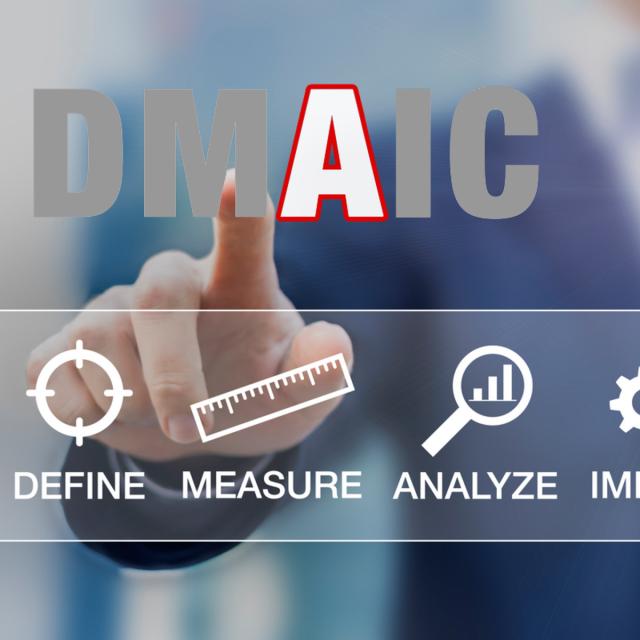
This course is for you if you are looking to dive deeper into Six Sigma or strengthen and expand your knowledge of the basic components of green belt level of Six Sigma and Lean. Six Sigma skills are widely sought by employers both nationally and internationally. These skills have been proven to help improve business processes and performance. This course will take you deeper into the principles and tools associated with the "Analyze" phase of the DMAIC structure of Six Sigma.

Class Deals by MOOC List - Click here and see Coursera's Active Discounts, Deals, and Promo Codes.

It is highly recommended that you complete the "Yellow Belt Specialization" and the courses "Six Sigma and the Organization (Advanced)" and "Six Sigma Advanced Design and Measure Phase" before beginning this course.
In this course, your instructors will introduce you to, and have you apply, some of the tools and metrics that are critical components of Six Sigma. This course will provide you with the advanced knowledge of hypothesis testing and design of experiments as they are associated with Six Sigma and Lean.
Every module will include readings, videos, and quizzes to help make sure you understand the material and concepts that are studied.
Course 3 of 4 in the Six Sigma Green Belt Specialization.

Syllabus

WEEK 1
Hypothesis Testing
In this module, Dr. Greg Wiles will introduce you to the principle of hypothesis testing in six sigma, including the Z-test and the T-test. Dr. Bailey will also explain confidence intervals, paired comparison tests, ANOVA, and Chi-Square.

WEEK 2
Design of Experiments (DOE) - Part 1
In this module, Dr. Christina Scherrer will begin the two-module journey through "design of experiments" (DOE).

WEEK 3
Design of Experiments (DOE) - Part 2
In this module, Dr. Christina Scherrer will conclude the two-module journey through "design of experiments" (DOE).

Go to Class
MOOC List is learner-supported. When you buy through links on our site, we may earn an affiliate commission.

Related Courses

L'avenir de la décision : connaître et agir en complexité (Coursera) Coursera
ESSEC Business School

L'avenir de la décision : connaître et agir en complexité (Coursera)

Ce MOOC a l’intention d’affronter et traiter des problèmes que rencontrent chaque personne, chaque groupe, chaque entreprise, chaque société, de façon de plus en plus aiguë et pressante ; dans notre temps d’évolution accélérée, de transformations ininterrompues, de mondialisation incontrôlée, d’incertitudes.

Dec 14th 2026
5-12 Weeks
Introduction to Financial Accounting (Coursera) Coursera
University of Pennsylvania

Introduction to Financial Accounting (Coursera)

Master the technical skills needed to analyze financial statements and disclosures for use in financial analysis, and learn how accounting standards and managerial incentives affect the financial reporting process. By the end of this course, you’ll be able to read the three most common financial statements: the income statement, balance sheet, and statement of cash flows. Then you can apply these skills to a real-world business challenge as part of the Wharton Business Foundations Specialization.

Dec 14th 2026
4 Weeks
Surviving Disruptive Technologies (On Demand) (Coursera) Coursera
University of Maryland, College Park

Surviving Disruptive Technologies (On Demand) (Coursera)

The purpose of this course is to help individuals and organizations survive when confronted with disruptive technologies that threaten their current way of life. We will look at a general model of survival and use it to analyze companies and industries that have failed or are close to failing. Examples of companies that have not survived include Kodak, a firm over 100 years old, Blockbuster and Borders.

Dec 14th 2026
4 Weeks
Alternative Approaches to Valuation and Investment (Coursera) Coursera
University of Melbourne

Alternative Approaches to Valuation and Investment (Coursera)

In this course, participants will develop an understanding of the intuitive foundations of asset and investment valuation, and how alternative valuation techniques may be used in practice. This is part of a Specialization in corporate finance created in partnership between the University of Melbourne and Bank of New York Mellon (BNY Mellon).

Dec 14th 2026
4 Weeks
European Business Law: Doing Business in Europe (Coursera) Coursera
Lund University

European Business Law: Doing Business in Europe (Coursera)

This six-week course titled Doing Business in Europe is the second in a series of three exploring some of the main business aspects of European Union law. Besides providing learners with a sound knowledge base of European laws and regulations relevant to establishing and managing a company within the European Union, the course also explores business considerations within a broader perspective by including inputs from leading law practitioners in the field.

Dec 14th 2026
5-12 Weeks
Becoming a Social Entrepreneur: Getting Started (Coursera) Coursera
University of Michigan

Becoming a Social Entrepreneur: Getting Started (Coursera)

Do you have an idea that could help solve a societal problem? Are you wondering if starting a social enterprise is the best way to go forward? You are thinking about becoming a social entrepreneur! In this course, you’ll critically examine what makes for a good idea, and whether that idea requires starting a new business. You’ll craft a personal immersion plan while considering different ways to create impact. You’ll explore the personal challenges and connections to your life’s purpose before deciding to commit to becoming a social entrepreneur.

Dec 14th 2026
5-12 Weeks
Finance for Everyone: Markets (Coursera) Coursera
McMaster University

Finance for Everyone: Markets (Coursera)

Markets begins with one of the most common and important elements of the financial system – interest rates. You will learn why interest rates have always been a key barometer in determining the value of everything. You will explore the changing influence of interest rates; the impact of interest rates on consumption, investment and economic growth; and the bizarre realities of negative interest rates. Markets explains how interest rates change the value of all financial instruments, highlighting the role of the bond and stock markets that have toppled empires

Dec 14th 2026
4 Weeks
An Introduction to Consumer Neuroscience & Neuromarketing (Coursera) Coursera
Copenhagen Business School

An Introduction to Consumer Neuroscience & Neuromarketing (Coursera)

How do we make decisions as consumers? What do we pay attention to, and how do our initial responses predict our final choices? To what extent are these processes unconscious and cannot be reflected in overt reports? This course will provide you with an introduction to some of the most basic methods in the emerging fields of consumer neuroscience and neuromarketing. You will learn about the methods employed and what they mean. You will learn about the basic brain mechanisms in consumer choice, and how to stay updated on these topics. The course will give an overview of the current and future uses of neuroscience in business.

Dec 14th 2026
5-12 Weeks
Process Mining: Data science in Action (Coursera) Coursera
Eindhoven University of Technology

Process Mining: Data science in Action (Coursera)

Process mining is the missing link between model-based process analysis and data-oriented analysis techniques. Through concrete data sets and easy to use software the course provides data science knowledge that can be applied directly to analyze and improve processes in a variety of domains. Data science is the profession of the future, because organizations that are unable to use (big) data in a smart way will not survive. It is not sufficient to focus on data storage and data analysis. The data scientist also needs to relate data to process analysis.

Dec 14th 2026
5-12 Weeks
How to finance your venture ? (Coursera) Coursera
École Polytechnique

How to finance your venture ? (Coursera)

The course aims at providing knowledge and experience to entrepreneurs and would-be entrepreneurs. Entrepreneurs generally start with a mission, a new idea that they want to bring to the world. If the idea is original, it is probably not expected by the market, which has to be educated. This is a very costly experience. Entrepreneurs need to gather capital at the start of the journey.

Dec 14th 2026
5-12 Weeks
How to Create a Good Business (Coursera) Coursera
University of Michigan

How to Create a Good Business (Coursera)

Prioritizing the wellbeing of workers is not just a good - or ethical - thing to do, but because it makes business sense. A happier, healthier workforce is a more productive workforce. A productive workforce is more likely to attend, perform their best work, and add more value to an organization. Unfortunately, investing in the well-being of workers isn’t so simple. In this course, you’ll unpack what “worker wellbeing” means across different contexts, explore how to use research techniques to find the sweet spot between worker interests and firm interests, and understand how to design scalable solutions to enable both parties to thrive.

Dec 14th 2026
5-12 Weeks
The 360º Corporation: Tools for Achieving Corporate Purpose (Coursera) Coursera
University of Toronto

The 360º Corporation: Tools for Achieving Corporate Purpose (Coursera)

If you’ve heard the terms stakeholder capitalism, or sustainability, or ESG, corporate social responsibility, CSR, conscious capitalism, sustainable development goals, shared value, corporate citizenship, or purpose-driven company but don’t know exactly what they mean—or don’t know how to make these ideas come to life—then this course is for you. Every business model and every operating decision has stakeholder trade-offs embedded in it. Profits to the bottom line are not always compatible with the interests of the stakeholders that surround the corporation.

Dec 14th 2026
4 Weeks