How to Describe Data examines the use of data in our everyday lives, giving you the ability to assess the usefulness and relevance of the information you encounter. In this course, learn about uncertainty’s role in measurements and how you can develop a critical eye toward evaluating statistical information in places like headlines, advertisements, and research. You’ll learn the fundamentals of discussing, evaluating, and presenting a wide range of data sets, as well as how data helps us make sense of the world. This is a broad overview of statistics and is designed for those with no previous experience in data analysis.
Class Deals by MOOC List - Click here and see Coursera's Active Discounts, Deals, and Promo Codes.
With this course, you’ll be able to spot potentially misleading statistics and better interpret claims about data you encounter in the world. Course assessments focus on your understanding of concepts rather than solving math problems.
This is the first course in Understanding Data: Navigating Statistics, Science, and AI Specialization, where you’ll gain a core foundation for statistical and data literacy and gain an understanding of the data we encounter in our everyday lives.
This course is part of the Understanding Data: Navigating Statistics, Science, and AI Specialization.
What you'll learn
- Learn the fundamentals of data interpretation, collection, and summarization
- Learn the capabilities and limitations of data and discuss criteria for determining which statistics are reliable
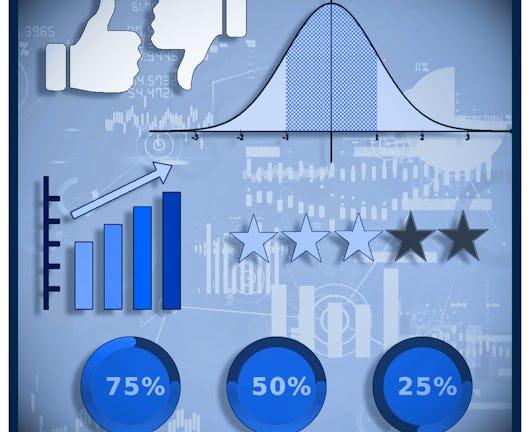
- Learn to interpret and evaluate the effectiveness of data visualizations
Syllabus
Welcome, Introduction & What Makes a Statistic Useful?
Module 1: Rethinking Certainty
Module 2: Talking about Numbers
Module 3: Statistics, Skepticism and Trust