Improvement Techniques and Control Tools (Coursera)

Offered by SkillUp EdTech,
Improvement Techniques and Control Tools (Coursera)

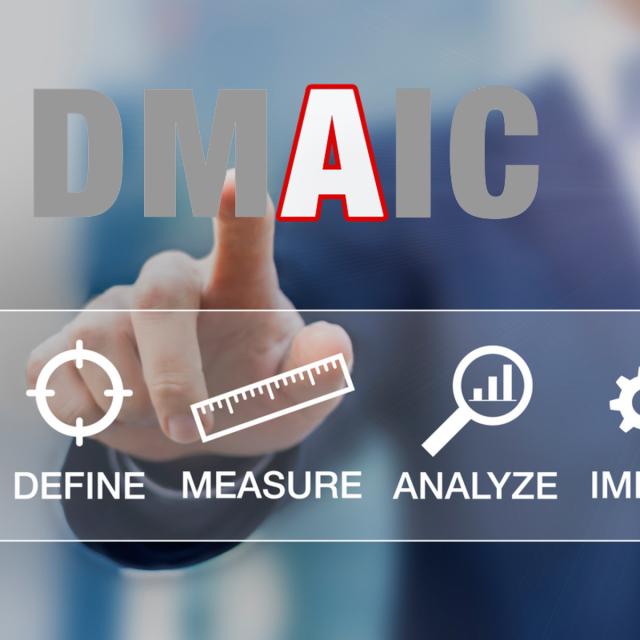
This course introduces you to the processes and tools to implement the improvement strategies and then sustain them by controlling your process as per the implemented solutions. Based on the analysis from the previous phases of the define, measure, analyze, improve, and control (DMAIC) framework, you will learn to evaluate the potential solutions and select the most effective ones to bring improvement to your process.

Class Deals by MOOC List - Click here and see Coursera's Active Discounts, Deals, and Promo Codes.

This may involve changing the process, introducing new tools or technologies, or implementing best practices. The course also delves into the importance of continuously refining and optimizing the process to maximize the impact of the improvement solutions.
Further, you will learn how to establish control measures to monitor the process and ensure it stays on track after the improvements are implemented. Finally, the course delves into the criticality of sustaining the implemented improvements for long-term benefit. You will learn how to implement mechanisms to sustain the improvements, such as conducting employee training, regular measurement practices, periodic reviews, and continuous improvement efforts.
This course is part of the ASQ-Certified Six Sigma Yellow Belt Exam Prep Specialization Specialization.

What you'll learn

  • Implement the identified solutions to bring improvement by making process amendments and introducing new tools or technologies.
  • Optimize the process to maximize the impact of the improvement solutions.
  • Define and implement control measures to monitor the process and ensure it stays on track.
  • Implement mechanisms to sustain the improvements over the long term.

Syllabus

Lean tools and techniques for process improvement
In this module, you will be introduced to the core principles and methodologies of Lean thinking. You will gain insight into essential Lean tools and techniques such as the five Ss (5S), 5S plus safety, and 6S and single-minute exchange of die (SMED), enabling you to lead process improvement initiatives within your organizations successfully. You will learn to implement SMED, a Lean tool used in manufacturing, to decrease the equipment changeover time. Additionally, you will be introduced to 5S, another Lean tool that represents the steps needed to accomplish this objective, namely, sort, set, shine, standardize, and sustain. The key objective of 5S is to create an uncluttered environment that enables people to carry out their job responsibilities without wasting time and reducing the risk of injury.

Lean Tools: Essentials of poka-yoke
This module introduces you to another powerful and effective Lean tool, poka-yoke, which was developed as a key component of the Toyota Production System (TPS). Poka-yoke is a process improvement technique, literally meaning “avoiding mistakes or errors.” It was developed in the 1960s by Shigeo Shingo. This technique significantly decreases the number of defects produced and is also known as error-proofing. In this module, you will learn about some real-life examples of poka-yoke and how to implement this technique by eliminating opportunities for defects or errors.

Eight types of wastes
In this module, you will learn about the concept of the eight wastes or 8 forms of waste, which is a fundamental Lean manufacturing and Six Sigma principle. The various non-value-added activities and inefficiencies within a process are known as the eight types of waste. Finding and reducing or eliminating these wastes can cut down your organization’s costs, chances of accidents, and lead times and make both employees and end customers happier. Waste reduction is a fundamental concept in Lean Six Sigma, and this module will equip you with the knowledge and tools needed to improve efficiency, productivity, and quality within your process and organization.

Control Charts
In this module, you will gain an overview of control charts and their application in process monitoring and quality control. Control charts determine if a process is in control or is stable or if it is out of control and requires some adjustment. Control charts are beneficial for your organization as you need to take some action to correct the variations that could have a negative impact on your business. You will learn about specific control charts for continuous data and how to create and interpret these charts, analyze patterns, and make data-driven decisions to improve process stability and performance. The module combines theoretical knowledge with practical exercises and case studies to equip you with the skills to implement control charts in various industries.

Peer-Reviewed Assignment
In this module, you will work on a peer-review assignment, which is based on the concepts taught in the Improvement Techniques and Control Tools course. In this assignment, you will apply your knowledge about Poka-Yoke to identify how various Poka-Yoke techniques are used in real life. This will encourage you to look around and study from examples in everyday life.
Go to Class
MOOC List is learner-supported. When you buy through links on our site, we may earn an affiliate commission.

Related Courses

Operations and Process Management (Coursera) Coursera
Illinois Tech

Operations and Process Management (Coursera)

The course focuses on teaching students how to successfully analyze a business process, research methods of improving a process, and adapt/integrate the improvement. methods into the business process in a prioritized and actionable manner. The goal of the course is to expose students to a universal set of business processes and provide them with a formal approach to improving and monitoring the health of those processes that they can apply in a current or future opportunity.

Jun 22nd 2026
5-12 Weeks
Dynamics and Control (edX) EdX
Universitat Politècnica de València,UPValenciaX

Dynamics and Control (edX)

This is an interactive course about the basic concepts of Systems, Control and their impact in all the human activities. First, the basic concepts of systems, dynamics, structure and control are introduced. Then, looking at many examples in Nature and human made devices, we will realize that the dynamic behavior of most systems can be modified by adding a control system. Later we will see how knowing how to evaluate the dynamic behavior of a system and measure its performance will provide the tools to design new controlled systems fulfilling some requirements.

Self Paced
Self-Paced
The Improve Phase for the 6 σ Black Belt (Coursera) Coursera
University System of Georgia

The Improve Phase for the 6 σ Black Belt (Coursera)

This course is designed for professionals interested in learning the principles of Lean Sigma, the DMAIC process and DFSS. This course is number 6 of 8 in this specialization dealing with topics in the Improve Phase of Six Sigma. Professionals with some completed coursework in statistics and a desire to drive continuous improvement within their organizations would find this course and the others in this specialization appealing. Method of assessment consists of several formative and summative quizzes and a multi-part peer reviewed project completion regiment.

Jun 15th 2026
5-12 Weeks
Six Sigma Advanced Analyze Phase (Coursera) Coursera
University System of Georgia

Six Sigma Advanced Analyze Phase (Coursera)

This course is for you if you are looking to dive deeper into Six Sigma or strengthen and expand your knowledge of the basic components of green belt level of Six Sigma and Lean. Six Sigma skills are widely sought by employers both nationally and internationally. These skills have been proven to help improve business processes and performance. This course will take you deeper into the principles and tools associated with the "Analyze" phase of the DMAIC structure of Six Sigma.

Jun 22nd 2026
3 Weeks
Intro to Lean Six Sigma and Project Identification Methods (Coursera) Coursera
SkillUp EdTech

Intro to Lean Six Sigma and Project Identification Methods (Coursera)

The course will equip you with the competencies and essential skills required to excel in the American Society for Quality (ASQ) Certified Six Sigma Yellow Belt (CSSYB) exam and contribute effectively to process improvement initiatives. The course provides an overview of Lean Six Sigma as a powerful methodology for process improvement, the define, measure, analyze, improve, and control (DMAIC) framework, measurement systems analysis (MSA), and various data collection methods.

Jun 15th 2026
4 Weeks
Six Sigma Tools for Analyze (Coursera) Coursera
University System of Georgia

Six Sigma Tools for Analyze (Coursera)

This course will cover the Measure phase and portions of the Analyze phase of the Six Sigma DMAIC (Define, Measure, Analyze, Improve, and Control) process. You will learn about lean tools for process analysis, failure mode and effects analysis (FMEA), measurement system analysis (MSA) and gauge repeatability and reproducibility (GR&R), and you will be introduced to basic statistics. This course will outline useful measure and analysis phase tools and will give you an overview of statistics as they are related to the Six Sigma process.

Jun 22nd 2026
4 Weeks
DFSS for the 6 σ Black Belt (Coursera) Coursera
University System of Georgia

DFSS for the 6 σ Black Belt (Coursera)

This course is designed for professionals interested in learning the principles of Lean Sigma, the DMAIC process and DFSS. This course is number 8 of 8 in this specialization dealing with topics in Design for Six Sigma. Professionals with some completed coursework in statistics and a desire to drive continuous improvement within their organizations would find this course and the others in this specialization appealing.

Jun 15th 2026
5-12 Weeks
In the footsteps of Zika… approaching the unknown (Coursera) Coursera
University of Geneva

In the footsteps of Zika… approaching the unknown (Coursera)

Welcome to this on-demand MOOC “In the footsteps of Zika… approaching the unknown”. This MOOC has been produced by Université de Genève Institut Pasteur, Université Paris Descartes and Centre Virchow-Villermé. With the help of the intervention of faculty members and international experts, we will explore together the recent Zika phenomenon, a previously rare benign virus that recently turned unexpectedly into the limelight when on the 1st of February 2016 it was declared by the WHO as a Public Health Emergency of International Concern.

Jun 1st 2026
5-12 Weeks
Supply Chain Operations (Coursera) Coursera
Rutgers University

Supply Chain Operations (Coursera)

Have you ever wondered how products and services are created exactly the same thousands of times over? And how companies are able to smooth out operations to manufacture efficiently, effectively, and without any waste? How is such precision possible? The answer lies at the heart of operations. In the Supply Chain Operations course, we introduce and apply essential process improvement tools to achieve perfection. After completing this course, you will be able to apply the Six Sigma methodology for process improvement.

Jun 15th 2026
4 Weeks
Team Management for the 6 σ Black Belt (Coursera) Coursera
University System of Georgia

Team Management for the 6 σ Black Belt (Coursera)

This course is designed for professionals interested in learning the principles of Lean Sigma, the DMAIC process and DFSS. This course is number 2 of 8 in this specialization dealing with topics in Team Management. Professionals with some completed coursework in statistics and a desire to drive continuous improvement within their organizations would find this course and the others in this specialization appealing. Method of assessment consists of several formative and summative quizzes and a multi-part peer reviewed project completion regiment.

Jun 15th 2026
4 Weeks
Six Sigma Principles (Coursera) Coursera
University System of Georgia

Six Sigma Principles (Coursera)

This course is for you if you are looking to learn more about Six Sigma or refresh your knowledge of the basic components of Six Sigma and Lean. Six Sigma skills are widely sought by employers both nationally and internationally. These skills have been proven to help improve business processes and performance. This course will introduce you to the purpose of Six Sigma and its value to an organization. You will learn about the basic principles of Six Sigma and Lean. Your instructors will introduce you to, and have you apply, some of the tools and metrics that are critical components of Six Sigma. This course will provide you with the basic knowledge of the principles, roles, and responsibilities of Six Sigma and Lean.

Jun 15th 2026
4 Weeks