Intro to Lean Six Sigma and Project Identification Methods (Coursera)

Offered by SkillUp EdTech,
Intro to Lean Six Sigma and Project Identification Methods (Coursera)

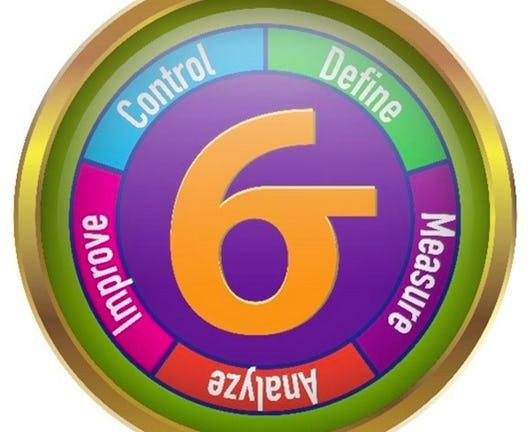
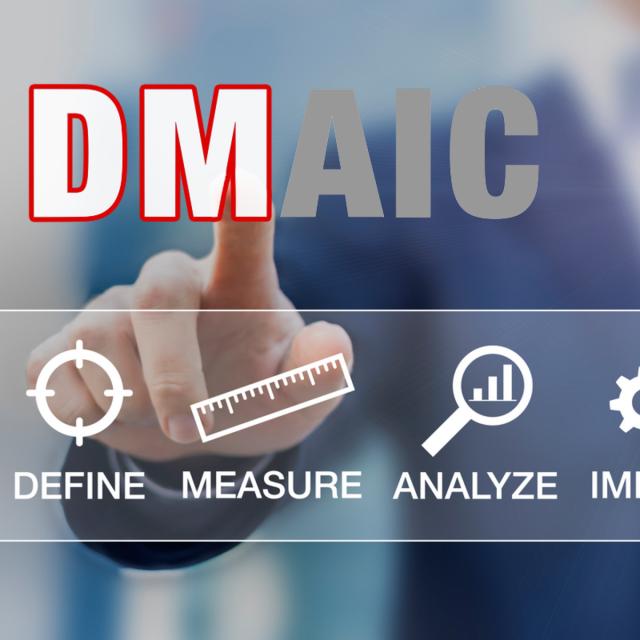
The course will equip you with the competencies and essential skills required to excel in the American Society for Quality (ASQ) Certified Six Sigma Yellow Belt (CSSYB) exam and contribute effectively to process improvement initiatives. The course provides an overview of Lean Six Sigma as a powerful methodology for process improvement, the define, measure, analyze, improve, and control (DMAIC) framework, measurement systems analysis (MSA), and various data collection methods.

Class Deals by MOOC List - Click here and see Coursera's Active Discounts, Deals, and Promo Codes.

By the end of this course, you will be able to:
-Identify the problem or opportunity to be addressed and then define specific and measurable goals for the project.
-Develop a project charter, including its objectives, scope, and required resources.
-Identify the needs and expectations of the customers directly affected by the problem or process under consideration.
-Create a high-level process map to visualize the process flow and identify areas for improvement.
The course is best suited for entry-level employees who are new to the world of Six Sigma and aim to advance their careers. No prior education or specific knowledge is required to enroll in this course.
This course is part of the ASQ-Certified Six Sigma Yellow Belt Exam Prep Specialization Specialization.

What you'll learn

  • Identify the problem or opportunity to be addressed and then define specific and measurable goals for the project.
  • Develop a project charter, including its objectives, scope, and required resources.
  • Identify the needs and expectations of the customers directly affected by the problem or process under consideration.
  • Create a high-level process map to visualize the process flow and identify areas for improvement.

Syllabus

Lean Six Sigma Fundamentals
In this module, you will gain an overview of the goal, origin, and evolution of the problem-solving approaches of Lean and Six Sigma. This module will equip you with the essential knowledge and skills required to contribute to process improvement initiatives in your organization effectively. You will also be introduced to each of the phases of the define, measure, analyze, improve, and control (DMAIC) approach and its role in driving continuous improvement and waste reduction.

Lean Six Sigma Metrics and Strategic Improvement Initiatives Framework
In this module, you will learn how to effectively measure and analyze performance in Lean Six Sigma projects. This first step comprises a detailed review to identify areas where improvements can make a difference. This module will also dive into consumer feedback to determine their requirements and expectations. After gathering consumer insights, you will learn how to determine critical-to-quality (CTQ) measures and KPIs for monitoring current conditions and future improvement activities. This aligns the company’s focus on customer satisfaction and strategic goals with a comprehensive, data-driven approach to continuous improvement.

Process Mapping and Project Charter
In this module, you will deep-dive into your organizational processes and the tools to be used for executing process improvements. You will be introduced to a visual representation technique called process mapping, which is used to document and understand the flow of a process from start to finish. The module also discusses how process maps help identify inefficiencies, bottlenecks, and opportunities for improvement. Additionally, you will learn about another tool called SIPOC, which stands for suppliers, inputs, process, outputs, and customers, representing the key elements involved in a process. SIPOC diagrams provide a high-level view of the process and its stakeholders and help to define and understand its boundaries. It also helps identify the critical requirements and potential sources of variation. Here, you will also learn how to develop a comprehensive project charter for your Lean Six Sigma initiatives. Further, you will be introduced to the essential elements of a project charter, its purpose, and its significance in project management. Finally, you will learn about the risk and how to control them and reduce their impact.

Peer Review Assignment
This is a peer-review assignment based on the concepts taught in the Introduction to Lean Six Sigma and Project Identification Methods course. In this assignment, you will be provided with real-life scenarios. You will be asked to explain how the DMAIC process can be applied to improve processes.


Go to Class
MOOC List is learner-supported. When you buy through links on our site, we may earn an affiliate commission.

Related Courses

Introduction to Machine Learning (Coursera) Coursera
Duke University

Introduction to Machine Learning (Coursera)

This course will provide you a foundational understanding of machine learning models (logistic regression, multilayer perceptrons, convolutional neural networks, natural language processing, etc.) as well as demonstrate how these models can solve complex problems in a variety of industries, from medical diagnostics to image recognition to text prediction.

Jun 12th 2026
5-12 Weeks
Introduction to Business Improvement: Lean Six Sigma, Kaizen, and Problem Solving (FutureLearn) FutureLearn
Lean 6 Services

Introduction to Business Improvement: Lean Six Sigma, Kaizen, and Problem Solving (FutureLearn)

Explore key business improvement techniques, and start working towards Lean Six Sigma Yellow Belt. Discover business improvement methods that can help identify and eliminate waste. Being able to minimise waste and maximise efficiency is crucial for any business, be it manufacturing or office-based. On this course, you’ll explore some of the most commonly used tools and techniques in business today, including Lean Six Sigma, Kaizen, Continuous Improvement, and Problem Solving. You’ll learn how you can practically improve your work processes, and successfully eliminate waste in your business.

Jun 28th 2021
3 Weeks
Six Sigma: Define and Measure (edX) EdX
Technische Universität München - TUM,TUMx

Six Sigma: Define and Measure (edX)

An introduction to the Six Sigma methodology and DMAIC cycle for process improvement with a focus on the Define and Measure phases. In this course, you will start by gaining an understanding of the background and meaning of Six Sigma and the five steps of the DMAIC process improvement flow: Define, Measure, Analyse, Improve and Control.

Self Paced
Self-Paced
Introduction to Lean Six Sigma for Sustainable and Resilient Supply Chains (edX) EdX
ISCEA

Introduction to Lean Six Sigma for Sustainable and Resilient Supply Chains (edX)

Become a Lean Six Sigma Yellow Belt, well versed in the techniques of Six Sigma, its metrics, and methodologies including but not limited to DMAIC (Define, Measure, Analyze, Improve, and Control), RCA (Root Cause Analysis), SIPOC (Suppliers, Inputs, Processes, Outputs, and Customers), and applications of Lean Six Sigma in Supply Chain Process Improvement.

Self Paced
Self-Paced
Gain from the Power of Lean Six Sigma (WizIQ) Other Providers
Canopus Business Management Group,Six Sigma Certification Course

Gain from the Power of Lean Six Sigma (WizIQ)

A good understanding of Lean Six Sigma concept is an indispensable knowledge for today’s aspiring professional or B-school student. If you are looking to get yourself up-to-speed in Lean Six Sigma, then this course is the best way to do so. By the end of the course you will be able to decide the relevance of Lean Six Sigma in your career and what kind of certification is apt for you.

No sessions available
5-12 Weeks
Apply Lean Six Sigma - Fundamentals Skills & Knowledge (OpenLearning) OpenLearning
InteGlobal GSBP

Apply Lean Six Sigma - Fundamentals Skills & Knowledge (OpenLearning)

One of the coolest characters in the world of investigations is Sir Arthur Conan Doyle’s Sherlock Holmes… You can learn to be a super sleuth in business productivity improvement, by learning to be a ‘process-scene investigator.’ In this first free course, you will be taken beyond a basic understanding of the world’s most sought after business skill set (Lean Six Sigma). Open your eyes to the everyday processes that surround you and explore how time, quality and pragmatic thinking each impact process efficiency.

Self Paced
Self-Paced
Operations Management: Strategy and Quality Management for the Digital Age (Coursera) Coursera
University of Illinois at Urbana-Champaign

Operations Management: Strategy and Quality Management for the Digital Age (Coursera)

In this course you will focus on process improvement. You will learn how to set organizational priorities for continuous process improvement, how to execute process improvement projects, and how to sustain the initiative for continuous improvements. Upon successful completion of this course, you will be able to: understand the roles of process improvement; relate underlying principles to frameworks and techniques used for process improvement; synthesize information to make decisions for organizational initiatives and process improvement; apply analytical techniques for tactical decisions in a process improvement project

Jun 8th 2026
4 Weeks
Six Sigma Tools for Define and Measure (Coursera) Coursera
University System of Georgia

Six Sigma Tools for Define and Measure (Coursera)

This course is for you if you are looking to learn more about Six Sigma or refresh your knowledge of the basic components of Six Sigma and Lean. Six Sigma skills are widely sought by employers both nationally and internationally. These skills have been proven to help improve business processes and performance. This course will cover the Define phase and introduce you to the Measure phase of the DMAIC (Define, Measure, Analyze, Improve, and Control) process. You will learn about Six Sigma project development and implementation, you will become familiar with project management tools, you will be introduced to statistics and understand its significance to Six Sigma, and finally you will learn about data collection and its importance to an organization.

Jun 8th 2026
4 Weeks
Six Sigma Principles (Coursera) Coursera
University System of Georgia

Six Sigma Principles (Coursera)

This course is for you if you are looking to learn more about Six Sigma or refresh your knowledge of the basic components of Six Sigma and Lean. Six Sigma skills are widely sought by employers both nationally and internationally. These skills have been proven to help improve business processes and performance. This course will introduce you to the purpose of Six Sigma and its value to an organization. You will learn about the basic principles of Six Sigma and Lean. Your instructors will introduce you to, and have you apply, some of the tools and metrics that are critical components of Six Sigma. This course will provide you with the basic knowledge of the principles, roles, and responsibilities of Six Sigma and Lean.

Jun 1st 2026
4 Weeks
Six Sigma and the Organization (Advanced) (Coursera) Coursera
University System of Georgia

Six Sigma and the Organization (Advanced) (Coursera)

This course is for you if you are looking to dive deeper into Six Sigma or strengthen and expand your knowledge of the basic components of green belt level of Six Sigma and Lean. Six Sigma skills are widely sought by employers both nationally and internationally. These skills have been proven to help improve business processes and performance. This course will introduce you to the purpose of Six Sigma and its value to an organization. You will learn about the basic principles of Six Sigma and Lean. Your instructors will introduce you to, and have you apply, some of the tools and metrics that are critical components of Six Sigma.

Jun 8th 2026
5-12 Weeks
Six Sigma Tools for Analyze (Coursera) Coursera
University System of Georgia

Six Sigma Tools for Analyze (Coursera)

This course will cover the Measure phase and portions of the Analyze phase of the Six Sigma DMAIC (Define, Measure, Analyze, Improve, and Control) process. You will learn about lean tools for process analysis, failure mode and effects analysis (FMEA), measurement system analysis (MSA) and gauge repeatability and reproducibility (GR&R), and you will be introduced to basic statistics. This course will outline useful measure and analysis phase tools and will give you an overview of statistics as they are related to the Six Sigma process.

Jun 8th 2026
4 Weeks