Digital Media for Health Outcomes (Coursera)

Offered by Yale University,
Digital Media for Health Outcomes (Coursera)

The Digital Media for Health Outcomes (DMHO) course will train health communication professionals to leverage social and behavioral insights to design, implement and evaluate health communications online. The course is designed as a comprehensive and evidence-based tutorial on the key tactical steps to develop and implement successful health campaigns on social media, and to evaluate their performance and impact on health behavior.

Class Deals by MOOC List - Click here and see Coursera's Active Discounts, Deals, and Promo Codes.

Throughout the course, students will explore best practices for designing relevant messages and campaign creatives. By the end of the course, students will be able to implement a digital communication strategy with actionable campaign objectives, and evaluate its impact through ad metrics, survey data, cost, and coverage indicators.

Syllabus

WEEK 1
Behavioral Insights as a Foundation
Behavioral insights are the foundation on which future campaign strategy is based. Participants will be encouraged to use this module to generate campaign ideas they can use to follow along with for the rest of the course.

WEEK 2
Crafting Your Communication Strategy
An understanding of key considerations to inform your health communication strategy for an established target audience.

WEEK 3
Designing for Context - Messaging & Creative That Resonates
A reveal of top performing content based on industry standards - both organic and planned assets - tied to best practices for designing health campaign creatives online.

WEEK 4
Tactics for Digital Media and Campaign Implementation
Learn how to design your digital communication strategy for optimal impact within budget and build confidence to hit the launch button on your campaign strategy!

WEEK 5
Metrics that Matter: Understanding Impact
Tangible goal setting and key performance indicators for real-world Social and Behavioral Change Communications (SBCC) campaigns.

Go to Class
MOOC List is learner-supported. When you buy through links on our site, we may earn an affiliate commission.

Related Courses

Genomics: Decoding the Universal Language of Life (Coursera) Coursera
University of Illinois at Urbana-Champaign

Genomics: Decoding the Universal Language of Life (Coursera)

What is a genome? A genome contains all of the information that a cell needs to develop, function, and reproduce itself, and all the information needed for those cells to come together to form a person, plant, or animal. Genomes contain an organism’s complete set of genes, and also the even tinier genetic structures that help regulate when and how those genes are used. The ability to regrow a torn ligament, the clues that might predict the onset of mental illness, the nutritional potential of crops, and even the history of life itself, are all encoded in genomes. By taking this course, you will discover how scientists are deciphering the language of genomes to learn how to develop sustainable food and fuel supplies, improve disease treatment and prevention, and protect our environment.

Oct 26th 2026
5-12 Weeks
HI-FIVE: Health Informatics For Innovation, Value & Enrichment (Social/Peer Perspective) (Coursera) Coursera
Columbia University

HI-FIVE: Health Informatics For Innovation, Value & Enrichment (Social/Peer Perspective) (Coursera)

HI-FIVE (Health Informatics For Innovation, Value & Enrichment) Training is an approximately 10-hour online course designed by Columbia University in 2016, with sponsorship from the Office of the National Coordinator for Health Information Technology (ONC). The training is role-based and uses case scenarios. Our nation’s healthcare system is changing at a rapid pace. Transformative health care delivery programs depend heavily on health information technology to improve and coordinate care, maintain patient registries, support patient engagement, develop and sustain data infrastructure necessary for multi-payer value-based payment, and enable analytical capacities to inform decision making and streamline reporting.

Oct 26th 2026
4 Weeks
Unleashing the Impact of your Social Enterprise (Coursera) Coursera
Copenhagen Business School

Unleashing the Impact of your Social Enterprise (Coursera)

In Course 3 of this Specialization you will first of all learn about Social Impact Assessment. Hence you will be able to develop a method to evaluate the social mission that you achieve while implementing your business plan. Next you will outline an appropriate communication strategy for your social enterprise and will demonstrate how to market your products and services to beneficiaries and other customers. Here you will employ an adaptable communication strategy as you move from early adopters to a broader market share.

Oct 26th 2026
5-12 Weeks
Engineering Health: Introduction to Yoga and Physiology (Coursera) Coursera
New York University Tandon School of Engineering

Engineering Health: Introduction to Yoga and Physiology (Coursera)

This course gives you access to an exploration of physiological systems from the perspective of overall health and wellness. In particular, a focus on yoga, meditation and mindfulness as a therapeutic intervention in chronic illness and long term treatment. This course is intended for yoga practitioners and teachers, as well as college students and medical practitioners looking for a deeper understanding of the physiological benefits of yoga.

Oct 26th 2026
5-12 Weeks
Design and Interpretation of Clinical Trials (Coursera) Coursera
Johns Hopkins University

Design and Interpretation of Clinical Trials (Coursera)

Clinical trials are experiments designed to evaluate new interventions to prevent or treat disease in humans. The interventions evaluated can be drugs, devices (e.g., hearing aid), surgeries, behavioral interventions (e.g., smoking cessation program), community health programs (e.g. cancer screening programs) or health delivery systems (e.g., special care units for hospital admissions). We consider clinical trials experiments because the investigators rather the patients or their doctors select the treatment the patients receive.

Oct 26th 2026
5-12 Weeks
Major Depression in the Population: A Public Health Approach (Coursera) Coursera
Johns Hopkins University

Major Depression in the Population: A Public Health Approach (Coursera)

Public Mental Health is the application of the principles of medicine and social science to prevent the occurrence of mental and behavioral disorders and to promote mental health of the population. This course illustrates the principles of public health applied to depressive disorder, including principles of epidemiology, transcultural psychiatry, health services research, and prevention. It is predicted that by 2020 depressive disorder will be the most important cause of disease burden in the entire world! Every human being suffers from feeling depressed at some point or other, but only about one fifth of the population will experience an episode of depressive disorder over the course of their lives.

Oct 26th 2026
5-12 Weeks
Unravelling solutions for Future Food problems (Coursera) Coursera
Universiteit Utrecht

Unravelling solutions for Future Food problems (Coursera)

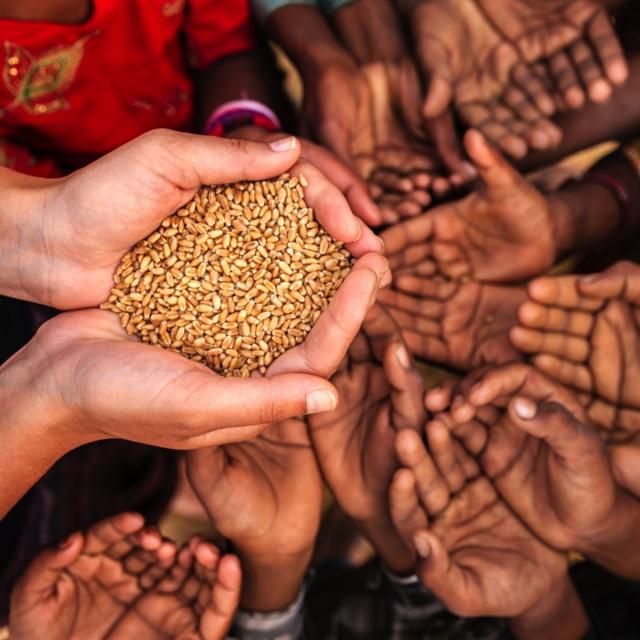
Our society depends on the availability of food and accessibility to it. According to the United Nations nearly 800 million people are hungry and on the other hand, over 650 million people are obese. While many people in developing countries experience food shortage, in industrialized countries people are throwing food away. These facts show how paradoxical and complex the world’s food problem is.

Nov 1st 2026
5-12 Weeks
Biohacking Your Brain's Health (Coursera) Coursera
Emory University

Biohacking Your Brain's Health (Coursera)

With deteriorating health, particularly brain health, occurring at a global level, this course introduces you to methods for maximizing your brain's fitness through nutrition, exercise, meditation, and sleep. We'll debunk popular myths about prescribed practices for overall health and then uncover studies from the last few decades revealing practical routines and interventions that are proven to help improve the brain.

Oct 26th 2026
4 Weeks
Living with Dementia: Impact on Individuals, Caregivers, Communities and Societies (Coursera) Coursera
Johns Hopkins University

Living with Dementia: Impact on Individuals, Caregivers, Communities and Societies (Coursera)

Health professionals and students, family caregivers, friends of and affected individuals, and others interested in learning about dementia and quality care will benefit from completing the course. Led by Drs. Nancy Hodgson and Laura Gitlin, participants will acquire foundational knowledge in the care of persons with Alzheimer’s Disease and other neurocognitive disorders.

Oct 26th 2026
5-12 Weeks
Health Concepts in Chinese Medicine (Coursera) Coursera
The Hong Kong University of Science and Technology - HKUST

Health Concepts in Chinese Medicine (Coursera)

Chinese Medicine and Modern Medicine are two distinct medical systems, yet they both aim at the prevention and treatment of human diseases. With this in mind, we should understand the practice of Chinese Medicine in the context of Modern Medicine. In this course, we explore the basic theories underlying the practice of Chinese Medicine, compare and contrast the use of Chinese Medicine and Modern Medicine in Preventive Health, and discuss how to restore a healthy condition and understand the pharmacological basis of different types of Chinese tonifying herbs.

Oct 26th 2026
5-12 Weeks
Anatomy of the Abdomen and Pelvis; a journey from basis to clinic. (Coursera) Coursera
Leiden University,Leiden University Medical Center

Anatomy of the Abdomen and Pelvis; a journey from basis to clinic. (Coursera)

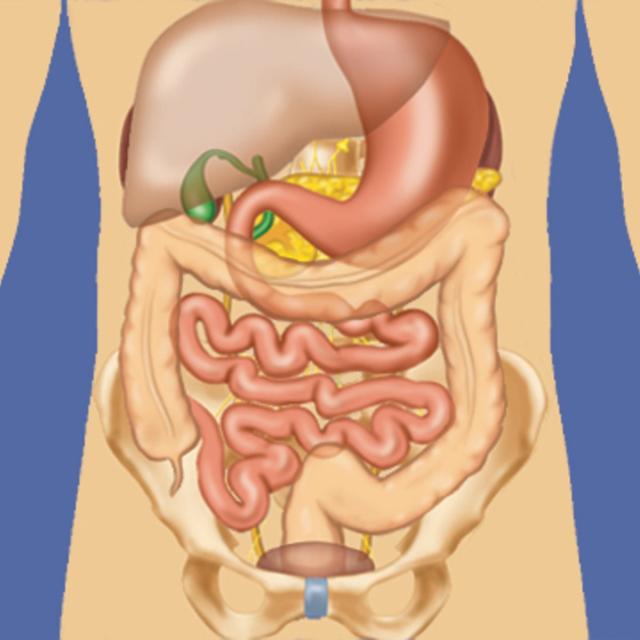
In this anatomy course you will explore the organs involved in our food digestion and discover the common causes of abdominal and pelvic pain. The latest graphics and animations will help you to find new insights and understanding of this part of the body, that has been the focus of anatomical research for centuries and presently arouses renewed scientific interest. You will explore the 3D anatomy of the organs from a basic level, providing thorough anatomical understanding, to its advanced application in surgical procedures.

Nov 2nd 2026
5-12 Weeks
Population Health: Predictive Analytics (Coursera) Coursera
Leiden University

Population Health: Predictive Analytics (Coursera)

Predictive analytics has a longstanding tradition in medicine. Developing better prediction models is a critical step in the pursuit of improved health care: we need these tools to guide our decision-making on preventive measures, and individualized treatments. In order to effectively use and develop these models, we must understand them better. In this course, you will learn how to make accurate prediction tools, and how to assess their validity. First, we will discuss the role of predictive analytics for prevention, diagnosis, and effectiveness. Then, we look at key concepts such as study design, sample size and overfitting.

Oct 26th 2026
4 Weeks