Cómo entrenar a tus electrones 2: Diodos y Transistores (Coursera)

Cómo entrenar a tus electrones 2: Diodos y Transistores (Coursera)

La electrónica ha respaldado el desarrollo científico y tecnológico de la humanidad, ostentando un rol clave en los últimos 50 años. Nos admiramos de la capacidad del ser humano de diseñar circuitos integrados que contienen millones de transistores y que nos permiten procesar con gran precisión las señales más débiles provenientes de las antenas de telefonía celular, de las neuronas del cerebro, de una cámara digital, o de la carga depositada por partículas subatómicas que colisionan en el Gran Colisionador de Hadrones en Suiza.

Class Deals by MOOC List - Click here and see Coursera's Active Discounts, Deals, and Promo Codes.

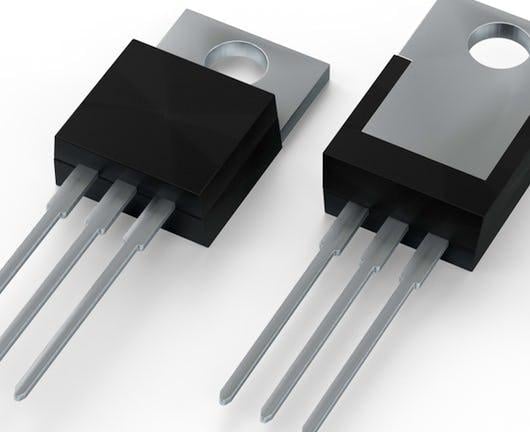
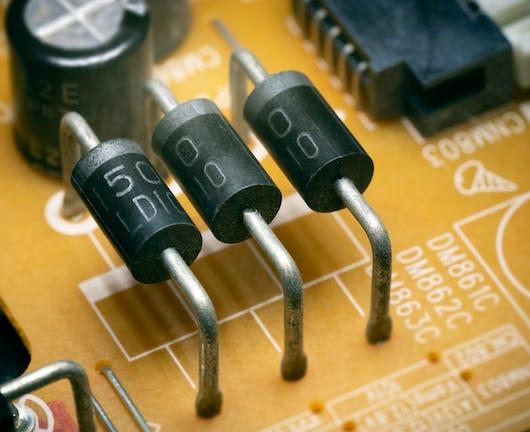
Es difícil entender un circuito electrónico, y aún más difícil diseñarlo. Pero no es imposible. Los electrones pueden ser muy dóciles si sabemos dominarlos. "Cómo entrenar a tus electrones 2: Diodos y Transistores", el segundo de una serie de tres MOOCs, te permitirá dar los primeros pasos para comprender los dispositivos semiconductores más importantes: diodos y transistores de efecto de campo. Las videolecciones acompañadas de pequeños cuestionarios te ayudarán a reforzar tu aprendizaje en cuanto a la comprensión del funcionamiento de los semiconductores, los circuitos principales para rectificar y amplificar voltajes, y las técnicas de análisis más utilizadas.

Course 2 of 3 in the Electrónica en cápsulas Specialization

Syllabus

WEEK 1
Introducción a la física de semiconductores
En este módulo aprenderás los fundamentos de la física que modela el funcionamiento de los dispositivos de estado sólidos más sencillos.

WEEK 2
El diodo
En este módulo aprenderás acerca de la física del diodo de unión, su modelo matemático y sus regiones de operación. Luego aprenderás los principales circuitos con diodos y finalmente conocerás otros dispositivos semiconductores basados en la unión PN.

WEEK 3
El transistor de efecto de campo: Estructura y funcionamiento
En este módulo aprenderás acerca de la estructura física de los MOSFETs, sus regiones de operación, sus modelos matemáticos y cómo polarizarlos en un circuito.

WEEK 4
El transistor de efecto de campo: Circuitos
En este módulo conocerás las principales configuraciones de amplificadores con MOSFETs, incluyendo amplificadores elementales y amplificadores de varios transistores. También aprenderás acerca del uso de los MOSFETs como switches para circuitos de potencia y circuitos digitales. Finalmente conocerás otros dispositivos de efecto de campo menos utilizados que los MOSFETs.
Go to Class
MOOC List is learner-supported. When you buy through links on our site, we may earn an affiliate commission.

Related Courses

Introduction to Semiconductor Devices 2 (Coursera) Coursera
Korea Advanced Institute of Science and Technology - KAIST

Introduction to Semiconductor Devices 2 (Coursera)

This course aims to provide a general understanding of semiconductor devices. This coures covers the Metal-Semiconductor Contact, Metal-Oxide-Semiconductor (MOS) capapcitor, Metal-Oxide-Semiconductor Field Effect Transistors(MOSFETs), CMOS, Metal-Semiconductor Field Effect Transistors(MESFETs), Memory and Bipolar Junction Transistor (BJT) to improve the overall knowledge of semiconductor industry.

Jun 1st 2026
5-12 Weeks
Electrónica Digital Bit a Bit: Aprendiendo fundamentos (Coursera) Coursera
Pontificia Universidad Católica de Chile

Electrónica Digital Bit a Bit: Aprendiendo fundamentos (Coursera)

Es desafiante y hasta atemorizante entender un circuito digital cuando observamos la cantidad de transistores que puede contener, y aún más difícil diseñarlo eficientemente para su implementación en un circuito integrado o una FPGA. Sin embargo, saber diseñar circuitos digitales simples nos abre las puertas para diseñar sistemas digitales más complejos a partir de estos.

May 25th 2026
5-12 Weeks
High Voltage Schottky and p-n Diodes (Coursera) Coursera
University of Colorado Boulder

High Voltage Schottky and p-n Diodes (Coursera)

This course can also be taken for academic credit as ECEA 5722, part of CU Boulder’s Master of Science in Electrical Engineering. This course is primarily aimed at first year graduate students interested in engineering or science, along with professionals with an interest in power electronics and semiconductor devices .

Jun 1st 2026
4 Weeks
Introduction to Semiconductor Process 2 (Coursera) Coursera
Korea Advanced Institute of Science and Technology - KAIST

Introduction to Semiconductor Process 2 (Coursera)

This course aims to provide a general understanding of semiconductor process. This course explores the principles and basic theory of semiconductor device and process. Furthermore, the students will learn the overall semiconductor process such as oxidation, diffusion, ion implantation, lithography, etching, thin film deposition, plasma, metallization, and packaging.

Jun 1st 2026
5-12 Weeks
Microwave engineering and antennas (Coursera) Coursera
Eindhoven University of Technology

Microwave engineering and antennas (Coursera)

This unique Master-level course provides you with in-depth know-how of microwave engineering and antennas. The course combines both passive and active microwave circuits as well as antenna systems. Future applications, like millimeter-wave 5G/beyond-5G wireless communications or automotive radar, require experts that can co-design highly integrated antenna systems that include both antennas and microwave electronics. We will provide you with the required theoretical foundation as well as hands-on experience using state-of-the-art design tools. The web lectures are supported by many on-line quizzes in which you can practice the background theory.

Jun 8th 2026
5-12 Weeks
Electrodynamics: In-depth Solutions for Maxwell’s Equations (Coursera) Coursera
Korea Advanced Institute of Science and Technology - KAIST

Electrodynamics: In-depth Solutions for Maxwell’s Equations (Coursera)

This course is the fourth course in the Electrodynamics series, and is directly proceeded by Electrodynamics: Electric and Magnetic Fields. Previously, we have learned about visualization of fields and solutions which were not time dependent. Here, we will return to Maxwell's Equations and use them to produce wave equations which can be used to analyze complex systems, such as oscillating dipoles. We will also introduce AC circuits, and how they can be simplified, solved, and applied.

May 25th 2026
5-12 Weeks
Converter Circuits (Coursera) Coursera
University of Colorado Boulder

Converter Circuits (Coursera)

This course introduces more advanced concepts of switched-mode converter circuits. Realization of the power semiconductors in inverters or in converters having bidirectional power flow is explained. Power diodes, power MOSFETs, and IGBTs are explained, along with the origins of their switching times. Equivalent circuit models are refined to include the effects of switching loss. The discontinuous conduction mode is described and analyzed. A number of well-known converter circuit topologies are explored, including those with transformer isolation.

May 25th 2026
4 Weeks
Designing Hardware for Raspberry Pi Projects (Coursera) Coursera
Johns Hopkins University

Designing Hardware for Raspberry Pi Projects (Coursera)

This is course 4 of this specialization (although it can be taken out of order) and focuses on applying experience and knowledge gained in the first three courses to build physical electronics hardware. Specifically, this course focuses on four areas: circuit simulation, schematic entry, PCB layout, and 3D CAD modeling. There are many excellent commercial applications available in these areas, however to give everyone access we'll be using all free and open-source software.

Jun 8th 2026
4 Weeks
Advanced Semiconductor Packaging (Coursera) Coursera
Arizona State University

Advanced Semiconductor Packaging (Coursera)

Throughout this course, you will be introduced to Pathway for Assembly and Packaging technologies for 7-nanometer silicon feature sizes and beyond. The course will present the evolution and impact of packaging on product performance and innovation. Specifically, we highlight how packaging has enabled better products via the use of heterogeneous integration by improving the interconnects for thermal management and signal integrity.

Jun 1st 2026
5-12 Weeks
Introduction to Semiconductor Packaging (Coursera) Coursera
Arizona State University

Introduction to Semiconductor Packaging (Coursera)

This course will cover various aspects of microelectronics and nanoelectronics. This field aims to advance and improve the functionality of electronic devices by scaling transistors to smaller feature sizes. The course will introduce you to essential concepts such as length scales, transistor actions, and feature sizes of integrated circuits.

Jun 1st 2026
5-12 Weeks