Advanced Semiconductor Packaging (Coursera)

Advanced Semiconductor Packaging (Coursera)

Throughout this course, you will be introduced to Pathway for Assembly and Packaging technologies for 7-nanometer silicon feature sizes and beyond. The course will present the evolution and impact of packaging on product performance and innovation. Specifically, we highlight how packaging has enabled better products via the use of heterogeneous integration by improving the interconnects for thermal management and signal integrity.

Class Deals by MOOC List - Click here and see Coursera's Active Discounts, Deals, and Promo Codes.

Course 3 of 3 in the Semiconductor Packaging Specialization.

What You Will Learn

  • Introduction to Pathway for Assembly and Packaging technologies
  • The evolution and impact of packaging on product performance and innovation.

Syllabus

WEEK 1
Welcome
Welcome to Advanced Packaging! Throughout this course, we will introduce you to Pathway for Assembly and Packaging technologies for 7-nanometer silicon feature sizes and beyond. We will present the evolution and impact of packaging on product performance and innovation. Specifically, we highlight how packaging has enabled better products via the use of heterogeneous integration by improving the interconnects for thermal management and signal integrity. Thank you for joining us & we hope you enjoy the materials!

WEEK 2
Packaging Trends Part 1
In this module you will have an opportunity to view a lecture video by Ravi Mahajan who is an Intel Fellow and the Director of Pathfinding for Assembly and Packaging technologies for 7-nanometer (7nm) silicon and beyond in the Technology Development and Manufacturing Group at Intel Corporation. In this module Dr. Mahajan will discuss the evolution and impact of packaging on product performance and innovation. He shows how packaging has enabled better products using heterogeneous integration (HI) by improving the interconnects, signaling, power delivery and thermals over the years.

WEEK 3
Packaging Trends Part 2
In this module you will have an opportunity to view a lecture video by Dr. Ravi Mahajan, Intel Fellow. In this module Dr. Mahajan will discuss how advanced packaging technologies enable the integration of diverse components and functionalities into microelectronics systems. You will learn about the importance of advanced packaging for the future of computing and communication.

WEEK 4
Heterogeneous Integration Part 1
In this module you will have an opportunity to view a lecture video by Dr. Ravi Mahajan, Intel Fellow. In this module Dr. Mahajan will discuss how interconnect scaling can enable complex multi-chip packages (MCPs) that combine different types of chips and technologies. You will learn about the various interconnect options and trade-offs for MCPs, and how blending 2D and 3D architectures.

WEEK 5
Heterogeneous Integration Part 2
In this module you will have an opportunity to view a lecture video by Dr. Ravi Mahajan, Intel Fellow. In this module Dr. Mahajan will discuss the trends in interconnect scaling for microelectronics systems. You will learn how 2D and 3D die-to-die (D2D) interconnects can enable high performance, how D2D link standardization can facilitate systematic and modular design of multi-chip packages (MCPs), and how co-packaging optics can address the challenge of off-package bandwidth scaling in future systems.

WEEK 6
Advanced Packaging End of Course Summary
In conclusion of Advanced Packaging, we would like to summarize the main takeaways. Starting with Pathway for Assembly and Packaging technologies, we discussed trends in interconnect scaling of microelectronics systems 7-nanometer (7nm) silicon and beyond. During our presentations, we saw how 2D and 3D die-to-die (D2D) interconnects can enable high performance and can facilitate the systematic and modular design of multi-chip packages (MCPs). Turning to the future, we estimated how co-packaging optics could address the challenge of off-package bandwidth scaling in future systems.

Go to Class
MOOC List is learner-supported. When you buy through links on our site, we may earn an affiliate commission.

Related Courses

Introduction to Semiconductor Devices 1 (Coursera) Coursera
Korea Advanced Institute of Science and Technology - KAIST

Introduction to Semiconductor Devices 1 (Coursera)

This course aims to provide a general understanding of semiconductor devices. This course explores the principles and the operation mechanism of semiconductor, such as charge transfer, p-n junction, junction capacitors, and Metal-Oxide-Semiconductor Field Effect Transistors(MOSFETs).

Jun 1st 2026
5-12 Weeks
Solar Energy: Photovoltaic (PV) Energy Conversion (edX) EdX
Delft University of Technology,DelftX

Solar Energy: Photovoltaic (PV) Energy Conversion (edX)

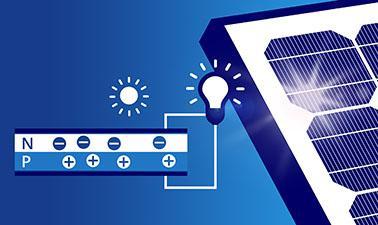
Learn how solar cells generate electricity, and about the semiconductor physics and optics required to design and manufacture solar cells. The key factor in getting more efficient and cheaper solar energy panels is the advance in the development of photovoltaic cells. In this course you will learn how photovoltaic cells convert solar energy into useable electricity. You will also discover how to tackle potential loss mechanisms in solar cells.

Aug 29th 2023
5-12 Weeks
Electron and Ion Beam Characterization (Coursera) Coursera
Arizona State University

Electron and Ion Beam Characterization (Coursera)

Electron and ion beams are widely used for both qualitative and quantitative analysis of semiconductor materials and devices. They can be used to image structures with sub-nm resolution and to provide information about elemental composition and dopant concentration. This course describes the fundamentals of electron and ion beam characterization and includes a project that analyzes the surface roughness of a solar cell.

Jun 22nd 2026
5-12 Weeks
Interfacing with the Raspberry Pi (Coursera) Coursera
University of California, Irvine

Interfacing with the Raspberry Pi (Coursera)

The Raspberry Pi uses a variety of input/output devices based on protocols such as HDMI, USB, and Ethernet to communicate with the outside world. In this class you will learn how to use these protocols with other external devices (sensors, motors, GPS, orientation, LCD screens etc.) to get your IoT device to interact with the real world.

Jun 22nd 2026
4 Weeks
Electrical Properties and Semiconductors (Coursera) Coursera
Arizona State University

Electrical Properties and Semiconductors (Coursera)

In this course, we will explore the electrical properties of materials and classify different materials as conductors, semiconductors or insulators. We will look at some examples of conductors, semiconductors and insulators, and note the key factors that cause the differences in their electrical properties. We will use rudimentary band theory to show how temperature impacts the conductivity of the three classifications of materials. We will learn what causes the differences in electrical behavior of a p-type versus an n-type semiconductor in a p-n diode.

Jun 15th 2026
5-12 Weeks
Optical and X-Ray Characterization (Coursera) Coursera
Arizona State University

Optical and X-Ray Characterization (Coursera)

Optical and X-ray techniques are powerful ways to characterize semiconductor thin films. They can be used to measure film thickness, purity and crystalline quality, and for compositional analysis. Modern techniques are fast, turn-key, and generally non-destructive, allowing for rapid assessment of material properties. This course describes the fundamentals of optical and X-ray characterization and provides real-world examples of how they are used in semiconductor manufacturing.

Jun 22nd 2026
5-12 Weeks
Quantitative Methods (Coursera) Coursera
University of Amsterdam

Quantitative Methods (Coursera)

Discover the principles of solid scientific methods in the behavioral and social sciences. Join us and learn to separate sloppy science from solid research! This course will cover the fundamental principles of science, some history and philosophy of science, research designs, measurement, sampling and ethics. The course is comparable to a university level introductory course on quantitative research methods in the social sciences, but has a strong focus on research integrity. We will use examples from sociology, political sciences, educational sciences, communication sciences and psychology.

Jun 22nd 2026
5-12 Weeks
Diode - pn Junction and Metal Semiconductor Contact (Coursera) Coursera
University of Colorado Boulder

Diode - pn Junction and Metal Semiconductor Contact (Coursera)

This course presents in-depth discussion and analysis of pn junction and metal-semiconductor contacts including equilibrium behavior, current and capacitance responses under bias, breakdown, non-rectifying behavior, and surface effect. You'll work through sophisticated analysis and application to electronic devices.

Jun 28th 2026
4 Weeks
Creativity, Innovation, and Change (Coursera) Coursera
Pennsylvania State University

Creativity, Innovation, and Change (Coursera)

Our lives are being disrupted by pandemics, global warming, wars, political chaos, and technological innovations. We must prepare for an unpredictable and unknown future - and this is the goal of the course on Creativity, Innovation and Transformation (CIT)! CIT is an upgrade of the former Creativity, Innovation and Change (CIC) course, which is now streamlined and updated with a new module on Transformation.

Jun 22nd 2026
4 Weeks