MOS Transistors (Coursera)

Offered by Columbia University,
MOS Transistors (Coursera)

Learn how MOS transistors work, and how to model them. The understanding provided in this course is essential not only for device modelers, but also for designers of high-performance circuits.

Class Deals by MOOC List - Click here and see Coursera's Active Discounts, Deals, and Promo Codes.

PLEASE NOTE: This version of the course has been formed from an earlier version, which was actively run by the instructor and his teaching assistants. Some of what is mentioned in the video lectures and the accompanying material regarding logistics, book availability and method of grading may no longer be relevant to the present version. Neither the instructor nor the original teaching assistants are running this version of the course. There will be no certificate offered for this course.

Syllabus

WEEK 1
About This Course and Overview of the MOS Transistor
Welcome to the “MOS Transistors” course! We are very excited to be able to offer this course, and are looking forward to working with you.
Preliminaries and Background

WEEK 2
The Two-Terminal and Three-Terminal MOS Structures

WEEK 3
The Long-Channel MOS Transistor – Part 1
This is the first module we are dealing with the complete transistor; much of this material, as well as next module's material, will form the core of what we will be covering in the rest of the course. We hope you will spend extra time studying to make sure you understand this material in depth. The total viewing time in each of these two modules is shorter, which should help.

WEEK 4
The Long-Channel MOS Transistor – Part 2
This material concludes the lectures on the long-channel transistor in DC operation. As mentioned earlier, these lectures will form the core on which many of our subsequent discussions will be based.

WEEK 5
Small-Dimension Effects 1
In this module we are dealing with phenomena that occur when the transistor dimensions are made small; this is important knowledge to have when one is dealing with modern devices.

WEEK 6
Small-Dimension Effects 2; Modeling for Circuits Simulation
This module we will finish with small dimension effects, and then talk about models for circuit simulation (the circuit designers among you are probably already using such models). We discuss what it takes to make a good model for circuit simulation (among other things: a lot of caution and care, and about 20,000 lines of code!), and how you can spot possible problems with such models. Although models for circuit simulation include capabilities we have not yet discussed, such as charge modeling, we think you know enough about models at this point to be able to follow this general discussion (which is out of sequence – it’s from Chap. 10 in the book, where you can find much more on the subject).

WEEK 7
Large-Signal Dynamic Operation
In this module there is a significant departure from what we have done up to this point: we will allow the terminal voltages of the transistor to vary with time. We will determine the resulting terminal currents, which will now include a “charging” component. We will do this both for moderate and for very high “speeds”. The transient response of circuits involves similar calculations, only done by computer for an ensemble of transistors and other devices.

WEEK 8
Small-Signal Modeling I
The material for this module deals with small-signal modeling, and constitutes an important part of the description of MOS transistor behavior. It relates small changes in terminal voltages to the resulting small changes in currents. Small-signal modeling is key to analog circuit design, but not only; it is also used in high-performance digital circuit design (e.g., in designing memory sense amplifiers).

WEEK 9
Small-Signal Modeling II
This material concludes our discussion of small-signal modeling; it shows how we can model the transistor at frequencies at which the simple model we derived last week is not valid. Such modeling is important in high-frequency applications, e.g. transceiver design.

WEEK 10
Final Exam
The exam is open book, open notes, open videos. It covers the material of the first nine weeks of videos in the course. You are NOT allowed to discuss the exam, directly or indirectly, with anyone. Anybody found in violation of this rule will be removed from the course. You should, of course, feel free to report technical issues with the exam and its submission.

WEEK 11
End of Course
Although your knowledge of this material will not be tested in the final exam, we urge you to go through it, as it deals with important topics, namely noise, ion implantation and substrate nonuniformity, and statistical variability; these topics will help complete your understanding of MOS transistors.

Go to Class
MOOC List is learner-supported. When you buy through links on our site, we may earn an affiliate commission.

Related Courses

Nanomaterials for Civil and Environmental Applications (edX) EdX
Purdue University,PurdueX

Nanomaterials for Civil and Environmental Applications (edX)

Learn about the field of nanotechnology with a special emphasis on nanomaterials synthesis, characterizations and their applications in civil and environmental engineering. This course will introduce students to the field of nanotechnology with a special emphasis on nanomaterials synthesis, characterizations and their applications in civil and environmental engineering.

Sep 27th 2021
5-12 Weeks
Powering the Drive: Unveiling EV Electronics (Coursera) Coursera
Coursera Instructor Network

Powering the Drive: Unveiling EV Electronics (Coursera)

In the rapidly advancing world of electric vehicles (EVs), understanding the application of power electronics is essential for both professionals and enthusiasts. Welcome to our comprehensive video course on the "Electric Vehicle Power Electronics " This course explores the pivotal role and significance of power electronics in the EV ecosystem. As EVs become a prominent part of the transportation landscape, understanding the intricacies of power electronics is crucial. This course equips you with the knowledge and skills to comprehend, utilize, and optimize power electronics for efficient and sustainable electric vehicle operation.

Jun 1st 2026
1 Week
Designing Hardware for Raspberry Pi Projects (Coursera) Coursera
Johns Hopkins University

Designing Hardware for Raspberry Pi Projects (Coursera)

This is course 4 of this specialization (although it can be taken out of order) and focuses on applying experience and knowledge gained in the first three courses to build physical electronics hardware. Specifically, this course focuses on four areas: circuit simulation, schematic entry, PCB layout, and 3D CAD modeling. There are many excellent commercial applications available in these areas, however to give everyone access we'll be using all free and open-source software.

Jun 22nd 2026
4 Weeks
Wie 'denkt' ein Computer? Vom Sandkorn bis zur Software (openHPI) OpenHPI
Hasso-Plattner-Institut

Wie 'denkt' ein Computer? Vom Sandkorn bis zur Software (openHPI)

Wie funktioniert ein Computer eigentlich? Diese Frage hast Du Dir wahrscheinlich schon einmal gestellt. Ausgehend von Transistoren und elektrischen Schaltungen finden wir heraus, woraus ein Prozessor besteht und wie er funktioniert. Dabei probieren wir selbst mit verschiedenen Simulationstools das Gelernte aus und entdecken die Welt der Rechnertechnik.

Apr 26th 2023
4 Weeks
Teaching Physical Computing with Raspberry Pi and Python (FutureLearn) FutureLearn
Raspberry Pi Foundation

Teaching Physical Computing with Raspberry Pi and Python (FutureLearn)

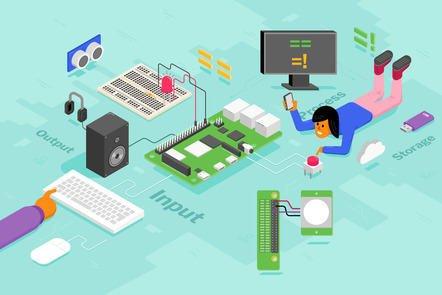
Explore the exciting world of physical computing and create electronic circuits that you can control with code. Learn the benefits of using physical computing with your students. On this course from the Raspberry Pi Foundation, you will be introduced to the world of physical computing. You will use input devices to capture data, process that data with the Python programming language, and then use output devices to get information back out from your computer.

Mar 6th 2023
3 Weeks
Solid State Devices 1 (edX) EdX
Purdue University,PurdueX

Solid State Devices 1 (edX)

Semiconductor are everywhere in human activities, from your credit card to space exploration. This graduate-level introduction brings aspects of physics, chemistry, and engineering together to understand, analyze, and design transistors and solar cells. This course provides the graduate-level introduction to understand, analyze, characterize and design the operation of semiconductor devices such as transistors, diodes, solar cells, light-emitting devices, and more.

Jan 9th 2023
13-24 Weeks
Electricity and Magnetism: Maxwell’s Equations (edX) EdX
MIT,MITx

Electricity and Magnetism: Maxwell’s Equations (edX)

In this final part of 8.02, we will cover Faraday’s Law, Circuits with Inductors, Maxwell’s equations, and electromagnetic radiation. This introductory Electromagnetism physics course will require the use of calculus. Electricity and Magnetism dominate much of the world around us – from the most fundamental processes in nature to cutting edge electronic devices.

Self Paced
Self-Paced
Converter Control (Coursera) Coursera
University of Colorado Boulder

Converter Control (Coursera)

This course teaches how to design a feedback system to control a switching converter. The equivalent circuit models derived in the previous courses are extended to model small-signal ac variations. These models are then solved, to find the important transfer functions of the converter and its regulator system. Finally, the feedback loop is modeled, analyzed, and designed to meet requirements such as output regulation, bandwidth and transient response, and rejection of disturbances.

Jun 22nd 2026
4 Weeks