Semiconductor Packaging Manufacturing (Coursera)

Semiconductor Packaging Manufacturing (Coursera)

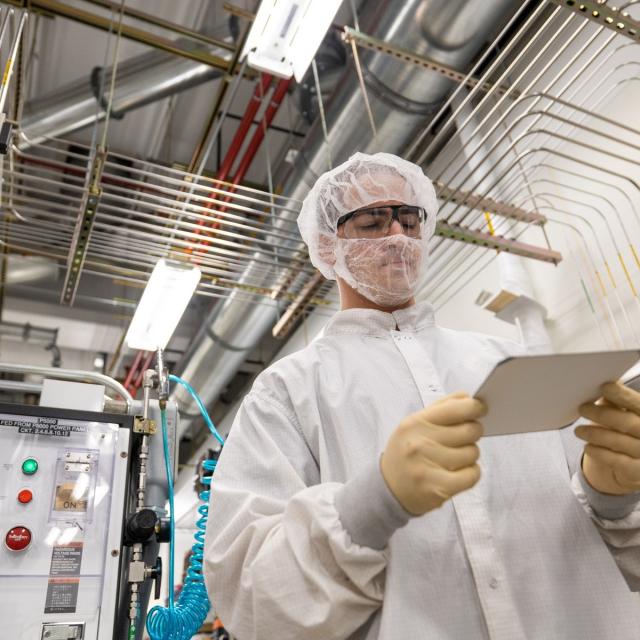
This course will provide information on the various stages of semiconductor package manufacturing, including sort, assembly, and final test. In addition, we will also describe how to select, build, and test the packages with the die and other components to ensure the quality of the package and total assembly performance.

Class Deals by MOOC List - Click here and see Coursera's Active Discounts, Deals, and Promo Codes.

We will also discuss the role of Process Control Systems in semiconductor manufacturing as they relate to quality testing. Specifically, we will explore how Process Control Systems can help identify and correct process problems that cause variation and quality issues. Finally, we also demonstrate how to use control charts to monitor the process performance. These can assist in decision-making, specifically when to take action to improve the process.
Course 2 of 3 in the Semiconductor Packaging Specialization.

What You Will Learn

  • Learn about the various stages of semiconductor package manufacturing.
  • The role of Process Control Systems in semiconductor manufacturing.
  • How Process control Systems can help identify and correct process problems.
  • How to use control charts to monitor process performance.

Syllabus

WEEK 1
Welcome
Welcome to Semiconductor Packaging Manufacturing, where we discuss the various stages of semiconductor package manufacturing, including sort, assembly, and final test. In addition, we will also describe how to select, build, and test the packages with the die and other components to ensure the quality of the package and total assembly performance. We will also discuss the role of Process Control Systems in semiconductor manufacturing as they relate to quality testing. Specifically, we will explore how Process Control Systems can help identify and correct process problems that cause variation and quality issues. Finally, we also demonstrate how to use control charts to monitor the process performance. These can assist in decision-making, specifically when to take action to improve the process.

WEEK 2
Introduction to Semiconductor Package Manufacturing 1
In this module you will have an opportunity to view a lecture video by Principal Engineer, Dr. Mitul Modi from Intel as he discusses semiconductor package manufacturing. He will explain how semiconductor packaging is a complex process and discuss the three primary phases: sort, assembly, and final test.

WEEK 3
Introduction to Semiconductor Package Manufacturing 2
In this module you will have an opportunity to view a lecture video by Principal Engineer, Dr. Mitul Modi from Intel as he discusses process flows for different types of semiconductor packages. He will explain how most process flows consist of three basic steps: sort, assembly, and final test. You will learn the details of how these steps vary depending on the package type. Mitul will give examples of process flows for BGA, LGA, 3D stacked LGA, and Stacked Hybrid packages. He will also mention that there are many more possible scenarios for process flows in semiconductor packaging.

WEEK 4
Assembly Part 1
In this module you will have an opportunity to view a lecture video by Principal Engineer, Dr. Mitul Modi from Intel as he discusses the assembly process of semiconductor packaging and their purposes. He explains how the die is prepared, attached to a substrate, and the importance of the epoxy process. He also discuss other assembly techniques for each of these steps.

WEEK 5
Assembly Part 2
In this module you will have an opportunity to view a lecture video by Principal Engineer, Dr. Mitul Modi from Intel as he discusses the different types of assembly steps in semiconductor packaging and their purposes. You will learn about the optional steps of IHS attach and ball attach, and how they improve the performance and reliability of the packages.

WEEK 6
Test and Finish
In this module you will have an opportunity to view a lecture video by Principal Engineer, Dr. Mitul Modi from Intel as he discusses the test and final stages of semiconductor packaging and their importance. Mitul describes how sort, burn-in, test and finish operations ensure the quality, functionality and reliability of the packages before they are delivered to the customer.

WEEK 7
Process Control Systems (PCS)
In this module you will have an opportunity to view a lecture video by Principal Engineer, Dr. Mitul Modi from Intel as he discusses the role and benefits of Process Control Systems (PCS) in semiconductor manufacturing. He will explain how PCS can detect and correct process problems that cause variation and quality issues. He will also define the concepts of targets, variation, common and special causes, control limits, and stability. Mitul will demonstrate how to use control charts to monitor the process performance and to decide when to take action to improve the process.

WEEK 8
Semiconductor Packaging Manufacturing Course Summary
In conclusion of Introduction to Semiconductor Packaging, we would like to summarize the main takeaways. We started by sharing various aspects of nanoelectronics, transistor action, reliability, and customer ease of use. Then, we explored how Moore’s Law and market use conditions affect the packages' reliability needs and the materials/design choices. At the end, we saw how the common footprint of a motherboard or socket determines a package's substrate level interconnect. Thank you for joining us.

Go to Class
MOOC List is learner-supported. When you buy through links on our site, we may earn an affiliate commission.

Related Courses

Electrical Properties and Semiconductors (Coursera) Coursera
Arizona State University

Electrical Properties and Semiconductors (Coursera)

In this course, we will explore the electrical properties of materials and classify different materials as conductors, semiconductors or insulators. We will look at some examples of conductors, semiconductors and insulators, and note the key factors that cause the differences in their electrical properties. We will use rudimentary band theory to show how temperature impacts the conductivity of the three classifications of materials. We will learn what causes the differences in electrical behavior of a p-type versus an n-type semiconductor in a p-n diode.

Jun 1st 2026
5-12 Weeks
Industrial Internet of Things (IIoT) (Coursera) Coursera
University of Michigan

Industrial Internet of Things (IIoT) (Coursera)

In this course, learners will be introduced to the concept of the Industrial Internet of Things, or IIoT, learn how it is applied in manufacturing, and what businesses should consider as they decide to implement this technology. Considerations include information technology infrastructure, the business value of implementing IIoT, and what needs to happen across the organization to ensure successful implementation.

Jun 1st 2026
4 Weeks
Electrical Characterization: Diodes (Coursera) Coursera
Arizona State University

Electrical Characterization: Diodes (Coursera)

Course 2 begins with the definitions of resistivity and sheet resistance of semiconductors and metals and emphasizes the importance of working with the correct units for each. We see how to calculate the sheet resistance of a thin conducting film once we know its resistivity. A method to determine the contact resistance using the transfer length method is described, along with the definition of the specific contact resistivity. Current-voltage (IV) measurements of p-n junction diodes are used to extract key device parameters such as the ideality factor and series resistance.

Jun 8th 2026
5-12 Weeks
Additive Manufacturing (Coursera) Coursera
University of Michigan

Additive Manufacturing (Coursera)

This course, Additive Manufacturing, is the third course in the Coursera Specialization, Digital Technologies and the Future of Manufacturing. In this course, learners will be introduced to the concept of Additive Manufacturing, learn how it is applied in manufacturing, and what businesses should consider as they decide to implement this technology. Considerations include the economics of the technology, information technology infrastructure, manufacturing ecosystem partners, the business value of implementing Additive Manufacturing, and what needs to happen across the organization to ensure successful implementation.

Jun 8th 2026
3 Weeks
Introduction to Semiconductor Devices 2 (Coursera) Coursera
Korea Advanced Institute of Science and Technology - KAIST

Introduction to Semiconductor Devices 2 (Coursera)

This course aims to provide a general understanding of semiconductor devices. This coures covers the Metal-Semiconductor Contact, Metal-Oxide-Semiconductor (MOS) capapcitor, Metal-Oxide-Semiconductor Field Effect Transistors(MOSFETs), CMOS, Metal-Semiconductor Field Effect Transistors(MESFETs), Memory and Bipolar Junction Transistor (BJT) to improve the overall knowledge of semiconductor industry.

Jun 1st 2026
5-12 Weeks
Introduction to solar cells (Coursera) Coursera
Technical University of Denmark - DTU

Introduction to solar cells (Coursera)

How do solar cells work, why do we need, and how can we measure their efficiency? These are just some of the questions Introduction to solar cells tackles. Whether you are looking for general insight in this green technology or your ambition is to pursue a career in solar, “Introduction to Solar Cells” is an excellent starting point. The course is a tour through the fundamental disciplines including solar cell history, why we need solar energy, how solar cells produce power, and how they work. During the course we cover mono- and multi-crystalline solar cells, thin film solar cells, and new emerging technologies.

Jun 1st 2026
5-12 Weeks
Fixing Healthcare Delivery (Coursera) Coursera
University of Florida

Fixing Healthcare Delivery (Coursera)

Isn’t it time to end the loss of life from preventable medical errors? Each year 100,000 patients die from preventable errors in the U.S. How can you help to change this intractable problem? Knowledge is power, and this course will provide you with a deep understanding of the problems and the solutions. You can become part of the solution.

Jun 1st 2026
5-12 Weeks
Materials Science: 10 Things Every Engineer Should Know (Coursera) Coursera
University of California, Davis

Materials Science: 10 Things Every Engineer Should Know (Coursera)

We explore “10 things” that range from the menu of materials available to engineers in their profession to the many mechanical and electrical properties of materials important to their use in various engineering fields. We also discuss the principles behind the manufacturing of those materials. By the end of the course, you will be able to: recognize the important aspects of the materials used in modern engineering applications; explain the underlying principle of materials science: “structure leads to properties,”; identify the role of thermally activated processes in many of these important “things” – as illustrated by the Arrhenius relationship; relate each of these topics to issues that have arisen (or potentially could arise) in your life and work.

Jun 8th 2026
5-12 Weeks
Shape and Property Control of Metals I & II (Coursera) Coursera
Arizona State University

Shape and Property Control of Metals I & II (Coursera)

This course introduces students to the basic concepts of shaping materials and their impacts on properties and structure. An introduction to the fundamentals of diffusion in a solid follows. We present different types of diffusion mechanisms and their dependence on temperature. The role of dislocation on mechanical properties and how it can be used to strengthen materials will be shown.

Jun 1st 2026
5-12 Weeks
The hidden value - Lean in manufacturing and services (Coursera) Coursera
École des Ponts ParisTech,Boston Consulting Group - BCG

The hidden value - Lean in manufacturing and services (Coursera)

Lean is a powerful methodology that enables managers and employees to shift their mindset and helps companies to keep their business sustainable by creating competitive advantage. Today, in an increasingly complex and dynamic world, where companies struggle to maintain competitive advantage, Lean is more important than ever. This course combines the experience of many senior experts and practitioners from the Boston Consulting Group and École des Ponts, and brings perspectives on Lean in manufacturing and services. It offers strong topic foundation as well as deep practical insights into the art of continuous improvement.

May 18th 2026
4 Weeks
Electron and Ion Beam Characterization (Coursera) Coursera
Arizona State University

Electron and Ion Beam Characterization (Coursera)

Electron and ion beams are widely used for both qualitative and quantitative analysis of semiconductor materials and devices. They can be used to image structures with sub-nm resolution and to provide information about elemental composition and dopant concentration. This course describes the fundamentals of electron and ion beam characterization and includes a project that analyzes the surface roughness of a solar cell.

Jun 8th 2026
5-12 Weeks
Advanced Semiconductor Packaging (Coursera) Coursera
Arizona State University

Advanced Semiconductor Packaging (Coursera)

Throughout this course, you will be introduced to Pathway for Assembly and Packaging technologies for 7-nanometer silicon feature sizes and beyond. The course will present the evolution and impact of packaging on product performance and innovation. Specifically, we highlight how packaging has enabled better products via the use of heterogeneous integration by improving the interconnects for thermal management and signal integrity.

Jun 1st 2026
5-12 Weeks