EdX

RF Design: Passive and Active Components (edX)

Offered by Purdue University, PurdueX,
RF Design: Passive and Active Components (edX)

Learn the necessary techniques and tools for designing high-performance passive and active RF components. Following the ‘Primer on RF Design’ course, this class focuses on passive and active components. We use the techniques learnt in the previous course, to design advanced RF devices including couplers, filters and amplifiers. Current research topics are discussed as appropriate.

Class Deals by MOOC List - Click here and see EdX's Active Discounts, Deals, and Promo Codes.

What you'll learn
After successfully completing this class, students will be able to:

  • Describe and articulate the basic design principles of RF passive and active components.
  • Design RF couplers, filters and amplifiers.
  • Use CAD tools and analysis techniques to support the design of RF filters and amplifiers.

Syllabus

Week 1: Basic Filter Design Concepts
Week 2: Coupled Transmission Lines
Week 3: Coupling Matrix Theory
Week 4: Advanced Filter Design; Introduction to Amplifiers
Week 5: Linear and Low-noise Amplifiers

Prerequisites:
Students interested in taking this course should plan to complete the edX course, Primer on RF Design , before enrolling in this course.
Students should aldo have completed undergraduate-level coursework in electromagnetics, including fundamental concepts of RF waves and transmission lines.


Go to Class
MOOC List is learner-supported. When you buy through links on our site, we may earn an affiliate commission.

Related Courses

Graphene Science and Technology (edX) EdX
Chalmers University of Technology,ChalmersX

Graphene Science and Technology (edX)

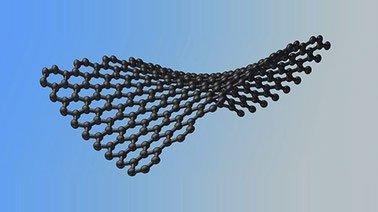
Graphene: its practical applications and how it offers new insights into quantum physics. Graphene is the world’s first 2-dimensional material and is the thinnest, strongest, and most flexible material known to exist. Graphene, a special form of carbon,,can conduct electricity and heat better than anything else.

No sessions available
5-12 Weeks
Electrónica Digital Bit a Bit: Diseñando circuitos complejos (Coursera) Coursera
Pontificia Universidad Católica de Chile

Electrónica Digital Bit a Bit: Diseñando circuitos complejos (Coursera)

Los circuitos digitales más complejos como memorias y procesadores, que contienen millones de transistores gracias a su reducido tamaño, pueden ser divididos en circuitos más simples ya conocidos para facilitar su diseño e implementación. Lo mismo podemos realizar utilizando Verilog para diseñar circuitos digitales complejos que realizan muchas funciones o cuentan con un gran número de entradas y salidas.

Jun 22nd 2026
5-12 Weeks
RF and millimeter-Wave Circuit Design (Coursera) Coursera
Eindhoven University of Technology

RF and millimeter-Wave Circuit Design (Coursera)

This unique Master-level course offered by the Center for Wireless Technology Eindhoven (CWT/e) of the Eindhoven University of Technology, The Netherlands, provides students with in-depth knowledge and hands-on experience on RF and mmWave circuit design. The course covers the topics on how to derive the RF wireless systems specifications, and how to design the main building blocks of a transceiver, i.e., low noise amplifier, power amplifier, RF mixers, oscillators, and PLL frequency synthesizers. It is divided into two parts: (1) theoretical lectures will cover the basis of RF and mmWave Circuit Design; and (2) design labs will include simulation and implementation of these circuits.

Jun 15th 2026
5-12 Weeks
Electromagnetic Compatibility Essentials (edX) EdX
Graz University of Technology,TUGrazX

Electromagnetic Compatibility Essentials (edX)

Advance your career by learning the basics of EMC. Explore all the different aspects and challenges every electronics engineer must be aware of. This course is designed to gain essential know-how in today’s world of very high frequencies. For instance, smartphone CPUs already work with clock frequencies above 3 GHz. But did you know that such fast switching disturbs other devices nearby? Such disturbances are either simply annoying or can become a real problem. As a consequence, international regulations exist which demand for emission and immunity tests before selling an electronic device.

Self Paced
Self-Paced
Circuits and Electronics 2: Amplification, Speed, and Delay (edX) EdX
MIT,MITx

Circuits and Electronics 2: Amplification, Speed, and Delay (edX)

Learn how to speed up digital circuits and build amplifiers in the design of microchips used in smartphones, computers, and the Internet. Want to learn how to construct an amplifier for mobile phones? Wondering how energy storage elements like capacitors and inductors work, or how to make microchips run faster? This free circuit course taught by edX CEO and MIT Professor Anant Agarwal and colleagues is for you.

Self Paced
Self-Paced
Designing Hardware for Raspberry Pi Projects (Coursera) Coursera
Johns Hopkins University

Designing Hardware for Raspberry Pi Projects (Coursera)

This is course 4 of this specialization (although it can be taken out of order) and focuses on applying experience and knowledge gained in the first three courses to build physical electronics hardware. Specifically, this course focuses on four areas: circuit simulation, schematic entry, PCB layout, and 3D CAD modeling. There are many excellent commercial applications available in these areas, however to give everyone access we'll be using all free and open-source software.

Jun 22nd 2026
4 Weeks
Sensors and Sensor Circuit Design (Coursera) Coursera
University of Colorado Boulder

Sensors and Sensor Circuit Design (Coursera)

After taking this course, you will be able to: understand how to specify the proper thermal, flow, or rotary sensor for taking real-time process data; implement thermal sensors into an embedded system in both hardware and software; add the sensor and sensor interface into a microprocessor based development kit; create hardware and firmware to process sensor signals and feed data to a microprocessor for further evaluation; study sensor signal noise and apply proper hardware techniques to reduce it to acceptable levels.

Jun 15th 2026
5-12 Weeks
Nanotechnology: Fundamentals of Nanotransistors (edX) EdX
Purdue University

Nanotechnology: Fundamentals of Nanotransistors (edX)

Explore nantechnology and gain an understanding of the essential physics and technology of nanotransistors. The transistor has been called the greatest invention of the 20th century – it enables the electronics systems that have shaped the world we live in. Today’s nanotransistors are a high volume, high impact success of the nanotechnology revolution. If you are interested in understanding how this scientifically interesting and technologically important nano-device operates, this course is for you!

No sessions available
5-12 Weeks
Plastic electronics (Coursera) Coursera
École Polytechnique

Plastic electronics (Coursera)

Plastic electronics is a concept that emerged forty years ago, with the discovery of electrically conductive polymers. Ten years later, the first electronic devices using organic solids in place of the ubiquitous inorganic semiconductors were realised. The best achievement of plastic electronics is constituted by Organic Light-Emitting Diodes (OLEDs) that equip the display of many smartphones, and even TV sets.

Jun 8th 2026
5-12 Weeks
Designing Electronics for Recycling in a Circular Economy (edX) EdX
Delft University of Technology,DelftX

Designing Electronics for Recycling in a Circular Economy (edX)

Discover the latest developments in Design for Recycling (DfR) of electrical and electronic equipment (EEE) and the application of recycled plastics into new products. Electronic products bring countless benefits to society, but their production and waste treatment also lead to numerous negative environmental and economic impacts. Since E-waste is the world’s fastest growing waste stream, governments are setting ambitious targets to help this industry transition towards a circular economy.

Nov 15th 2023
4 Weeks