The Mediterranean, a Space of Exchange (from the Renaissance to Enlightenment) (Coursera)

The Mediterranean, a Space of Exchange (from the Renaissance to Enlightenment) (Coursera)

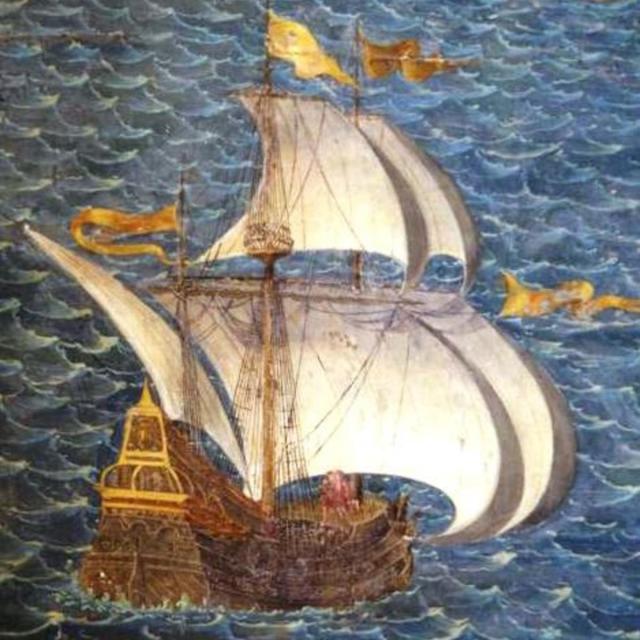
The course The Mediterranean, a Space of Exchange (from Renaissance to Enlightenment) aims to explain the Mediterranean, using history and the analysis of the past, as a space generated by routes and circulation. We consider it crucial to disclose mobility as a historical factor: a mobility comprised of four major elements, namely people, objects, ideas and practices.

Class Deals by MOOC List - Click here and see Coursera's Active Discounts, Deals, and Promo Codes.

In our analysis of Mediterranean reality between the fifteenth and sixteenth centuries, from the Renaissance to the Enlightenment, we will pay particular attention to its western shores, an area seething with transfers and exchanges, in the social and economic spheres as well as the political and cultural, with the Iberian Peninsula, the various islands and the Italian Peninsula, all spaces of great dynamism.
El curso El Mediterráneo, espacio de intercambios (del Renacimiento a la Ilustración) quiere explicar, desde la historia y el análisis del pasado, el Mediterráneo como un espacio generado por las rutas y las circulaciones. Consideramos necesario divulgar la movilidad como factor histórico. Una movilidad centrada en cuatro grandes ámbitos: las personas, los objetos, las ideas y las prácticas. Al analizar la realidad mediterránea entre los siglos XV y XIX, del Renacimiento a la Ilustración, ponemos un foco especial en su orilla occidental, un área abocada a la transferencia y el intercambio, tanto en el ámbito social y económico como en el político y cultural, con la Península Ibérica, las islas y la Península Itálica como espacios de gran dinamismo.

Syllabus

WEEK 1: Introduction; The Mediterranean and its History - El Mediterráneo y su historia
WEEK 2: The Mediterranean through the Eyes of Travellers and Artists - El Mediterráneo visto por los viajeros y los artistas
WEEK 3: The Mediterranean, a Space of Powers - El Mediterráneo, un espacio de poderes
WEEK 4: The Mediterranean at War - El Mediterráneo, guerra y conflictos
WEEK 5: The Mediterranean, a Network of Ports - El Mediterráneo, red de puertos
WEEK 6: The Mediterranean, Beliefs and Lifestyles - El Mediterráneo, creencias y formas de vida
WEEK 7: The Mediterranean on the Table: Food and Culture - El Mediterráneo en la mesa: cultura alimentaria
WEEK 8: The Mediterranean and the Atlantic World - El Mediterráneo y el mundo atlántico
WEEK 9: Final assignment / Prueba final

Go to Class
MOOC List is learner-supported. When you buy through links on our site, we may earn an affiliate commission.

Related Courses

Arch of Titus: Rome and the Menorah (Coursera) Coursera
Yeshiva University

Arch of Titus: Rome and the Menorah (Coursera)

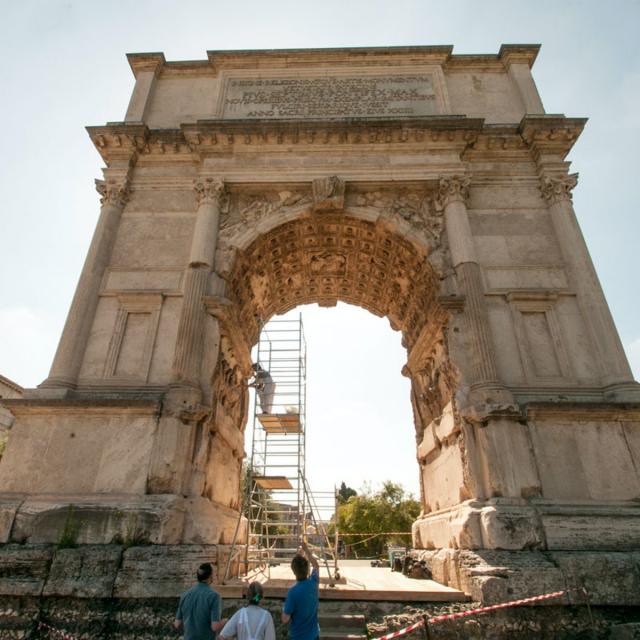
The Arch of Titus: Rome and the Menorah explores one of the most significant Roman monuments to survive from antiquity, from the perspectives of Roman, Jewish and later Christian history and art. The Arch of Titus commemorates the destruction of Jerusalem by the emperor Titus in 70 CE, an event of pivotal importance for the history of the Roman Empire, of Judaism, of Christianity and of modern nationalism. Together with your guide, Professor Steven Fine, you will examine ancient texts and artifacts, gaining skills as a historian as you explore the continuing significance of the Arch of Titus from antiquity to the very present.

Sep 28th 2026
5-12 Weeks
A Journey through Western Christianity: from Persecuted Faith to Global Religion (200 - 1650) (Coursera) Coursera
Yale University

A Journey through Western Christianity: from Persecuted Faith to Global Religion (200 - 1650) (Coursera)

This course follows the extraordinary development of Western Christianity from its early persecution under the Roman Empire in the third century to its global expansion with the Jesuits of the early modern world. We explore the dynamic and diverse character of a religion with an enormous cast characters. We will meet men and women who tell stories of faith as well as of violence, suppression, and division.

Oct 5th 2026
5-12 Weeks
Understanding China, 1700-2000: A Data Analytic Approach, Part 1 (Coursera) Coursera
The Hong Kong University of Science and Technology - HKUST

Understanding China, 1700-2000: A Data Analytic Approach, Part 1 (Coursera)

The purpose of this course is to summarize new directions in Chinese history and social science produced by the creation and analysis of big historical datasets based on newly opened Chinese archival holdings, and to organize this knowledge in a framework that encourages learning about China in comparative perspective. Our course demonstrates how a new scholarship of discovery is redefining what is singular about modern China and modern Chinese history.

Sep 28th 2026
5-12 Weeks
Words Spun Out of Images: Visual and Literary Culture in Nineteenth Century Japan (Coursera) Coursera
The University of Tokyo

Words Spun Out of Images: Visual and Literary Culture in Nineteenth Century Japan (Coursera)

In their ambition to capture “real life,” Japanese painters, poets, novelists and photographers of the nineteenth century collaborated in ways seldom explored by their European contemporaries. This course offers learners the chance to encounter and appreciate behavior, moral standards and some of the material conditions surrounding Japanese artists in the nineteenth century, in order to renew our assumptions about what artistic “realism” is and what it meant.

Oct 5th 2026
4 Weeks
The Emergence of the Modern Middle East - Part II (Coursera) Coursera
Tel Aviv University

The Emergence of the Modern Middle East - Part II (Coursera)

This course will discuss the developments in the Middle East from the early 20th century to the present. It will discuss the rise and retreat of Arab nationalism, the problems of internal cohesion of the Arab states, issues of religion and state, and the evolution of Islamist politics. It will also focus on the evolution of the Arab-Israeli conflict and its impact on the region and will conclude with an in depth analysis of the “Arab Spring” by placing these contemporary revolutionary events in their historical context.

Oct 5th 2026
5-12 Weeks
Structuring Values in Modern China (Coursera) Coursera
The Chinese University of Hong Kong

Structuring Values in Modern China (Coursera)

This sequence of four courses will propose a multi-disciplinary approach to the study of Chinese cultural history conceived of as a succession of modes of rationality (philosophical, bureaucratic, and economic). The focus will be on the moments of paradigm shift from one mode of rationality to another. For each of these moments, cultural facts and artifacts—thought, literature, ritual—will be examined in relationship to changing social, political, and economic systems.

Oct 12th 2026
5-12 Weeks
The History of Modern Israel - Part II: Challenges of Israel as a sovereign state (Coursera) Coursera
Tel Aviv University

The History of Modern Israel - Part II: Challenges of Israel as a sovereign state (Coursera)

This course deals with the Israeli politics, economy, society and culture, since its creation in 1948 till today. It analyzes the construction of the Israeli historical narrative as an identity-building narrative, intending to inculcate a collective memory to a diverse society. We will focus on key events and essential components that shaped the Israeli society from the fifties till the present. We will also discuss the changes that the Israeli society experiences in its almost seventy years of existence and how it affects its politics and culture.

Oct 12th 2026
5-12 Weeks
The Final Solution to the Jewish Question (Coursera) Coursera
Yad Vashem

The Final Solution to the Jewish Question (Coursera)

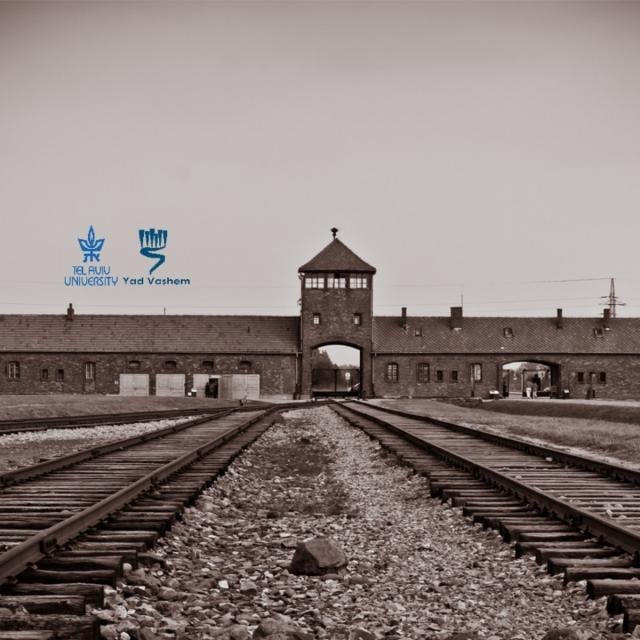
The "Final Solution to the Jewish Question" was the official code name used by Nazi German authorities for the planned annihilation of Jews during World War II. This course focuses on the origins, evolution, and implementation of this deadly operation which led to the murder of six million Jews by the Nazis and their collaborators.

Oct 12th 2026
5-12 Weeks
The Holocaust - An Introduction (II): The Final Solution (Coursera) Coursera
Tel Aviv University,Yad Vashem

The Holocaust - An Introduction (II): The Final Solution (Coursera)

The Holocaust was an inconceivable historical event, which forever robbed Western culture of its innocence. As civilized human beings, we fail to understand how events of such horror could have taken place, and how an idea so inhumanly warped could have spread like wildfire through an entire continent, instigating the systematic annihilation of millions of Jews.

Oct 5th 2026
3 Weeks
William Shakespeare's Twelfth Night: Comedy, Conflict, and Community (Coursera) Coursera
University of Colorado Boulder

William Shakespeare's Twelfth Night: Comedy, Conflict, and Community (Coursera)

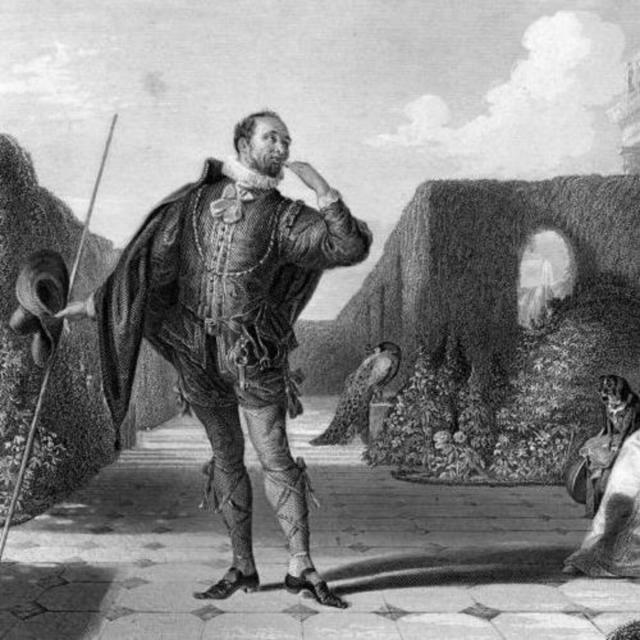
This course introduces and explores William Shakespeare’s classic comedy, Twelfth Night. Interviews with actors who appeared in the Colorado Shakespeare Festival’s 2019 production of Twelfth Night, as well as lectures by scholars and theater professionals who work and teach at the University of Colorado Boulder, offer students insight into Shakespeare’s artistic vision and its applications.

Oct 12th 2026
5-12 Weeks