William Shakespeare's Twelfth Night: Comedy, Conflict, and Community (Coursera)

William Shakespeare's Twelfth Night: Comedy, Conflict, and Community (Coursera)

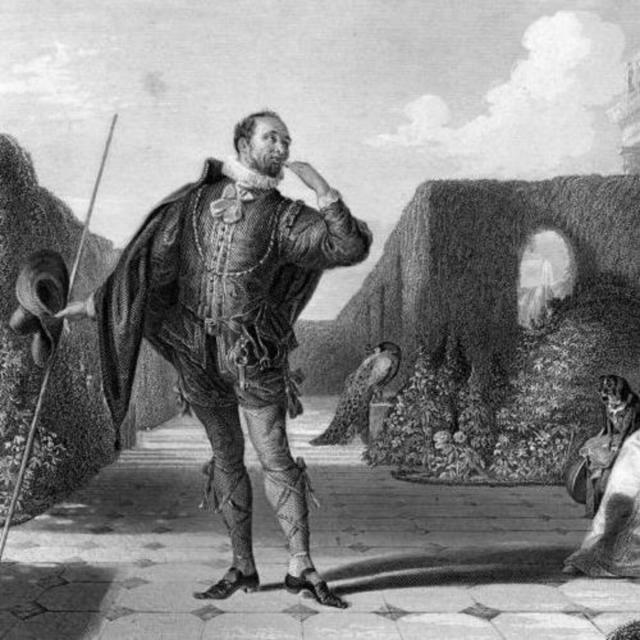
This course introduces and explores William Shakespeare’s classic comedy, Twelfth Night. Interviews with actors who appeared in the Colorado Shakespeare Festival’s 2019 production of Twelfth Night, as well as lectures by scholars and theater professionals who work and teach at the University of Colorado Boulder, offer students insight into Shakespeare’s artistic vision and its applications.

Class Deals by MOOC List - Click here and see Coursera's Active Discounts, Deals, and Promo Codes.

Exploring Shakespeare’s language, his characters, his humor and his world view, the lectures, interviews, and interactive learning experiences that make up this class will help students comprehend the power of Shakespearean comedy and the abiding appeal of Twelfth Night for its original audience and our contemporary moment. You'll explore the relationship between comedy and tragedy, the conflict inherent in desire, and the ways Shakespeare's words and works engaged his community, and yours.
This course strives to be of interest to multiple audiences, but we think it may particularly appeal to...

  • Shakespeare enthusiasts and the Shakespeare curious in all walks of life
  • Actors, theater practitioners, and teachers of Shakespeare everywhere
  • Secondary school and college students interested in expanding their studies of Shakespeare
  • Interested readers with little or no familiarity with Shakespeare

What You Will Learn

  • Engage Shakespeare’s play through appreciation of the richness of language, the complexity of his characters, and the intricacy of his narratives
  • Grasp the primary interpretive questions facing readers, actors, and scholars of Twelfth Night
  • Enhance enjoyment of the play through insight into the richness, humor, and power of Shakespeare’s presentation of the human condition
  • View Shakespeare’s plays as an invitation to interpret and create, empowering you as a thinker and creator

Syllabus

WEEK 1
Twelfth Night and the World of the Play
This module provides an overview of Twelfth Night and introduces the play by exploring key aspects of the world it imagines. The interviews, lectures, and faculty roundtable explore the carnivalesque quality of the play, its humor, its language, and significant historical contexts. Dialogues with scholars and theater practitioners provide multiple perspectives on the nature of this narrative universe.

WEEK 2
Desire, Identity, and Chaos in Twelfth Night
This module focuses on Shakespeare’s understanding of human psychology, especially the experience of desire. Twelfth Night dramatizes the folly associated with love, and also—as with all of Shakespeare’s comedies—revels in the tumult love creates. The world depicted in this play is characterized by a kind of collective madness that grows ever more chaotic as it progresses.

WEEK 3
Class, Comedy, and Conflict in Twelfth Night
Module Three emphasizes how assumptions about social order fuel conflict in the play. The previous module emphasized the humor that derives from desire, but also the awareness of grimmer aspects of desire. The lectures, interviews and roundtables in this unit focus on desires that are not allowed. Desire creates conflict. This aspect of Twelfth Night is most obviously evident in the interactions among a number of the play’s minor characters, especially the conflict between Malvolio, on the one hand, and Sir Toby and Maria, on the other.

WEEK 4
Twelfth Night and the Limits of Comedy
This module focuses on how Shakespeare’s play both conforms to the expectations of the comedic genre and challenges the genre’s conventions. Such tensions are especially evident in the play’s resolution. Even as the play provides the marriages expected at the end of a comedy, the play also draws attention to characters excluded from such happy endings. Twelfth Night derives great humor from the chaos prompted by love; but the conflicts unleashed in the course of the play’s action cannot all be resolved by the marriage of some members of the community.

WEEK 5
Applied Shakespeare in the Community: A Case Study
In this module we will briefly explore a case study of how Twelfth Night has been re-interpreted and repurposed by the Colorado Shakespeare Festival’s Shakespeare in the Schools project. Module five examines how Malvolio's story offers a platform for conversations relevant to our own day about communities and violence.
OPTIONAL BONUS MODULE: Optional Full-Length Actor Interviews
In this optional bonus module, we include for you the full-length Twelfth Night actor interviews in case you are interested in digging deeper into these discussions. Reviewing these videos isn't a course requirement, but we wanted to include them for your benefit.

Go to Class
MOOC List is learner-supported. When you buy through links on our site, we may earn an affiliate commission.

Related Courses

The Holocaust - An Introduction (II): The Final Solution (Coursera) Coursera
Tel Aviv University,Yad Vashem

The Holocaust - An Introduction (II): The Final Solution (Coursera)

The Holocaust was an inconceivable historical event, which forever robbed Western culture of its innocence. As civilized human beings, we fail to understand how events of such horror could have taken place, and how an idea so inhumanly warped could have spread like wildfire through an entire continent, instigating the systematic annihilation of millions of Jews.

Aug 10th 2026
3 Weeks
Arctic Economy (Coursera) Coursera
University of Alberta,UiT The Arctic University of Norway

Arctic Economy (Coursera)

Arctic communities have diverse histories and roles in local, regional and global economies. However, the scope and scale of globalization has increased so quickly that vulnerable Arctic communities are facing new kinds of challenges to their survival. In this 3-week MOOC, a unique collaboration between the University of Alberta and UiT The Arctic University of Norway, you will investigate the challenges faced by Indigenous, North American, Russian and Nordic Arctic communities in a modern world. So join us as we venture above the 60th parallel North, and explore how these fascinating communities adjust to change while maintaining their ways of life, socio-economic histories, and cultural traditions.

Aug 17th 2026
4 Weeks
Magic in the Middle Ages (Coursera) Coursera
University of Barcelona

Magic in the Middle Ages (Coursera)

Magical thought has always attracted human imagination. In this course we will introduce you to the Middle Ages through a wide conception of magic. Students will have an approach to medieval culture, beliefs and practices from the perspective of History and History of Science. Popular magic, as well as learned magic (alchemy, geomancy and necromancy) will be addressed. Moreover, we will also deal with how eastern practices and texts influenced western culture. In July 2016, the course will contain a brand-new module devoted to astrology. Magic in the Middle Ages offers a captivating overview of medieval society and promotes reflection about certain stereotypes associated with this period.

Aug 17th 2026
5-12 Weeks
The Emergence of the Modern Middle East - Part II (Coursera) Coursera
Tel Aviv University

The Emergence of the Modern Middle East - Part II (Coursera)

This course will discuss the developments in the Middle East from the early 20th century to the present. It will discuss the rise and retreat of Arab nationalism, the problems of internal cohesion of the Arab states, issues of religion and state, and the evolution of Islamist politics. It will also focus on the evolution of the Arab-Israeli conflict and its impact on the region and will conclude with an in depth analysis of the “Arab Spring” by placing these contemporary revolutionary events in their historical context.

Aug 10th 2026
5-12 Weeks
Words Spun Out of Images: Visual and Literary Culture in Nineteenth Century Japan (Coursera) Coursera
The University of Tokyo

Words Spun Out of Images: Visual and Literary Culture in Nineteenth Century Japan (Coursera)

In their ambition to capture “real life,” Japanese painters, poets, novelists and photographers of the nineteenth century collaborated in ways seldom explored by their European contemporaries. This course offers learners the chance to encounter and appreciate behavior, moral standards and some of the material conditions surrounding Japanese artists in the nineteenth century, in order to renew our assumptions about what artistic “realism” is and what it meant.

Aug 10th 2026
4 Weeks
Film, Images & Historical Interpretation in the 20th Century: The Camera Never Lies (Coursera) Coursera
University of London,Royal Holloway, University of London

Film, Images & Historical Interpretation in the 20th Century: The Camera Never Lies (Coursera)

This course is a short taster on the topic of the use of Images, Film, and their use in historical interpretation in the 20th century. It is primarily provided for those who have a general interest in history that draws on photojournalism as primary evidence, and films based on historical events.

Aug 10th 2026
5-12 Weeks
Journey of the Universe: The Unfolding of Life (Coursera) Coursera
Yale University

Journey of the Universe: The Unfolding of Life (Coursera)

Journey of the Universe weaves together the discoveries of the evolutionary sciences together with humanities such as history, philosophy, art, and religion. The course draws on the Emmy-award winning film, Journey of the Universe, and the book from Yale University Press. Journey explores cosmic evolution as a creative process based on connection, interdependence, and emergence. It examines a range of dynamic interactions in the unfolding of galaxies, Earth, life, and human communities. It investigates ways in which we understand evolutionary processes and the implications for humans and our ecological future.

Aug 17th 2026
5-12 Weeks
The Cycle: Management of Successful Arts and Cultural Organizations (Coursera) Coursera
University of Maryland, College Park

The Cycle: Management of Successful Arts and Cultural Organizations (Coursera)

What makes a successful arts and cultural organization? Led by DeVos Institute Chairman Michael M. Kaiser and President Brett Egan, this course will introduce you to a management theory called the Cycle which supports thriving arts and cultural organizations. Learning from our work with managers from over 80 countries around the world, the DeVos Institute developed the Cycle as a simple, but powerful tool to assist managers in their effort to respond to an increasingly complex environment and propel their institutions to excellence.

Aug 10th 2026
5-12 Weeks
Making Architecture (Coursera) Coursera
IE Business School,IE School of Architecture & Design

Making Architecture (Coursera)

Making architecture offers a unique insight into the mind and work of an Architect, starting with the basics of the profession and culminating with the production of a scaled site model. The course should act as ideal preparation for those interested in undertaking an undergraduate degree in Architecture, although its flexible, intriguing and enjoyable content makes it accessible for all those looking to increase their knowledge in the field.

Aug 17th 2026
4 Weeks
Music and Social Action (Coursera) Coursera
Yale University

Music and Social Action (Coursera)

What is a musician’s response to the condition of the world? Do musicians have an obligation and an opportunity to serve the needs of the world with their musicianship? At a time of crisis for the classical music profession, with a changing commercial landscape, a shrinking audience base, and a contraction in the number of professional orchestras, how does a young musician construct a career today? Are we looking at a dying art form or a moment of reinvigoration?

Aug 10th 2026
5-12 Weeks
Exploring Beethoven’s Piano Sonatas Part 2 (Coursera) Coursera
Curtis Institute of Music

Exploring Beethoven’s Piano Sonatas Part 2 (Coursera)

Welcome to Part 2 of Exploring Beethoven's Piano Sonatas! I'm delighted to launch another set of new lectures of this course as Part 2. As before, this class is meant for people of all levels of experience with Beethoven's music (including no experience at all!). Remember that you are able to watch the lectures as many times as you like, at whatever pace is comfortable for you.

Aug 10th 2026
5-12 Weeks