Charles Darwin, Evolution and Tropical Australia (CDU)

Charles Darwin, Evolution and Tropical Australia (CDU)

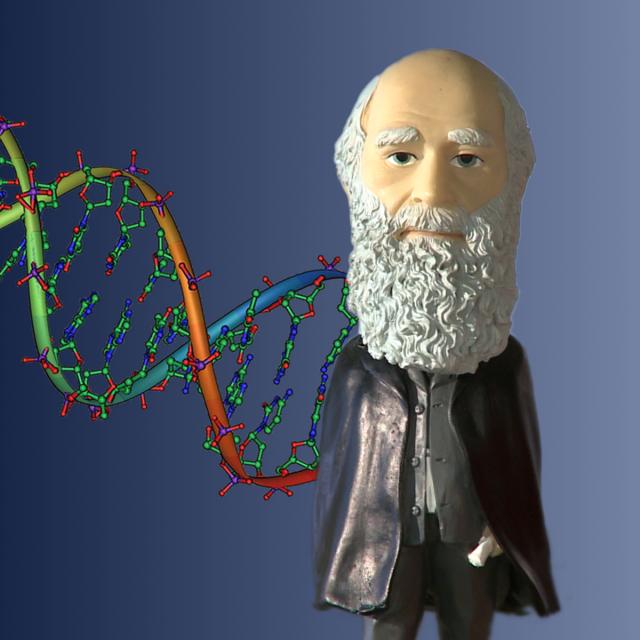
This free, open course is offered by Charles Darwin University to provide an introduction to Charles Darwin, the theory of evolution, Alfred Russel Wallace, and an overview of adaptation of tropical organisms in the Northern Territory of Australia. You will experience highly engaging interactives, videos and innovative media. This course won Blackboard's 2014 Exemplary Course Award and Director's Choice for Courses with Distinction.

You can participate as much or as little as you like. The course is designed so that you can personalise your learning journey. There are four parts:
Part 1 - The Life of Charles Darwin
Part 2 - Evolution of Evolution
Part 3 - Wallacea and Biogeography
Part 4 - Evolution and Adaptation in the Monsoon Tropics
The course features guest appearances by Harvard University's Professor Janet Browne, Charles Darwin Scholar 2014 and Professors Peter and Rosemary Grant, Princeton, Charles Darwin Scholars 2016.

Go to Class
MOOC List is learner-supported. When you buy through links on our site, we may earn an affiliate commission.

Related Courses

Philosophy, Science and Religion: Science and Philosophy (Coursera) Coursera
University of Edinburgh

Philosophy, Science and Religion: Science and Philosophy (Coursera)

Philosophy, Science and Religion mark three of the most fundamental modes of thinking about the world and our place in it. Are these modes incompatible? Put another way: is the intellectually responsible thing to do to ‘pick sides’ and identify with one of these approaches at the exclusion of others? Or, are they complementary or mutually supportive? As is typical of questions of such magnitude, the devil is in the details. For example, it is important to work out what is really distinctive about each of these ways of inquiring about the world. In order to gain some clarity here, we’ll be investigating what some of the current leading thinkers in philosophy, science and religion are actually doing.

Jun 22nd 2026
5-12 Weeks
Introduction to Biology: Evolution (Coursera) Coursera
Rice University

Introduction to Biology: Evolution (Coursera)

Evolution is one of the most interesting fields within biology, and one that’s central to a complete understanding of modern biology. We begin by tracing how Charles Darwin developed a theory of evolution by natural selection and the many ways that biologists have advanced the science of evolution since his lifetime. We then go on to learn about the many applications of evolutionary biology to our everyday lives.

Jun 22nd 2026
4 Weeks
The Brain and Space (Coursera) Coursera
Duke University

The Brain and Space (Coursera)

This course is about how the brain creates our sense of spatial location from a variety of sensory and motor sources, and how this spatial sense in turn shapes our cognitive abilities. Knowing where things are is effortless. But “under the hood,” your brain must figure out even the simplest of details about the world around you and your position in it.

Jun 22nd 2026
5-12 Weeks
Dynamical Modeling Methods for Systems Biology (Coursera) Coursera
Icahn School of Medicine at Mount Sinai

Dynamical Modeling Methods for Systems Biology (Coursera)

An introduction to dynamical modeling techniques used in contemporary Systems Biology research. We take a case-based approach to teach contemporary mathematical modeling techniques. The course is appropriate for advanced undergraduates and beginning graduate students. Lectures provide biological background and describe the development of both classical mathematical models and more recent representations of biological processes. The course will be useful for students who plan to use experimental techniques as their approach in the laboratory and employ computational modeling as a tool to draw deeper understanding of experiments.

Jun 15th 2026
5-12 Weeks
Agroforestry V: Ecosystem Services, Food and Sustainability (Coursera) Coursera
University of Florida

Agroforestry V: Ecosystem Services, Food and Sustainability (Coursera)

Welcome to Agroforestry V: Ecosystem Services, Food Security and Sustainable Development, a detailed review of fundamental principles and best practices for successful agroforestry projects. This interdisciplinary module, presented by leading experts in the field, is the final in the five-module course covering the various aspects of agroforestry including the global distribution of the practices, their underlying principles, and major scientific advances during the past nearly five decades.

Jun 22nd 2026
2 Weeks
Nanotechnology and Nanosensors, Part 2 (Coursera) Coursera
Technion - Israel Institute of Technology

Nanotechnology and Nanosensors, Part 2 (Coursera)

Learn about novel sensing tools that make use of nanotechnology to screen, detect and monitor various events in personal or professional life. Together, we will lay the groundwork for infinite innovative applications, starting from diagnosis and treatments of diseases, continuing with quality control of goods and environmental aspects, and ending with monitoring security issues.

Jun 15th 2026
5-12 Weeks
Introduction to Systems Biology (Coursera) Coursera
Icahn School of Medicine at Mount Sinai

Introduction to Systems Biology (Coursera)

This course will introduce the student to contemporary Systems Biology focused on mammalian cells, their constituents and their functions. Biology is moving from molecular to modular. As our knowledge of our genome and gene expression deepens and we develop lists of molecules (proteins, lipids, ions) involved in cellular processes, we need to understand how these molecules interact with each other to form modules that act as discrete functional systems.

Jun 15th 2026
5-12 Weeks
Dino 101: Dinosaur Paleobiology (Coursera) Coursera
University of Alberta

Dino 101: Dinosaur Paleobiology (Coursera)

Dino 101: Dinosaur Paleobiology is a 12-lesson course teaching a comprehensive overview of non-avian dinosaurs. Topics covered: anatomy, eating, locomotion, growth, environmental and behavioral adaptations, origins and extinction. Lessons are delivered from museums, fossil-preparation labs and dig sites. Estimated workload: 3-5 hrs/week.

Jun 27th 2026
5-12 Weeks
Philosophy, Science and Religion: Religion and Science (Coursera) Coursera
University of Edinburgh

Philosophy, Science and Religion: Religion and Science (Coursera)

Philosophy, Science and Religion mark three of the most fundamental modes of thinking about the world and our place in it. Are these modes incompatible? Put another way: is the intellectually responsible thing to do to ‘pick sides’ and identify with one of these approaches at the exclusion of others? Or, are they complementary or mutually supportive? As is typical of questions of such magnitude, the devil is in the details. For example, it is important to work out what is really distinctive about each of these ways of inquiring about the world. In order to gain some clarity here, we’ll be investigating what some of the current leading thinkers in philosophy, science and religion are actually doing.

Jun 16th 2026
5-12 Weeks
Emergent Phenomena in Science and Everyday Life (Coursera) Coursera
University of California, Irvine

Emergent Phenomena in Science and Everyday Life (Coursera)

Before the advent of quantum mechanics in the early 20th century, most scientists believed that it should be possible to predict the behavior of any object in the universe simply by understanding the behavior of its constituent parts. For instance, if one could write down the equations of motion for every atom in a system, it should be possible to solve those equations (with the aid of a sufficiently large computing device) and make accurate predictions about that system’s future.

Jun 22nd 2026
5-12 Weeks