Religions From The Inside: Improving Interreligious Dialogue (FutureLearn)

Religions From The Inside: Improving Interreligious Dialogue (FutureLearn)

Explore the value of cooperation between faiths and learn how the five main world religions’ core beliefs relate to each other. Learn how to encourage and benefit from respectful interfaith dialogue. This short course, led by the Faculty of Theology of Lugano in collaboration with USI, will develop your knowledge of what interfaith dialogue means from a philosophical and epistemological point of view, and teach how to enjoy productive interfaith dialogue.

Class Deals by MOOC List - Click here and see FutureLearn's Active Discounts, Deals, and Promo Codes.

Understand the value of a multi-faith society
Until a few decades ago, it seemed secularisation processes were inevitable and that religion would be confined to the private conscience. However, the new millennium saw religions return – both as places for spiritual reflection, as well as movements that could affect the public sphere.
This course will enhance your understanding of the relationship between different faiths and help you to explore why religions play such an active role in promoting peaceful coexistence among humans.

Learn how to create the right conditions for effective interfaith dialogue
From the perspective of a speaker representing each of the world’s five main religions – Judaism, Christianity, Islam, Buddhism, and Hinduism – you’ll explore the core characteristics of each religion from a historical and conceptual perspective before discussing a principle of the religion which relates to interfaith dialogue and promotes peace.
You’ll discover how each religion offers similar lessons that encourage humans to relate, connect with each other, as opposed to withdrawing into themselves and sparking conflict.
By the end of the course, you’ll understand how to have a positive interfaith discussion that encourages mutual cooperation and understanding between different faiths and forms of faith.
You’ll even have the chance to put your new knowledge to the test as you join an online interfaith debate with your fellow learners.

What topics will you cover?

  • The main tenets of the five main world religions: Judaism, Christianity, Islam, Buddhism, Hinduism.
  • The conditions necessary for the practice of interreligious dialogue: elements that advance the cooperation and mutual understanding among different forms of faith.
  • The five religions will be presented from the perspective of an interreligious dialogue.
  • Every religion will be described in its structure from both its historical and conceptual viewpoints.

What will you achieve?
By the end of the course, you‘ll be able to...

  • Identify the most important characteristics of the main five religions
  • Describe the fundamentals of the main five world religions
  • Explain the relationship between the different forms of faith
  • Reflect on what dialogue among religions means from a philosophical and epistemological point of view
  • Develop a critical thinking about dialogue among religions and what makes it possible

Go to Class
MOOC List is learner-supported. When you buy through links on our site, we may earn an affiliate commission.

Related Courses

The Qur'an Between Judaism and Christianity (FutureLearn) FutureLearn
The University of Nottingham

The Qur'an Between Judaism and Christianity (FutureLearn)

Get an introduction to the history of the Qur'an, and its relationship with Judaism and Christianity. Explore the relationship between the Qur'an, Judaism and Christianity. This online course will illustrate how the Qur’an situates itself as part of, and as a correction to, the religious discourse of the Jewish and Christian communities of Late Antique Arabia.

Jan 10th 2022
4 Weeks
Love as a Force for Social Justice (Coursera) Coursera
Stanford University

Love as a Force for Social Justice (Coursera)

This course will explore the concept of agape love (compassion/kindness) as a force for social justice and action and as the inspiration for service and the application of knowledge to positive social change. Biological, psychological, religious, and social perspectives of love will be discussed, drawing on the expertise of people from a variety of disciplines.

Jun 1st 2026
5-12 Weeks
Antisemitism: From Its Origins to the Present (FutureLearn) FutureLearn
Yad Vashem

Antisemitism: From Its Origins to the Present (FutureLearn)

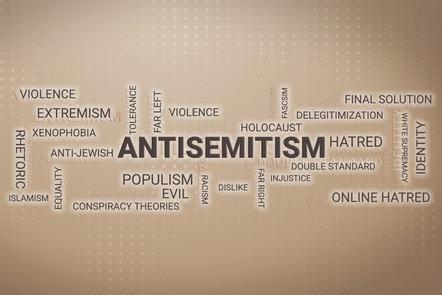
Join 50 leading scholars in exploring antisemitism, from its roots to its contemporary forms. In this course, 50 leading scholars from all over the world will explore questions and issues relating to antisemitism including: what is antisemitism? How has it changed throughout history? Why can it be found among so many diverse cultures, and even among opposing ideologies? What happened to antisemitism after the Holocaust? How is antisemitism expressed today, and what are the main spheres in which it can be found?

Nov 8th 2021
5-12 Weeks
Indigenous Religions & Ecology (Coursera) Coursera
Yale University

Indigenous Religions & Ecology (Coursera)

At first glance the fields of religion and ecology may seem and unlikely pairing, but a deeper consideration reveals the two have a great deal to contribute to one another and are indeed inextricably linked. Religions recognize the unity and interdependence of humans with nature. Ecological sciences affirm this deep interconnection with the natural world. This partnership can inspire work for the wellbeing of the Earth community

Jun 8th 2026
5-12 Weeks
Christian-Muslim Relations (FutureLearn) FutureLearn
University of Edinburgh

Christian-Muslim Relations (FutureLearn)

Uncover important themes in the history of Christian-Muslim relations and understand the politics that continue to shape it. Gain an insight into the academic study of Christian-Muslim Relations. On this innovative four-week course, you’ll be introduced to the academic study of Christian-Muslim Relations with the School of Divinity at the University of Edinburgh.

Oct 3rd 2022
4 Weeks
Arch of Titus: Rome and the Menorah (Coursera) Coursera
Yeshiva University

Arch of Titus: Rome and the Menorah (Coursera)

The Arch of Titus: Rome and the Menorah explores one of the most significant Roman monuments to survive from antiquity, from the perspectives of Roman, Jewish and later Christian history and art. The Arch of Titus commemorates the destruction of Jerusalem by the emperor Titus in 70 CE, an event of pivotal importance for the history of the Roman Empire, of Judaism, of Christianity and of modern nationalism. Together with your guide, Professor Steven Fine, you will examine ancient texts and artifacts, gaining skills as a historian as you explore the continuing significance of the Arch of Titus from antiquity to the very present.

Jun 8th 2026
5-12 Weeks
Governing Religion: European Challenges and Asian Approaches (FutureLearn) FutureLearn
European University Institute - EUI

Governing Religion: European Challenges and Asian Approaches (FutureLearn)

Explore the relationship between religions and governments and learn how religions have come to be governed across the world. Explore ways of governing religion and religious diversity today. On this course you will consider different models of state-religion relations, reviewing examples from both European and non-European countries. You will learn how different models have emerged out of historical processes of nation formation (including post-colonial independence, redrawing of state boundaries after a major political transition or through an evolutionary process of institutional and value change).

Feb 6th 2023
3 Weeks
Change of Era: The Origins of Christian Culture through the Lens of Archaeology (FutureLearn) FutureLearn
University of Padova

Change of Era: The Origins of Christian Culture through the Lens of Archaeology (FutureLearn)

Learn about innovative approaches to the study of early Christianity and discover its role in a crucial period of history. Delve into early Christianity. On this four-week course, you’ll gain a better understanding of a crucial period in history – one characterised by deep political, economic, cultural, and environmental transformations in the context of the end of the Western Roman Empire.

Dec 5th 2022
4 Weeks
Religion and Conflict (FutureLearn) FutureLearn
University of Groningen

Religion and Conflict (FutureLearn)

Understand and analyze the role of religion in conflicts and peacebuilding in present-day societies, with this free online course. Many conflicts in the world today are framed in terms of religion, but there is much discussion and confusion concerning the precise role religion plays in these conflicts. According to some, conflict and violence are inherent to religion. Others claim that religion is only the guise under which social, economic or political conflicts are fought out. The first step to solving religiously framed conflicts is understanding the role of religion in them, and that is what this free online course is about.

No sessions available
5-12 Weeks
De-Mystifying Mindfulness (Coursera) Coursera
Leiden University

De-Mystifying Mindfulness (Coursera)

Interest in meditation, mindfulness, and contemplation has grown exponentially in recent years. Rather than being seen as mystical practices from ancient Buddhism or esoteric philosophy, they are increasingly seen as technologies rooted in evidence from psychology and neuroscience. Mindfulness has become the basis for numerous therapeutic interventions, both as a treatment in healthcare and as a means of enhancing well-being and happiness. For millions around the world, mindfulness has become a life-style choice, enhancing and enriching everyday experience. Mindfulness is big business.

Jun 1st 2026
5-12 Weeks
Greek and Roman Mythology (Coursera) Coursera
University of Pennsylvania

Greek and Roman Mythology (Coursera)

Myths are traditional stories that have endured over a long time. Some of them have to do with events of great importance, such as the founding of a nation. Others tell the stories of great heroes and heroines and their exploits and courage in the face of adversity. Still others are simple tales about otherwise unremarkable people who get into trouble or do some great deed. What are we to make of all these tales, and why do people seem to like to hear them? This course will focus on the myths of ancient Greece and Rome, as a way of exploring the nature of myth and the function it plays for individuals, societies, and nations. We will also pay some attention to the way the Greeks and Romans themselves understood their own myths.

Jun 1st 2026
5-12 Weeks