EdX

Cellular Solids Part 3: Applications in Nature (edX)

Offered by MIT, MITx,
Cellular Solids Part 3: Applications in Nature (edX)

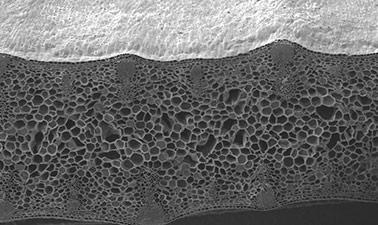
Learn how to apply models for cellular materials to natural materials such as wood, cork, monocotyledon leaves, skulls, palm and bamboo.

Class Deals by MOOC List - Click here and see EdX's Active Discounts, Deals, and Promo Codes.

In this engineering course, we will explore sandwich structures and cellular solids that occur in nature, and we will consider examples of engineering design inspired by natural materials.
This course should be taken with Cellular Solids 1 for a complete survey of the structure, properties, and engineering applications of cellular solids that occur in nature.

What you'll learn:

  • How to apply models for honeycombs to the mechanics of wood and cork
  • The behavior of natural sandwich structures such as the leaves of monocotyledon plants and animal skulls
  • How to analyze the mechanics of natural cellular solids with density gradients, such as palm stems and bamboo
  • Examples of engineering design inspired by natural cellular solids
Go to Class
MOOC List is learner-supported. When you buy through links on our site, we may earn an affiliate commission.


Related Courses

Graphene Science and Technology (edX) EdX
Chalmers University of Technology,ChalmersX

Graphene Science and Technology (edX)

Graphene: its practical applications and how it offers new insights into quantum physics. Graphene is the world’s first 2-dimensional material and is the thinnest, strongest, and most flexible material known to exist. Graphene, a special form of carbon,,can conduct electricity and heat better than anything else.

No sessions available
5-12 Weeks
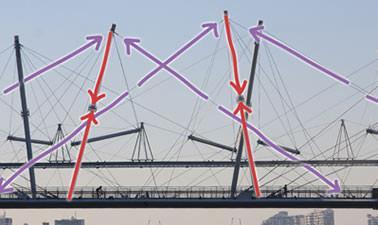
Caer o No caer. El secreto de las estructuras (edX) EdX
Universidad Carlos III de Madrid - UC3M,UC3Mx

Caer o No caer. El secreto de las estructuras (edX)

Las estructuras están presentes en todos los sistemas que nos rodean. Descubrirlas y comprender cómo funcionan es sencillo y fascinante. Las estructuras están implicadas en nuestras vidas: las plantas, los animales, casi todo lo que fabrica el ser humano, incluso nuestro propio cuerpo, deben soportar una serie de fuerzas sin romperse, y por lo tanto prácticamente cualquier elemento de nuestro entorno es una estructura de una clase u otra.

Self Paced
Self-Paced
The Engineering of Structures Around Us (edX) EdX
DartmouthX,Dartmouth College

The Engineering of Structures Around Us (edX)

Explore how engineers design bridges and buildings in our communities and iconic structures around the world. In this introductory course, you’ll learn some engineering principles that can be applied to structural systems everywhere: in nature, in furniture, in mechanical and aerospace systems, and in any solid object that resists a load. Together we’ll explore how structures work, why they were designed the way they were designed, how they support loads, and where forces flow through them.

Self Paced
Self-Paced
Introducción al Control Numérico por Computadora (edX) EdX
TenarisUniversity

Introducción al Control Numérico por Computadora (edX)

El curso de Introducción al Control Numérico Computarizado te permitirá adquirir conocimientos básicos para la selección, programación y accionamiento de un CNC. Con este curso aprenderás a desarrollar y operar un proyecto con una máquina CNC. A través de la simulación de un caso real y con el objetivo de producir piezas de ajedrez para una empresa llamada “Jaque Mate”.

Self-Paced
Self-Paced
Dynamics and Control (edX) EdX
Universitat Politècnica de València,UPValenciaX

Dynamics and Control (edX)

This is an interactive course about the basic concepts of Systems, Control and their impact in all the human activities. First, the basic concepts of systems, dynamics, structure and control are introduced. Then, looking at many examples in Nature and human made devices, we will realize that the dynamic behavior of most systems can be modified by adding a control system. Later we will see how knowing how to evaluate the dynamic behavior of a system and measure its performance will provide the tools to design new controlled systems fulfilling some requirements.

Self Paced
Self-Paced
Solid State Devices 1 (edX) EdX
Purdue University,PurdueX

Solid State Devices 1 (edX)

Semiconductor are everywhere in human activities, from your credit card to space exploration. This graduate-level introduction brings aspects of physics, chemistry, and engineering together to understand, analyze, and design transistors and solar cells. This course provides the graduate-level introduction to understand, analyze, characterize and design the operation of semiconductor devices such as transistors, diodes, solar cells, light-emitting devices, and more.

Jan 9th 2023
13-24 Weeks
Wave-Based NDT Methods (edX) EdX
Purdue University,PurdueX

Wave-Based NDT Methods (edX)

Learn how to use wave-based NDT techniques, ultrasonic testing, acoustic emission, etc, to inspect the structural integrity of civil engineering structures, including highways, bridges, dams, and buildings. Wave-based NDT methods allow for reliable and rapid evaluation of civil engineering infrastructure. These methods are particularly useful in long-range inspection; for example, in pipelines, where the wave-based NDT can provide data on hundreds of meters of piping in a matter of seconds.

Feb 14th 2022
5-12 Weeks
Introduction to Quantum Transport (edX) EdX
Purdue University,PurdueX

Introduction to Quantum Transport (edX)

This course introduces the non-equilibrium Green’s function (NEGF) method widely used to describe quantum effects in nanoscale devices, along with its applications to spintronic devices. This course introduces the Schrödinger equation, using the tight-binding method to discuss the concept of bandstructure and E(k) relations, followed by an introduction to the NEGF method with simple illustrative examples. Concept of spinors is introduced along with the application of the NEGF method to spintronic devices.

Feb 12th 2024
5-12 Weeks
Fundamentals of Non-Destructive Testing (edX) EdX
Purdue University,PurdueX

Fundamentals of Non-Destructive Testing (edX)

Learn the fundamentals of non-destructive testing (NDT), a technique used to evaluate material and structure properties and defects without causing damage. Non-destructive testing (NDT) is used across industries to ensure product integrity and reliability; it is used in the aerospace, defense, oil and gas, and automotive sectors. In civil engineering, NDT is commonly used to detect flaws and defects in concrete elements and structures.

Jan 10th 2022
5-12 Weeks