EdX

Diseño de diques rompeolas con cubípodos (edX)

Diseño de diques rompeolas con cubípodos (edX)

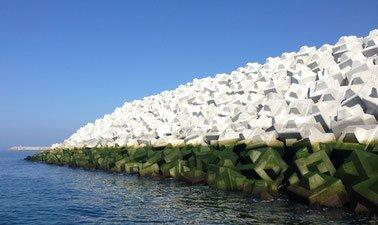
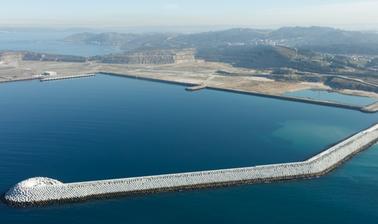
El objetivo del curso esaprender a diseñar diques en talud para los estudios de viabilidad de proyectos que incluyan obras marítimas de abrigo, con especial atención al diseño con mantos de cubípodos. Este es un curso de ingeniería dirigido a profesionales de ingeniería marítima, portuaria y civil. En él se puede aprender a diseñar diques en talud para los estudios de viabilidad de proyectos que incluyan obras marítimas de abrigo, con especial atención al diseño con mantos de cubípodos.

Class Deals by MOOC List - Click here and see EdX's Active Discounts, Deals, and Promo Codes.

Si eres ingeniero civil, marítimo o portuario y quieres diseñar diques rompeolas seguros y funcionales minimizando el coste económico y ambiental, no puedes perderte este curso en línea.
El objetivo del curso es diseñar diques rompeolas que sean seguros y funcionales, con costo ambiental y económico mínimo.
Este MOOC está pensado para los estudios de viabilidad que tratan de identificar unas pocas soluciones de diseño y construcción factibles entre las muchas posibles, para luego desarrollarlas. Para estos estudios de viabilidad, este curso facilita el diseño preliminar de diques rompeolas con mantos monocapa y bicapa de cubípodos.
El curso de ingeniería va dirigido a profesionales de ingeniería marítima, portuaria y civil relacionados con análisis de variantes de obras de abrigo y estudios de viabilidad. Destinado a ingenieros de caminos y otros técnicos habituados a utilizar conceptos y terminología de ingeniería marítima y portuaria; como son: altura de ola significante, periodo de retorno, temporal de cálculo, número de estabilidad, número de Iribarren, espaldón, huella energética y otros.

What you'll learn

  • Las características principales de los diques en talud en general y de los mantos de cubípodos en particular
  • Los conceptos fundamentales que hay que tener en consideración para el estudio de alternativas y evaluación de costes, con especial atención al uso de cubípodos en la protección de diques rompeolas
  • A estimar la estabilidad hidráulica de los mantos monocapa y bicapa de cubípodos, el remonte, rebase, fuerzas sobre el espaldón y coronación de este tipo de diques
  • A evaluar la integridad estructural de los cubípodos, los procesos de fabricación, manipulación, acopio y colocación en obra
  • Las pautas para pre-diseñar un dique rompeolas con manto de cubípodos

Syllabus

  1. Introducción
  2. Estabilidad hidráulica del manto principal
  3. Rebase y fuerzas en el espaldón
  4. Integridad estructural de los cubípodos
  5. Manipulación y acopio de los cubípodos
  6. Colocación de cubípodos en el manto
  7. Aplicación. Diseño preliminar de un dique en talud
Go to Class
MOOC List is learner-supported. When you buy through links on our site, we may earn an affiliate commission.

Related Courses

Advanced Transport Phenomena (edX) EdX
Delft University of Technology,DelftX

Advanced Transport Phenomena (edX)

Learn how to tackle complex mass and heat transfer problems and apply the results in your own environment. How can you reduce the energy loss of your home? What is the underlying science of energy loss in pipes? Which heat and mass transfer problems do we have to tackle to make consumer products? In this engineering course, you will learn about the engineering principles that play an important role in all of these and more phenomena. You will learn about microbalances, radiation, convection, diffusion and more and their applications in everyday life.

Self Paced
Self-Paced
A Hands-on Introduction to Engineering Simulations (edX) EdX
CornellX,Cornell University

A Hands-on Introduction to Engineering Simulations (edX)

Learn how to analyze real-world engineering problems using ANSYS simulation software and gain important professional skills sought by employers. In this hands-on course, you’ll learn how to perform engineering simulations using a powerful tool from ANSYS, Inc. This is a problem-based course where you’ll learn by doing. The focus will be on understanding what’s under the blackbox so as to move beyond garbage-in, garbage-out. You’ll practice using a common solution approach to problems involving different physics: structural mechanics, fluid dynamics and heat transfer.

Self Paced
Self-Paced
水力学 | Hydraulics (edX) EdX
Tsinghua University,TsinghuaX

水力学 | Hydraulics (edX)

This Hydraulics course explores the science of hydraulics and focuses on hydrodynamic laws and their applications, which are indispensable and a critical factor in the development and utilization of water resources. 水,是人类生活不可或缺的资源。水力学是人类开发利用水资源的有力工具。本课教你认识和掌握水流静止和运动的力学规律,了解在相关领域的工程应用。

Self Paced
Self-Paced
A System View of Communications: From Signals to Packets (Part 3) (edX) EdX
The Hong Kong University of Science and Technology - HKUST,HKUSTx

A System View of Communications: From Signals to Packets (Part 3) (edX)

Explore the tradeoffs in designing communication systems like mobile phones, and the engineering tools to handle them. Have you ever wondered how information is transmitted using your mobile phone or a WiFi hotspot? Gain an understanding of the basic engineering tools used and tradeoffs encountered in the design of these communication systems.

Self Paced
Self-Paced
Nanophotonic Modeling (edX) EdX
Purdue University,PurdueX

Nanophotonic Modeling (edX)

Learn a comprehensive set of simulation techniques to predict the performance of photonic nanostructures. This engineering course is an introduction to photonic materials and devices structured on the wavelength scale. Generally, these systems will be characterized as having critical dimensions at the nanometer scale. These can include nanophotonic, plasmonic, and metamaterial components and systems.

Feb 12th 2024
5-12 Weeks
Modeling and Simulation of Multibody Systems - Part I (edX) EdX
LouvainX,Université Catholique de Louvain - UCL

Modeling and Simulation of Multibody Systems - Part I (edX)

Vehicles, bicycles, cranes, human body and robots are multibody systems. Learn how to model them and compute their kinematic and dynamic characteristics, such as velocities, accelerations and forces. This course aims at acquainting you with the modeling and simulation of complex articulated mechanical systems, denoted as multibody systems, such as vehicles, merry-go-rounds, motorbikes, cranes, human bodies, suspensions, robot manipulators, mechanical transmissions, etc.

Self Paced
Self-Paced
Introduction to Quantum Transport (edX) EdX
Purdue University,PurdueX

Introduction to Quantum Transport (edX)

This course introduces the non-equilibrium Green’s function (NEGF) method widely used to describe quantum effects in nanoscale devices, along with its applications to spintronic devices. This course introduces the Schrödinger equation, using the tight-binding method to discuss the concept of bandstructure and E(k) relations, followed by an introduction to the NEGF method with simple illustrative examples. Concept of spinors is introduced along with the application of the NEGF method to spintronic devices.

Feb 12th 2024
5-12 Weeks
Introduction to Discrete Choice Models (edX) EdX
École Polytechnique Fédérale de Lausanne,EPFLx

Introduction to Discrete Choice Models (edX)

The course introduces the theoretical foundations to choice modeling and describes the steps of operational modeling. Human behavior is complexand unpredictable. Or is it? The focus of this course is methods for predicting the behavior using mathematical models. More specifically, we'll explore choice modeling in order to obtain disaggregate demand models.

Self Paced
Self-Paced
Software Engineering: Introduction (edX) EdX
The University of British Columbia,UBCx

Software Engineering: Introduction (edX)

Learn how to apply engineering principles, such as Agile, to build a full-stack software system. You will learn software engineering principles that are applicable to the breadth of large-scale software systems. The course explores topics such as agile development, REST and Async programming, software specification, design, refactoring, information security, and more.

Self Paced
Self-Paced
Decision-Making for Autonomous Systems (edX) EdX
Chalmers University of Technology,ChalmersX

Decision-Making for Autonomous Systems (edX)

Learn effective tactics for making key decisions when working with autonomous, self-driving vehicles. In autonomous vehicles such as self-driving cars, we find a number of interesting and challenging decision-making problems. Starting from the autonomous driving of a single vehicle, to the coordination among multiple vehicles. This course will teach you the fundamental mathematical model for many of these real-world problems.

Self Paced
Self-Paced
Engineering Drawing | 工程制图 (edX) EdX
Tsinghua University,TsinghuaX

Engineering Drawing | 工程制图 (edX)

“Engineering Drawing” is a fundamental course of engineering technology, including two parts: basic theories and advanced practices. The first part will introduce the theory of projection and its application on drawings. The second part is to give students general experience in producing a variety of mechanical drawings.

Self Paced
Self-Paced