EdX

Book Sleuthing: The Nineteenth Century (edX)

Offered by Harvard University,
Book Sleuthing: The Nineteenth Century (edX)

Go behind the scenes at Harvard’s libraries to discover how readers in the first information age interacted with their books. Do you love printed paper and wonder how much longer it will survive in the age of ebooks? Are you curious about how the mass-produced modern book emerged in the first place? Come behind the scenes in Harvard’s libraries to explore the look, feel and even smell of nineteenth-century British and American books in this module of The Book: Histories Across Time and Space.

Class Deals by MOOC List - Click here and see EdX's Active Discounts, Deals, and Promo Codes.

In 19th-century Britain and America, schooling expanded, paper cheapened, and new technologies allowed print to reach wider audiences than ever before. After the rare and beautiful manuscripts and books showcased by earlier modules, the mass-produced, disposable objects that survive from the nineteenth century bear witness to the rise of the reading public.
This module investigates what scholars know about nineteenth-century reading, as well as how they know it.
This module’s six sections guide you through underlined, inscribed, defaced and repaired books in Harvard’s collections:

  1. Name That Book

Find out what you can tell about a book when you’re blindfolded.

  1. Handheld Books and Mobile Readers

What book did one soldier carry to Civil War battlefields in his pocket? (Hint: it’s not what you think.)

  1. The Pen and the Needle

Did 19th-century girls have to choose between sewing and reading? The holes pricked in one book suggest they did both at once.

  1. Leaving your Mark

Luckily for future historians, these children didn’t listen when people told them not to write in their books.

  1. Detective Work

Try out some tools that build on what you’ve learned about books at Harvard to discover the stories hidden in your local library.

  1. Over to You

Your chance to share what you have found in the books around you.
Join us, and discover how people in the first information age read, underlined, and repaired the pages that they treasured.

What you'll learn:

  • Examine books for clues to the lives of the people who have read them
  • Gain historical perspective on today’s shift from print to digital media by tracing the 19th-century origins of modern mass-produced books
  • Compare your own reading habits to those of past readers. What conclusions would future historians draw if they could look at your bookshelves?
Go to Class
MOOC List is learner-supported. When you buy through links on our site, we may earn an affiliate commission.

Related Courses

Shakespeare’s Othello: The Moor (edX) EdX
HarvardX,Harvard University

Shakespeare’s Othello: The Moor (edX)

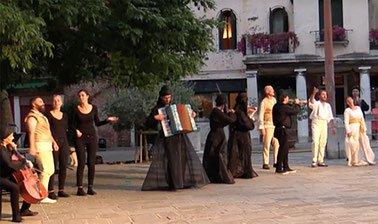
Explore acts of storytelling in Shakespeare's Othello alongside world-class artists who interpret Othello's story in new forms and contexts today. In this course, we'll read William Shakespeare’s Othello and discuss the play from a variety of perspectives. The goal of the course is not to cover everything that has been written on Othello.

Self Paced
Self-Paced
Shakespeare on the Page and in Performance: Tragic Love (edX) EdX
Wellesley College

Shakespeare on the Page and in Performance: Tragic Love (edX)

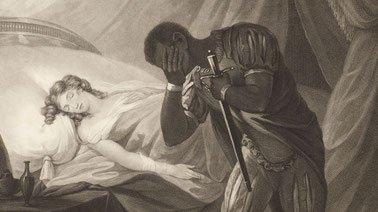
Explore Shakespeare's mature plays of tragic love, Othello and King Lear, and learn what makes them so powerful and enduring. This literature and theater course will study two of the most sublime and gut-wrenching plays in the English language: Othello and King Lear. We will try to understand the reasons for their centrality to literary history as well as their continuing power to mesmerize audiences in theatres and cinemas across the world.

No sessions available
4 Weeks
Humphry Davy: Laughing Gas, Literature, and the Lamp (FutureLearn) FutureLearn
Lancaster University,Royal Institution - RI

Humphry Davy: Laughing Gas, Literature, and the Lamp (FutureLearn)

Discover Humphry Davy and his contribution to science and the arts. Before culture was divided into the sciences and the arts there was a chemist who was also a poet. Sir Humphry Davy (1778-1829) is one of the best known men of science of the nineteenth century: he was the first person to inhale nitrous oxide; he isolated nine chemical elements; and he invented the miners’ safety lamp known as the Davy lamp. This course will consider Davy’s life and career using manuscript sources held at the Royal Institution of Great Britain.

Oct 9th 2023
4 Weeks
The Talmud: A Methodological Introduction (Coursera) Coursera
Northwestern University

The Talmud: A Methodological Introduction (Coursera)

The Talmud is one of the richest and most complicated works of literature the world has ever known. Since being composed around 1500 years ago it has inspired not only religious reverence but significant intellectual engagement. In this course learners will be introduced to the unique characteristics of this text and the challenges that inhere in studying it while studying a chapter of the Talmud.

Jun 1st 2026
5-12 Weeks
Modern Masterpieces of World Literature (edX) EdX
HarvardX,Harvard University

Modern Masterpieces of World Literature (edX)

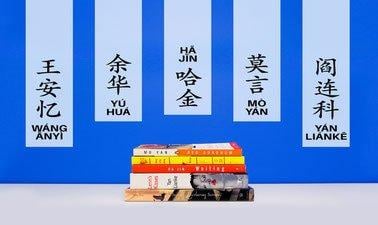
Examine how great modern writers capture the intricacies of our globalized world and how their works circulate within that world to find their own audiences. Based on the second half of the Masterpieces of World Literature edX MOOC, this short literature course examines how writers reach beyond national and linguistic boundaries as worldly readers and travelers, and how their modern fictions rise to the status of world literature.

Self Paced
Self-Paced
Invitation to The Tale of Genji: The Foundational Elements of Japanese Culture (edX) EdX
Waseda University,WasedaX

Invitation to The Tale of Genji: The Foundational Elements of Japanese Culture (edX)

Explore the world's oldest novel written in the eleventh century and develop the perspective to understand Japanese classical literature and the foundation of Japanese culture. The Tale of Genji (Genji Monogatari) is a long-form narrative composed in Japan at the beginning of the eleventh century. It depicts relationships both harmonious and discordant among a wide cast of the men and women of the Heian court. These revolve around the many love affairs of the main character, the Shining Genji (Hikaru Genji).

Self Paced
Self-Paced
Introduction to Academic Writing (Coursera) Coursera
O.P. Jindal Global University

Introduction to Academic Writing (Coursera)

Welcome to the Introduction to Academic Writing course! By the end of this course, you will gain an in-depth understanding of reading and writing as essential skills to conduct robust and critical research. This course introduces you to critical reading and writing skills within the conventions of academic writing.

Jun 22nd 2026
4 Weeks