EdX

ChinaX Book Club: Five Authors, Five Books, Five Views of China (edX)

ChinaX Book Club: Five Authors, Five Books, Five Views of China (edX)

An exploration of the dynamics of contemporary China using the tools of close reading, discussion, and analysis. How can literature and literary analysis allow us to understand the dynamics of contemporary China? China’s historical and cultural transformations, and its imaginary and actual engagements in everyday life are vividly dramatized by five Chinese authors featured in this course.

Class Deals by MOOC List - Click here and see EdX's Active Discounts, Deals, and Promo Codes.

Taught by Harvard faculty member Professor David Wang, this course will employ the tools of close reading, discussion, and analysis to explore issues that concern the Chinese people, and ponder the power (and limitations) of literature in imagining China anew.
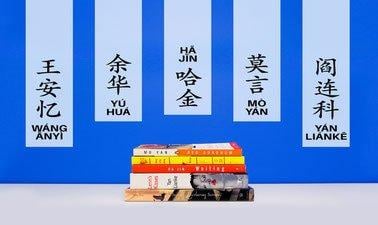
Featured Books and Authors

This course features interviews and discussions with the authors. More Information about each of these authors is available in the syllabus.

What you'll learn

  • Survey the transformation of contemporary Chinese literature through direct engagement with five books and author interviews
  • Explore contemporary China from a range of perspectives including politics, ethics, culture, and gender
  • Understand how literature (particularly in the context of China) can become a source of political intervention and articulate tensions between authoritarianism and individual freedom.
  • Develop your own approaches to modern literature, culture, and history via close reading, critical discussion, and analysis
  • Express ideas more clearly and confidently through the study of primary and secondary sources
Go to Class
MOOC List is learner-supported. When you buy through links on our site, we may earn an affiliate commission.

Related Courses

Invitation to The Tale of Genji: The Foundational Elements of Japanese Culture (edX) EdX
Waseda University,WasedaX

Invitation to The Tale of Genji: The Foundational Elements of Japanese Culture (edX)

Explore the world's oldest novel written in the eleventh century and develop the perspective to understand Japanese classical literature and the foundation of Japanese culture. The Tale of Genji (Genji Monogatari) is a long-form narrative composed in Japan at the beginning of the eleventh century. It depicts relationships both harmonious and discordant among a wide cast of the men and women of the Heian court. These revolve around the many love affairs of the main character, the Shining Genji (Hikaru Genji).

Self Paced
Self-Paced
Letteratura latina, dalle origini all'età augustea (edX) EdX
University of Naples Federico II,FedericaX

Letteratura latina, dalle origini all'età augustea (edX)

Una panoramica dei generi letterari tra repubblica e primo impero. La nascita e lo sviluppo della letteratura latina furono profondamente condizionati da un lato dall'influenza della cultura greca con la quale i Romani entrarono in contatto a partire dal II sec. a. C. soprattutto per la loro politica espansionistica nel Mediterraneo e poi in Oriente; dall'altro dalle pressioni esercitate dal potere politico che richiedeva al cittadino di prestare la propria attività innanzitutto a favore della res publica.

Self Paced
Self-Paced
Contemporary China: The People's Republic, Taiwan, and Hong Kong (edX) EdX
HarvardX,Harvard University

Contemporary China: The People's Republic, Taiwan, and Hong Kong (edX)

Use the case study method to study China from the rise of Deng Xiaoping to the present. Using case studies from the Harvard Business School, this course will cover the contemporary Chinese scene by focusing on five main themes in China’s development: agriculture, entrepreneurship, education, environment, and literature.

Self Paced
Self-Paced
Uncovering the Voices of Japanese Literature (edX) EdX
Waseda University,WasedaX

Uncovering the Voices of Japanese Literature (edX)

This course explores issues of agency in premodern and modern Japan. Discover many facets of the Japanese literary, theatrical, and intellectual traditions which, although important, are rarely taught around the world. This course will provide you with an introduction and a basis for further study in Japanese history, culture, literature, arts, and other areas which you may intend to explore in the future.

Self Paced
Self-Paced
Masterpieces of World Literature (edX) EdX
HarvardX,Harvard University

Masterpieces of World Literature (edX)

Embark on a global journey to explore the past, present, and future of World Literature. This literature course explores how great writers refract their world and how their works are transformed when they intervene in our global cultural landscape today. No national literature has ever grown up in isolation from the cultures around it; from the earliest periods, great works of literature have probed the tensions, conflicts, and connections among neighboring cultures and often more distant regions as well.

Self Paced
Self-Paced
The American Renaissance: Classic Literature of the 19th Century (edX) EdX
DartmouthX

The American Renaissance: Classic Literature of the 19th Century (edX)

Explore the writings of famous American authors from Ralph Waldo Emerson and Harriet Beecher Stowe to Mark Twain, and examine the historic role Dartmouth College played in their formation. What is the American Renaissance? How did Dartmouth help foster the formation of the American Renaissance and its reevaluation and reinvention in the twentieth? Why should we, as twenty-first century readers, concern ourselves with this literature?

Self Paced
4 Weeks
Shakespeare: On the Page and in Performance (edX) EdX
Wellesley College,WellesleyX

Shakespeare: On the Page and in Performance (edX)

An introduction to Shakespeare that combines literary study with theatrical analysis to understand both Shakespeare’s continuing popularity and his greatness. Shakespeare wrote for a popular audience and was immensely successful. Shakespeare is also rightly regarded as one of the greatest playwrights the world has known. This course will try to understand both Shakespeare’s popularity and his greatness by starting from a simple premise: that the fullest appreciation of Shakespeare can be achieved only when literary study is combined with analysis of the plays as theatre.

No sessions available
4 Weeks
English for Doing Business in Asia - Speaking (edX) EdX
The Hong Kong University of Science and Technology - HKUST,HKUSTx

English for Doing Business in Asia - Speaking (edX)

Introducing strategies for developing your spoken English communication skills in the context of doing business in Asia. The use of English for doing business in multinational settings is a fact of life for many business people. As Asian economies expand and become more involved in the global economy, a lingua franca – a language used to communicate among groups of people who do not share a mother tongue – is needed to exchange information.

Self Paced
Self-Paced
AP® English Literature & Composition – Part 2: Poems (edX) EdX
University of California, Berkeley,BerkeleyX

AP® English Literature & Composition – Part 2: Poems (edX)

Learn how to read and interpret poetry and enhance your reading and writing skills in preparation for the AP® English Literature & Composition exam. This course prepares you to read more deeply and write more clearly about works of literature. Through an engaging collection of videos, authentic readings, and support material from a variety of sources, you will learn to appreciate literature from different genres. You will learn about different genres of poetry and the history of some of our greatest poets.

Self Paced
Self-Paced
Shakespeare's Hamlet: The Ghost (edX) EdX
HarvardX,Harvard University

Shakespeare's Hamlet: The Ghost (edX)

Explore the haunting figure at the heart of one of William Shakespeare’s most famous plays. In the first act of William Shakespeare’s Hamlet, the Ghost of the dead King of Denmark appears to his son, setting off a chain of events that culminates in the play’s notoriously bloody finale. But how would this mysterious figure have been understood in Shakespeare’s time?

Self Paced
Self-Paced