EdX

The Ancient Greek Hero (edX)

The Ancient Greek Hero (edX)

Discover the literature and heroes of ancient Greece through the Homeric Iliad and Odyssey, the tragedies of Sophocles, the dialogues of Plato, and more. Explore what it means to be human today by studying what it meant to be a hero in ancient Greek times.

Class Deals by MOOC List - Click here and see EdX's Active Discounts, Deals, and Promo Codes.

In this introduction to ancient Greek culture and literature, learners will experience, in English translation, some of the most beautiful works of ancient Greek literature and song-making spanning over a thousand years from the eighth century BCE through the third century CE: the Homeric Iliad and Odyssey; tragedies of Aeschylus, Sophocles, and Euripides; songs of Sappho and Pindar; dialogues of Plato, and On Heroes by Philostratus. All of the resources are free and designed to be equally accessible and transformative for a wide audience.

You will gain access to a supportive learning community led by Professor Gregory Nagy and his Board of Readers, who model techniques for “reading out” of ancient texts. This approach allows readers with little or even no experience in the subject matter to begin seeing this literature as an exquisite, perfected system of communication.
No previous knowledge of Greek history, literature, or language is required. This is a project for students of any age, culture, and geographic location, and its profoundly humanistic message can be easily received without previous acquaintance with Western Classical literature.

What you'll learn:

  • To read “out of,” rather than “into,” a literary text, which is the art of close reading
  • The definition of a “hero” in the Classical Greek sense, contrasted with modern concepts of heroism
  • The relationship between epic and lyric in the ancient Greek tradition
  • To explore the interaction of text and image in the ancient Greek tradition
  • About hero cult and the role of heroes as objects of worship in ancient Greece
  • About the connection between myth and ritual in ancient Greece
  • The concept of the hero as conveyed in dramatic performance and as activated through Socratic dialogue
Go to Class
MOOC List is learner-supported. When you buy through links on our site, we may earn an affiliate commission.

Related Courses

Uncovering the Voices of Japanese Literature (edX) EdX
Waseda University,WasedaX

Uncovering the Voices of Japanese Literature (edX)

This course explores issues of agency in premodern and modern Japan. Discover many facets of the Japanese literary, theatrical, and intellectual traditions which, although important, are rarely taught around the world. This course will provide you with an introduction and a basis for further study in Japanese history, culture, literature, arts, and other areas which you may intend to explore in the future.

Self Paced
Self-Paced
Invitation to The Tale of Genji: The Foundational Elements of Japanese Culture (edX) EdX
Waseda University,WasedaX

Invitation to The Tale of Genji: The Foundational Elements of Japanese Culture (edX)

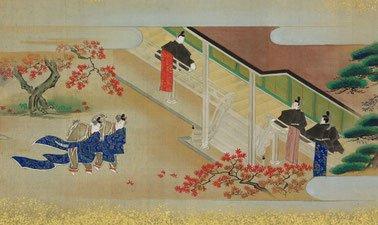
Explore the world's oldest novel written in the eleventh century and develop the perspective to understand Japanese classical literature and the foundation of Japanese culture. The Tale of Genji (Genji Monogatari) is a long-form narrative composed in Japan at the beginning of the eleventh century. It depicts relationships both harmonious and discordant among a wide cast of the men and women of the Heian court. These revolve around the many love affairs of the main character, the Shining Genji (Hikaru Genji).

Self Paced
Self-Paced
Ancient Philosophy: Aristotle and His Successors (Coursera) Coursera
University of Pennsylvania

Ancient Philosophy: Aristotle and His Successors (Coursera)

What is philosophy? How does it differ from science, religion, and other modes of human discourse? This course traces the origins of philosophy in the Western tradition in the thinkers of Ancient Greece. We begin with the Presocratic natural philosophers who were active in Ionia in the 6th century BCE and are also credited with being the first scientists. Thales, Anaximander, and Anaximines made bold proposals about the ultimate constituents of reality, while Heraclitus insisted that there is an underlying order to the changing world.

Sep 21st 2026
5-12 Weeks
Introduction to Academic Writing (Coursera) Coursera
O.P. Jindal Global University

Introduction to Academic Writing (Coursera)

Welcome to the Introduction to Academic Writing course! By the end of this course, you will gain an in-depth understanding of reading and writing as essential skills to conduct robust and critical research. This course introduces you to critical reading and writing skills within the conventions of academic writing.

Sep 14th 2026
4 Weeks
Book Sleuthing: The Nineteenth Century (edX) EdX
Harvard University

Book Sleuthing: The Nineteenth Century (edX)

Go behind the scenes at Harvard’s libraries to discover how readers in the first information age interacted with their books. Do you love printed paper and wonder how much longer it will survive in the age of ebooks? Are you curious about how the mass-produced modern book emerged in the first place? Come behind the scenes in Harvard’s libraries to explore the look, feel and even smell of nineteenth-century British and American books in this module of The Book: Histories Across Time and Space.

No sessions available
3 Weeks
Shakespeare on the Page and in Performance: Tragic Love (edX) EdX
Wellesley College

Shakespeare on the Page and in Performance: Tragic Love (edX)

Explore Shakespeare's mature plays of tragic love, Othello and King Lear, and learn what makes them so powerful and enduring. This literature and theater course will study two of the most sublime and gut-wrenching plays in the English language: Othello and King Lear. We will try to understand the reasons for their centrality to literary history as well as their continuing power to mesmerize audiences in theatres and cinemas across the world.

No sessions available
4 Weeks
The Talmud: A Methodological Introduction (Coursera) Coursera
Northwestern University

The Talmud: A Methodological Introduction (Coursera)

The Talmud is one of the richest and most complicated works of literature the world has ever known. Since being composed around 1500 years ago it has inspired not only religious reverence but significant intellectual engagement. In this course learners will be introduced to the unique characteristics of this text and the challenges that inhere in studying it while studying a chapter of the Talmud.

Sep 21st 2026
5-12 Weeks
AP® English Literature & Composition – Part 2: Poems (edX) EdX
University of California, Berkeley,BerkeleyX

AP® English Literature & Composition – Part 2: Poems (edX)

Learn how to read and interpret poetry and enhance your reading and writing skills in preparation for the AP® English Literature & Composition exam. This course prepares you to read more deeply and write more clearly about works of literature. Through an engaging collection of videos, authentic readings, and support material from a variety of sources, you will learn to appreciate literature from different genres. You will learn about different genres of poetry and the history of some of our greatest poets.

Self Paced
Self-Paced
Oscar Wilde, écrivain et penseur du langage (edX) EdX
Sorbonne University

Oscar Wilde, écrivain et penseur du langage (edX)

Ce MOOC présente l’œuvre entière d’Oscar Wilde: conférences, poésie, contes, roman, théâtre, essais, De profundis. L’accent est mis sur les relations de Wilde avec la France, sa langue et sa littérature, dont l’écrivain avait une connaissance profonde, et la nature innovante de sa relation au langage et à la littérature.

No session available
5-12 Weeks
Letteratura latina, dalle origini all'età augustea (edX) EdX
University of Naples Federico II,FedericaX

Letteratura latina, dalle origini all'età augustea (edX)

Una panoramica dei generi letterari tra repubblica e primo impero. La nascita e lo sviluppo della letteratura latina furono profondamente condizionati da un lato dall'influenza della cultura greca con la quale i Romani entrarono in contatto a partire dal II sec. a. C. soprattutto per la loro politica espansionistica nel Mediterraneo e poi in Oriente; dall'altro dalle pressioni esercitate dal potere politico che richiedeva al cittadino di prestare la propria attività innanzitutto a favore della res publica.

Self Paced
Self-Paced