Black Agricultural Solutions to Food Apartheid: A Teach-Out (Coursera)

Black Agricultural Solutions to Food Apartheid: A Teach-Out (Coursera)

Black Agricultural Solutions to Food Apartheid is a series where we dive deep into the historical, ancestral, and spiritual connections that Black people have to land and agriculture. Throughout this course, we encourage participants to learn about their ancestral foodways, agrarian practices, and spiritual connections. These sessions share wisdom and highlight the importance of food sovereignty, rebuilding community, and land based living.

Class Deals by MOOC List - Click here and see Coursera's Active Discounts, Deals, and Promo Codes.

Participants will gain a deeper understanding of the spiritual and ancestral relationships that many Black people have to a higher power, land, plants, and each other.
Participants will walk away from this series with an understanding of the many benefits of gardening and farming, including but not limited to social capital, collective agency, physical wellbeing, deepened spiritual connections, community resilience, economic autonomy, organizing, mobilizing, and improved mental and emotional health.
Participants will leave this session with the desire to learn more about their own familial relationships to food and land, as well as a greater understanding of Black agriculture.

Syllabus

WEEK 1
Land is at the Center
A Brief History of Structural Racism Experienced by Black Farmers
Community Gardening in Philadelphia: Past and Present
Threatened Gardens and Advocacy Efforts
We will discuss our visions for our communities and develop a greater understanding of how community gardens and urban farms can serve as a central place for rebuilding and world building to occur. We are joined in conversation by Soil Generation organizer, Sonia Galiber.
Stewarding from Spirit
The facilitator will discuss some of her practices to connect to Earth, hear from the plants, and techniques for growing in pots and small spaces.
Overcoming Barriers to Growing in a City

Go to Class
MOOC List is learner-supported. When you buy through links on our site, we may earn an affiliate commission.

Related Courses

Black Lives Matter (Coursera) Coursera
Johns Hopkins University

Black Lives Matter (Coursera)

The #BlackLivesMatter movement is the most significant political movement in African American life in the United States in the last fifty years. BLM leaders denounced anti-black racism, white supremacy, and police brutality and reshaped how we think about gender, sexuality, social justice, economic injustice, and crime.

Aug 3rd 2026
4 Weeks
Designing and Building Institutional Anti-Racist Spaces (Coursera) Coursera
Wesleyan University

Designing and Building Institutional Anti-Racist Spaces (Coursera)

Designing and Building Institutional Antiracist Spaces (D-BIAS) is a course whose mission is to teach and apply tenets of equity, anti-racism, and cultural justice to students from Institutions to achieve social change. The course is aimed at educators and administrators in educational spaces, lawyers and advocates in spaces that touch civil rights, equity, and whose Institutional mission it is to achieve greater cultural equity.

Jul 27th 2026
4 Weeks
Feeding a Hungry Planet: Agriculture, Nutrition and Sustainability (edX) EdX
SDGAcademyX,SDG Academy

Feeding a Hungry Planet: Agriculture, Nutrition and Sustainability (edX)

How do we create a healthy and sustainable diet for the growing world population? Agriculture is more than waving fields of wheat; our ability to grow food from existing natural resources – and without decimating those resources – is key to sustainably feeding the world. In this course, learn about food security worldwide, the effects of malnutrition, how we manage ecosystems that provide food resources and more.

Self Paced
Self-Paced
Nitrogen: A Global Challenge (edX) EdX
University of Edinburgh,EdinburghX

Nitrogen: A Global Challenge (edX)

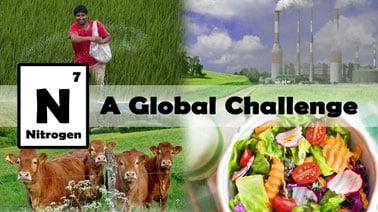
Learn about the global nitrogen challenge, how nitrogen has helped human civilization to develop, and how its misuse now threatens us. It’s a perfect storm. Limited food, water and energy unequally spread between an expanding population, and a warming climate as the bitter icing on the cake. In all these global challenges nitrogen has a leading role to play. Here you will learn just how hard-wired into all of human civilisation nitrogen is, and whether the future will see it as our quiet savior or the toxic villain of the piece.

Self Paced
Self-Paced
Agriculture and Nutrition (FutureLearn) FutureLearn
Taipei Medical University

Agriculture and Nutrition (FutureLearn)

The benefits of rice bran for preventing chronic diseases; the relationships of the mammary gland, and immune in cow. In this course, you will learn about the bioactive components and the benefits of rice bran and fermented rice bran for preventing chronic diseases such as metabolic syndrome. You will learn about the basic knowledge of the immune system and the correlations among mammary gland, epithelial mucosa, and immune in the dairy cows.

Self Paced
4 Weeks
Healthy House Plants: A Complete Guide to Gardening Indoors (FutureLearn) FutureLearn
BBC Gardeners' World Magazine

Healthy House Plants: A Complete Guide to Gardening Indoors (FutureLearn)

Learn how to care for house plants, with home gardening tips from BBC Gardeners’ World Magazine. Discover how to make any room beautiful with these indoor gardening tips. House plants can help make any indoor space more beautiful. Growing and taking care of house plants can also offer mood-boosting benefits.

Self Paced
4 Weeks
Anti-Racism II (Coursera) Coursera
University of Colorado Boulder

Anti-Racism II (Coursera)

Anti-Racism II is an intermediate course between Anti-Racism I and Anti-Racism III, focusing on the topic of race, racism, and strategies regarding how to be an anti-racist. Anti-Racism II is for anyone who has previously taken Anti-Racism I, or who has basic knowledge of the racial issues plaguing the United States, and globally. Anti-Racism I focused upon how to have open dialogue and conversations about race and racism. Anti-Racism II takes on the vital role assisting students in guiding their own conversations regarding race, and additionally gender and sexuality.

Jul 20th 2026
4 Weeks
Population, Food, and Soil (Coursera) Coursera
Dartmouth College

Population, Food, and Soil (Coursera)

This course explores the population-environment relationship. In this course, you will learn about the human population and the ways in which changes in the population affect the environment. Agriculture, soils, and the environmental implications of eating meat, vegetables, local, organic, sustainable, industrial, and other types of food are discussed too.

Jul 27th 2026
4 Weeks
Sustainable Agricultural Land Management (Coursera) Coursera
University of Florida

Sustainable Agricultural Land Management (Coursera)

This course will cover the agricultural and urban water quality issues in Florida, their bases, land and nutrient management strategies, and the science and policy behind the best management practices (BMPs). Students will learn to evaluate BMP research and analyze its role in determining practices and policies that protect water quality.

Aug 10th 2026
5-12 Weeks
Strategies and Tools to Mitigate Agricultural Risk (Coursera) Coursera
University of Illinois at Urbana-Champaign

Strategies and Tools to Mitigate Agricultural Risk (Coursera)

Learners will examine risk management strategies for crop production, discuss techniques and programs to mitigate financial risk, and describe the types of rental agreements for agricultural land use. Learners will also explore traditional and innovative risk management strategies used in agricultural food production.

Jul 20th 2026
5-12 Weeks
Risks to Crop Production in Agriculture (Coursera) Coursera
University of Illinois at Urbana-Champaign

Risks to Crop Production in Agriculture (Coursera)

Learners will be able to describe the crop production cycles of agriculture for annual and permanent crops, explain the financial characteristics and risks of food production, discuss the various types of land ownership and rental agreements for the use of agricultural land, and describe personal, external, and food production risks that influence decision-making in agriculture.

Jul 20th 2026
5-12 Weeks
Structural Racism: Causes of Health Inequities in the U.S. (Coursera) Coursera
University of Michigan

Structural Racism: Causes of Health Inequities in the U.S. (Coursera)

Racial health disparities - differences in health outcomes based on race - are rampant in the U.S., and many incorrectly assume these are due to differences in behavior or genetics. To understand these differences, and ultimately identify solutions to eliminate these disparities, we need to dig deeper and look at the root causes. We need to examine how our socio-political institutions have racial inequities embedded within their policies and practices. We need to re-examine history to learn how and why race was created and how it was used to advance the interests of whites. We need to examine how state violence is selectively used to reinforce racial inequities.

Aug 3rd 2026
3 Weeks