Biomedical Visualisation (Coursera)

Offered by University of Glasgow,
Biomedical Visualisation (Coursera)

Visualisation is a rapidly progressive specialty in academia, research and industry, and becoming the future of science. With the advancement of digital technologies and their applications, biomedical visualisation is an evolving and popular field. With new techniques and technologies to image, process and analyse data related to the human body, and its biological processes, it is at the forefront of the digital revolution.

Class Deals by MOOC List - Click here and see Coursera's Active Discounts, Deals, and Promo Codes.

By the end of this course, you will be able to:
Define and describe anatomical terminology related to the human body.
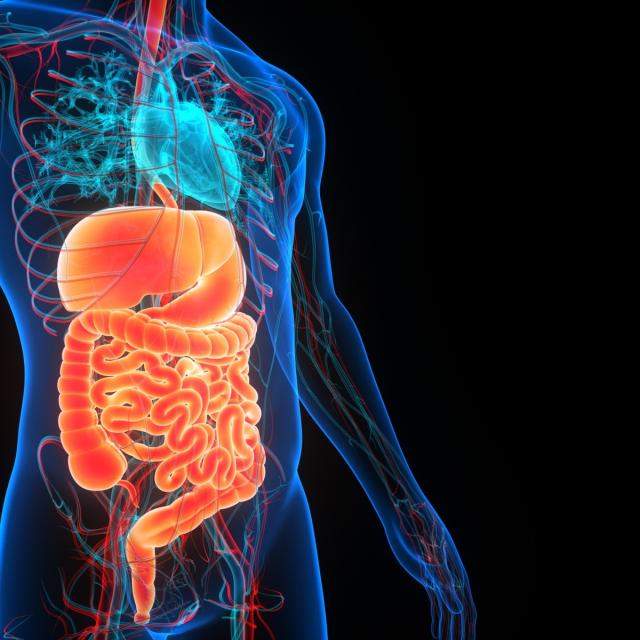
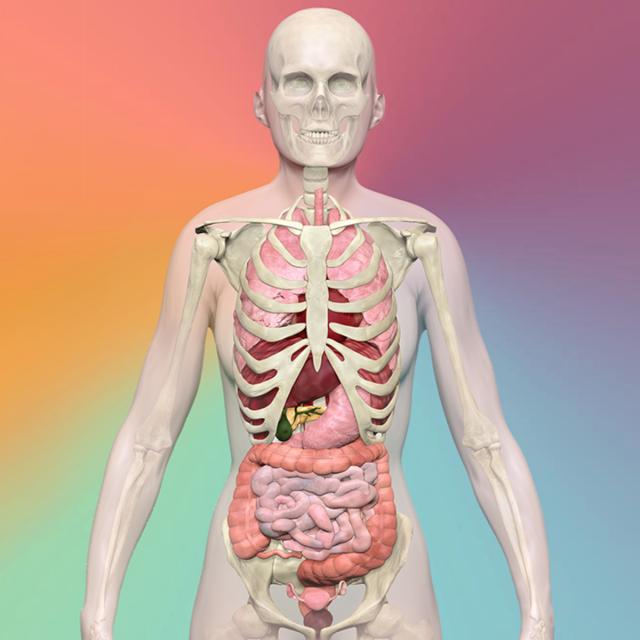
Describe the various body systems, what comprises them, and how they relate to function.
Create your own 3D modelling and animations using industry standard, open-source software (Blender).
Analyse various visualisation techniques and methods, and be able to apply them to areas of biomedical science.

This course is the first of its kind on Coursera. It explores the structure and function of the human body including terminology used. It showcases visualisation techniques available using technology to image and display data related to the body and biological processes.. It also provides training in the creation of animations, and examines the applicability of different types of reality.
You will learn from experts in these fields and with the knowledge you will gain from this course, be able to evaluate and apply how best to use visualisation in your own discipline.
No prior experience is necessary but should be able to learn at an intermediate level.

What You Will Learn

  • Define and describe anatomical terminology related to the human body
  • Describe the various body systems, what comprises them, and how they relate to function
  • Create your own 3D modelling and animations using industry standard, open-source software (Blender)
  • Analyse various visualisation techniques and methods, and be able to apply them to areas of biomedical science

Syllabus

WEEK 1
Introduction to Visualisation and the Human Body
Module 1 will cover introductory material of visualisation and its applications, as well as exploring the basis of human anatomy. You will learn about a historical journey of "visualisation" to the present day advances and uses with biomedical science. Exploring the human body, you will learn its structure and function; the body systems and their roles; as well as learning frequently used terminology within anatomy. Examples of visualisation techniques will be covered, and as a learner you will be able to name examples as and evaluate their advantages and disadvantages.

WEEK 2
3D Models and Animation
Module 2 will give you an introductory lesson into 3D modelling software "Blender" and modelling terminology. By completion you will be able to create your own organic 3D models and animations using Blender. You will be taught a brief introduction to modelling and its vast variety of uses within Biomedical Science. The theory and process of segmentation from patient imaging data will be explored as another option to obtain realistic 3D models.

WEEK 3
Virtual Reality and Augmented Reality
Module 3 will introduce virtual (VR) and augmented reality (AR). The history and background of virtual reality will be explored, and how augmented reality rose in popularity within this field as well. This week will allow you as a learner to hear interviews with VR and AR experts. They will discuss their research, theory and some of the applications of this technology in biomedical science. The wide variety of applications will be taught, and why it has become such a popular tool in research, teaching and in other areas.

WEEK 4
Extended Reality: The Realities and The Future
Module 4 is the concluding module for Biomedical Visualisation. New theory that will be introduced are Mixed and 'Extended reality' as a whole, and what could potentially come of the realities in the future. This week is for the learner to reflect on what they have learned throughout this course. When to best use visualisation techniques; their advantages and disadvantages; and how you could use what you have learned throughout the course for future projects in your area of interest.


Go to Class
MOOC List is learner-supported. When you buy through links on our site, we may earn an affiliate commission.

Related Courses

Medical Terminology and the Human Body Fundamentals (Coursera) Coursera
MedCerts

Medical Terminology and the Human Body Fundamentals (Coursera)

In this Introduction to Medical Terminology and the Human Body course, you will learn about the medical language that is used to describe the human body. Throughout each Lesson, the roots of terms are explained to help students understand how medical terminology works in healthcare and to increase their knowledge and understanding of the material discussed.

Jun 8th 2026
4 Weeks
EMT Foundations (Coursera) Coursera
University of Colorado System

EMT Foundations (Coursera)

In this course, you will get a thorough introduction to the emergency medical services system, and learn the foundation components to how it works as a whole. You will also learn the nuts and bolts of becoming a healthcare provider, and gain some basic knowledge about the human body.

Jun 8th 2026
5-12 Weeks
3D CAD Fundamental (Coursera) Coursera
National Taiwan University

3D CAD Fundamental (Coursera)

There have many three-dimensional shape of the object in your brain that are wanted to share, but do not know how to express? How to "sketch" the three-dimensional image in your mind? 3D modeling technology can help us construct the most intuitive and understandable three-dimensional model. The use of floor plan interpret the three-dimensional object process-the most direct and effective expression of our ideas.

Jun 15th 2026
5-12 Weeks
Making Your First Virtual Reality Game (Coursera) Coursera
University of London,Goldsmiths, University of London

Making Your First Virtual Reality Game (Coursera)

Virtual Reality is one of the most exciting experiences that technology can give us. The immersion and presence you can have in VR is quite unlike any other medium. Like many others, you are excited about the possibilities of this new medium and want to get started developing your own VR experiences. This course will take you through all of the steps you need to create a VR game or other project.

Jun 8th 2026
5-12 Weeks
Advanced App Development in Android Capstone (Coursera) Coursera
Imperial College London

Advanced App Development in Android Capstone (Coursera)

This capstone project has been designed as an opportunity to practice what you have learned in the first 3 courses of this specialisation. This capstone project consists of 4 assignments. You will have to develop an immersive Android app with the use 3D graphics, sensor control and VR. For the first assignment, you will have to develop a virtual art gallery using the Android Canvas drawing functions introduced in Course 1 "Introduction to Android graphics". The second assignment entails the design and development of a virtual 3D art gallery based on OpenGL ES applying the knowledge and skills acquired in Course 2 "Android Graphics with OpenGL ES". For the third assignment you will create a virtual reality app with your 3D art gallery, using advanced techniques like introducing sensor control, animations, binocular view for VR, lighting effects and texture mapping, based on the knowledge and skills you learned in Course 3 "3D Graphics in Android: Sensors and VR".

Jun 8th 2026
4 Weeks
Anatomy & Physiology: Regulation, Integration, & Control (Coursera) Coursera
Rice University

Anatomy & Physiology: Regulation, Integration, & Control (Coursera)

This course continues the systems-based approach to human anatomy and physiology at the organ, organ system, and organism level. Two major body systems related to regulation and integration of information will be explored in detail: the nervous and endocrine systems. Course material will cover both the structure (anatomy) and function (physiology) of each system with direct application to human development and disease.

Jun 15th 2026
3 Weeks
What is the Metaverse? (Coursera) Coursera
Meta

What is the Metaverse? (Coursera)

The metaverse isn’t just for gamers or developers, it will be for everyone. In this free course from the experts at Meta, you’ll learn what the metaverse is, what it means for our world today and into the future, and the opportunities it presents for both professionals and businesses. Understand the metaverse fundamentals. Experts will guide you through a broad range of topics spanning the metaverse ecosystem, from communication and collaboration to NFTs and cryptocurrency, from avatars and devices to platforms and game engines. You’ll learn about augmented reality (AR), virtual reality (VR), extended reality, NFTs, blockchain, web3, cryptocurrency, and more.

Jun 8th 2026
5-12 Weeks
Communicating Data Science Results (Coursera) Coursera
University of Washington

Communicating Data Science Results (Coursera)

Making predictions is not enough! Effective data scientists know how to explain and interpret their results, and communicate findings accurately to stakeholders to inform business decisions. Visualization is the field of research in computer science that studies effective communication of quantitative results by linking perception, cognition, and algorithms to exploit the enormous bandwidth of the human visual cortex. In this course you will learn to recognize, design, and use effective visualizations.

Jun 8th 2026
3 Weeks
Introduction to advanced tomography (Coursera) Coursera
Technical University of Denmark - DTU

Introduction to advanced tomography (Coursera)

In this course you get the chance to get teaching and hands-on experience with the complete workflow of high-resolution tomography analysis. You will get introduced to data acquisition, 3D reconstruction, segmentation and meshing and, finally, 3D modelling of data to extract physical parameters describing mechanical and flow properties. The teaching and the exercises will take place in close interaction with top experts in the field. Exercises will require some basic programming skills, and will be carried out in a common python environment.

Jun 8th 2026
4 Weeks
Anatomy & Physiology: Levels of Organization (Coursera) Coursera
Rice University

Anatomy & Physiology: Levels of Organization (Coursera)

This course will provide a basic introduction to the human body. It will examine common organizational patterns and terms in anatomy. It will also provide a micro-level view of essential elements and compounds at the atomical and molecular level before expanding to the cellular and tissue levels. Finally, we will look at how tissue can form organs and even an entire organ system with the skin through our look at the Integumentary System.

Jun 15th 2026
3 Weeks
Operating System Virtualization - Master's (Coursera) Coursera
Illinois Tech

Operating System Virtualization - Master's (Coursera)

Each successful student in this course will become familiar with hypervisors, virtualization terms, infrastructure considerations, and appropriate use cases. While designed to give an overview of today’s Virtualization technologies and methods, students in the course will gain enough practical knowledge to begin deploying various hypervisors and virtual machine environments using current industry standard platforms.

May 25th 2026
5-12 Weeks