Anatomy & Physiology: Exchange and Energy (Coursera)

Offered by Rice University,
Anatomy & Physiology: Exchange and Energy (Coursera)

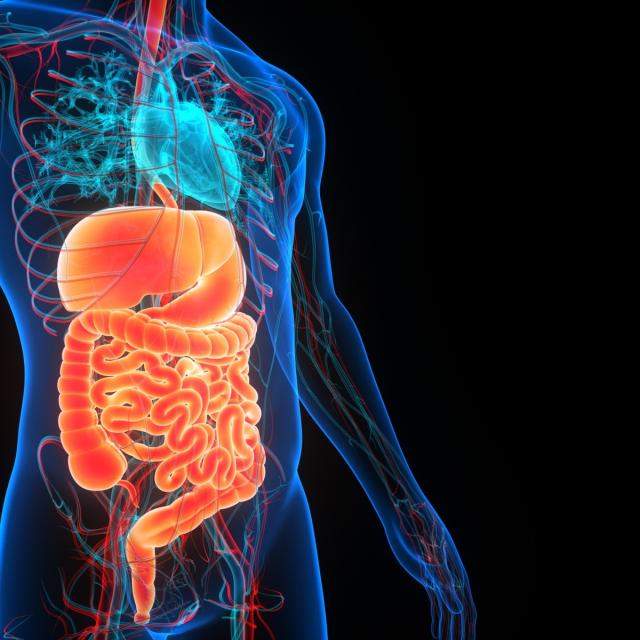
The course of the second A&P specialization continues a systems-based approach to human anatomy and physiology at the organ, organ system, and organism level. Two major body systems related to gas exchange and energy consumption will be explored in detail: the respiratory and digestive systems.

Class Deals by MOOC List - Click here and see Coursera's Active Discounts, Deals, and Promo Codes.

Course material will cover both the structure (anatomy) and function (physiology) of each system with direct application to human development and disease.
After completing this course, you will be able to:

  1. Identify the major parts of the respiratory and digestive systems;
  2. Describe normal human anatomy structure and function for the respiratory and digestive systems;
  3. Relate anatomical structure and function at the cellular, tissue, organ, and body system levels to clinical diagnoses and dysfunction of the respiratory and digestive systems.

This course is part of the Human Anatomy & Physiology II Specialization.

Syllabus

Welcome to Exchange & Energy
The Respiratory System
The Digestive System - Overview through Esophagus
The Digestive System: Stomach through Elimination & Diseases
Course Final Assessments & Summary

Go to Class
MOOC List is learner-supported. When you buy through links on our site, we may earn an affiliate commission.

Related Courses

Exercise Prescription for the Prevention and Treatment of Disease (FutureLearn) FutureLearn
Trinity College Dublin

Exercise Prescription for the Prevention and Treatment of Disease (FutureLearn)

Learn how physical exercise can help patients including those with cardiovascular disease, mental health problems and cancer. In the last few decades physical exercise has become well established as a tool to prevent and treat disease. Perceptions within the healthcare sector of exercise and its prescription as a treatment have changed dramatically in recent years.

Self Paced
2 Weeks
Medical Terminology and the Human Body Fundamentals (Coursera) Coursera
MedCerts

Medical Terminology and the Human Body Fundamentals (Coursera)

In this Introduction to Medical Terminology and the Human Body course, you will learn about the medical language that is used to describe the human body. Throughout each Lesson, the roots of terms are explained to help students understand how medical terminology works in healthcare and to increase their knowledge and understanding of the material discussed.

Aug 31st 2026
4 Weeks
Anatomy: Human Neuroanatomy (Coursera) Coursera
University of Michigan

Anatomy: Human Neuroanatomy (Coursera)

In this anatomy course, part of the Anatomy Specialization, you will be introduced to the central and peripheral nervous systems. You will learn about basic neuroanatomy, sensory pathways, motor pathways and the autonomic nervous system. The course includes illustrated lecture videos and quizzes to help you expand and test your knowledge of the nervous system.

Aug 24th 2026
5-12 Weeks
Essential Human Biology: Cells and Tissues (edX) EdX
University of Adelaide,AdelaideX

Essential Human Biology: Cells and Tissues (edX)

An introduction to the human body's most fundamental building blocks and their behaviours in health and disease. Are you preparing for a health-related career, or planning to study in the health sciences? Perhaps you're just keen to learn more about the wonders of the human body? Our bodies are amazing but complex biological machines. This course will provide you with an outstanding foundation of knowledge in human anatomy and physiology.

Self Paced
Self-Paced
So You Want to Study Life Science? (FutureLearn) FutureLearn
University of Glasgow

So You Want to Study Life Science? (FutureLearn)

Explore the exciting subjects within life sciences and the rewarding careers that studying life sciences at university lead to. This short, free online course will introduce you to studying life sciences at university level.We’ll take you on a whistle stop tour of the exciting world of life sciences, exploring the vast array of subjects within the discipline – from anatomy to zoology and everything in between, including immunology, cellular and molecular biology, genetics, physiology and parasitology.

Self Paced
2 Weeks
Human Anatomy: Musculoskeletal Cases (edX) EdX
HarvardX,Harvard University

Human Anatomy: Musculoskeletal Cases (edX)

Learn the anatomy basic to understanding five musculoskeletal injuries commonly seen in primary care medicine and orthopedic clinical specialty practice. Follow hypothetical patients from injury to operating room. Human Anatomy: Musculoskeletal Cases invites students to join medical and basic science faculty at Harvard Medical School (HMS) to learn about musculoskeletal injuries commonly seen in clinical practice.

Self Paced
Self-Paced
Anatomy: Cardiovascular, Respiratory and Urinary Systems (Coursera) Coursera
University of Michigan

Anatomy: Cardiovascular, Respiratory and Urinary Systems (Coursera)

In this anatomy course, part of the Anatomy Specialization, you will explore the interactive relationships of the cardiovascular, respiratory and urinary systems, and the roles they play in your body. This course is a primer for the cardiovascular, respiratory, and urinary systems in which students learn the pertinent details of the structures and functions through a combination of lectures, videos, labeling activities and quizzes.

Aug 24th 2026
4 Weeks
The Heart, Blood, and Lungs (Coursera) Coursera
MedCerts

The Heart, Blood, and Lungs (Coursera)

In this course on The Heart, Blood, and Lungs, you will learn about the wonderful diversity of the cardiovascular, immune, and respiratory systems and the medical language that is used to describe these systems. Throughout each Lesson, the roots of terms are explained to help students understand how medical terminology works in healthcare and to increase their knowledge and understanding of the material discussed.

Aug 24th 2026
3 Weeks
Developing the SIR Model (Coursera) Coursera
Imperial College London

Developing the SIR Model (Coursera)

Compartmental modelling is a cornerstone of mathematical modelling of infectious diseases and this course will introduce some of the basic concepts in building compartmental models, including how to interpret and represent rates, durations and proportions. You'll learn to place the mathematics to one side and concentrate on gaining intuition into the behaviour of a simple epidemic, and be introduced to further basic concepts of infectious disease epidemiology, such as the basic reproduction number (R0) and its implications for infectious disease dynamics.

Aug 24th 2026
4 Weeks
The Skin, Bones, and Muscles (Coursera) Coursera
MedCerts

The Skin, Bones, and Muscles (Coursera)

In this course on The Skin, Bones, and Muscles, you will learn about the wonderful diversity of the integumentary, skeletal, and muscular systems and the medical language that is used to describe these systems. Throughout each Lesson, the roots of terms are explained to help students understand how medical terminology works in healthcare and to increase their knowledge and understanding of the material discussed.

Aug 24th 2026
3 Weeks
Voice Disorders: What Patients and Professionals Need to Know (Coursera) Coursera
Icahn School of Medicine at Mount Sinai

Voice Disorders: What Patients and Professionals Need to Know (Coursera)

Knowledge regarding vocal production physiology and management options for voice disorders have experienced rapid growth over the past 40 years. This growth has resulted in a knowledge gap amongst patients and practitioners. Entirely new subspecialties of laryngology under otolaryngology and vocology under speech-language pathology have developed in response to this gap. This MOOC (Massive Open Online Course) is designed to educated patients, allied healthcare providers, vocal trainers/coaches, general medical practitioners and otolaryngologists.

Aug 31st 2026
5-12 Weeks
Medical Neuroscience (Coursera) Coursera
Duke University

Medical Neuroscience (Coursera)

Medical Neuroscience explores the functional organization and neurophysiology of the human central nervous system, while providing a neurobiological framework for understanding human behavior. In this course, you will discover the organization of the neural systems in the brain and spinal cord that mediate sensation, motivate bodily action, and integrate sensorimotor signals with memory, emotion and related faculties of cognition. The overall goal of this course is to provide the foundation for understanding the impairments of sensation, action and cognition that accompany injury, disease or dysfunction in the central nervous system. The course will build upon knowledge acquired through prior studies of cell and molecular biology, general physiology and human anatomy, as we focus primarily on the central nervous system.

Sep 14th 2026
13-24 Weeks