3D Interaction Design in Virtual Reality (Coursera)

3D Interaction Design in Virtual Reality (Coursera)

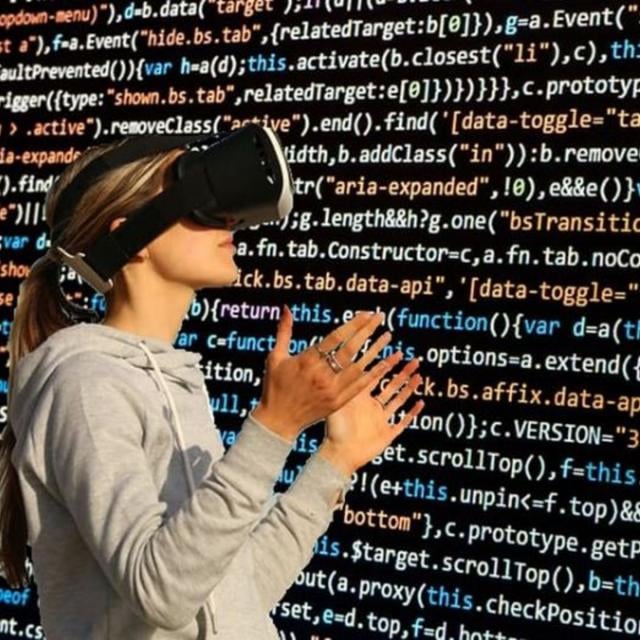
This course will teach you about one of the most important aspects of VR, how you interact with a VR world. Virtual Reality is completely different from an on screen app or game. You are completely immersed in a VR world, so it doesn't make sense to interact only through buttons or menus. You will get the most out of VR if you can interact with the world just as you would with the real world: with your natural body movements.

Class Deals by MOOC List - Click here and see Coursera's Active Discounts, Deals, and Promo Codes.

You will learn about the basic concepts and technologies of VR Interaction. You will then get hands on, learning about how to move around in VR and how to interact with the objects in your world. The course will finish with some advice from experts on VR interaction design and you will do a project where you will get real experience of developing VR Interaction.

Course 3 of 5 in the Virtual Reality Specialization

Syllabus

WEEK 1
Interaction in VR
Welcome to Week 1! In this week, we will cover interaction in VR. You will discover different types of interaction, and how interaction works with different HMDs. We'll end the week by introducing you to this MOOC's project.

WEEK 2
Moving around in VR
Welcome to Week 2! This week, we'll cover moving around in VR. We'll look at physical navigation, such as walk-in-place, and virtual navigation, such as teleportation. You will end the week by beginning your project, and submitting your work in progress.

WEEK 3
Interacting with Objects in VR
Welcome to Week 3! This week, we will be looking at interacting with objects in VR. We'll cover topics such as interacting with objects within reach, hyper-natural interaction, and magic interaction. We'll then move on to physics interaction, and how this works in VR.

WEEK 4
Challenges in VR interaction and User Interfaces in VR
Welcome to Week 4! In the final week of this MOOC, we'll be looking at challenges in VR interaction, and user interfaces in VR. You'll begin by learning about graphical user interfaces in VR, including abstract interfaces and diegetic and non-diegetic UI, before moving on to designing VR interaction.

Go to Class
MOOC List is learner-supported. When you buy through links on our site, we may earn an affiliate commission.

Related Courses

Google Workspace Security (Coursera) Coursera
Google Cloud

Google Workspace Security (Coursera)

Google Workspace Security is the third course in the Google Workspace Administration series. In this course you will focus on the various aspects of G Suite Security including user password policies and how to enable and enforce two step verification (2SV) for your users. You will learn about application security and understand how to whitelist and block API access to your account. You will see how G Suite can easily be integrated with a number of predefined 3rd party applications. You will also become familiar with the SSO options in G Suite. Finally you will understand how to spot potential security risks within your organization and learn how to address them using the tools available in the admin console.

Jun 22nd 2026
1 Week
VR and 360 Video Production (Coursera) Coursera
Google AR & VR

VR and 360 Video Production (Coursera)

Welcome to Daydream Impact Virtual Reality (VR) and 360 video production course! Our mission is to give you the skills needed to use VR to advocate for a cause and communicate your mission. This course will introduce you to Virtual Reality (VR) and 360 video production, guiding you through a step-by-step process to create VR content. To begin, we recommend taking a few minutes to explore the course site and review the material.

Jun 22nd 2026
4 Weeks
Concurrent Programming in Java (Coursera) Coursera
Rice University

Concurrent Programming in Java (Coursera)

This course teaches learners (industry professionals and students) the fundamental concepts of concurrent programming in the context of Java 8. Concurrent programming enables developers to efficiently and correctly mediate the use of shared resources in parallel programs. By the end of this course, you will learn how to use basic concurrency constructs in Java such as threads, locks, critical sections, atomic variables, isolation, actors, optimistic concurrency and concurrent collections, as well as their theoretical foundations (e.g., progress guarantees, deadlock, livelock, starvation, linearizability).

Jun 22nd 2026
4 Weeks
Building Interactive 3D Characters and Social VR (Coursera) Coursera
University of London,Goldsmiths, University of London

Building Interactive 3D Characters and Social VR (Coursera)

Meeting another person is one of the most amazing experiences you can have in Virtual Reality. It is quite unlike communicating through any other medium except a real life face-to-face conversation. Because the other person is life size and shares a virtual space with you, body language works in a way that cannot be done on a flat screen. This course will enable you to create realistic social interactions in VR.

Jun 22nd 2026
4 Weeks
Introduction to High-Performance and Parallel Computing (Coursera) Coursera
University of Colorado Boulder

Introduction to High-Performance and Parallel Computing (Coursera)

This course introduces the fundamentals of high-performance and parallel computing. It is targeted to scientists, engineers, scholars, really everyone seeking to develop the software skills necessary for work in parallel software environments. These skills include big-data analysis, machine learning, parallel programming, and optimization. We will cover the basics of Linux environments and bash scripting all the way to high throughput computing and parallelizing code.

Jun 22nd 2026
4 Weeks
Data Structures and Performance (Coursera) Coursera
University of California, San Diego

Data Structures and Performance (Coursera)

How do Java programs deal with vast quantities of data? Many of the data structures and algorithms that work with introductory toy examples break when applications process real, large data sets. Efficiency is critical, but how do we achieve it, and how do we even measure it? This is an intermediate Java course. We recommend this course to learners who have previous experience in software development or a background in computer science, and in particular, we recommend that you have taken the first course in this specialization (which also requires some previous experience with Java).

Jun 22nd 2026
5-12 Weeks
Python Basic Structures: Lists, Strings, and Files (Coursera) Coursera
Codio

Python Basic Structures: Lists, Strings, and Files (Coursera)

Code and run your first python program in minutes without installing anything! This course is designed for learners with limited coding experience, providing a solid foundation of not just python, but core Computer Science topics that can be transferred to other languages. The modules in this course cover lists, strings, and files. Completion of Python Basics: Selection and Iteration before taking this course is recommended.

Jun 22nd 2026
3 Weeks
Introduction to Virtual Reality (Coursera) Coursera
University of London,Goldsmiths, University of London

Introduction to Virtual Reality (Coursera)

This course will introduce you to Virtual Reality (VR). The course will teach you everything from the basics of VR- the hardware and the history of VR- to different applications of VR, the psychology of Virtual Reality, and the challenges of the medium. The course is designed for people who are new to VR as a medium. You may have experienced some virtual reality before, and may have some hardware- but this course is suitable to individuals who have never experienced VR and those who do not have much hardware- we will explain Mobile VR as well as devices such as the Oculus Rift and HTC Vive.

Jun 22nd 2026
4 Weeks
System Validation (2): Model process behaviour (Coursera) Coursera
EIT Digital

System Validation (2): Model process behaviour (Coursera)

System Validation is the field that studies the fundamentals of system communication and information processing. It is the next logical step in computer science and improving software development in general. It allows automated analysis based on behavioural models of a system to see if a system works correctly. We want to guarantee that the systems does exactly what it is supposed to do.

Jun 22nd 2026
3 Weeks
操作系统原理 (Operating Systems) (Coursera) Coursera
Peking University

操作系统原理 (Operating Systems) (Coursera)

操作系统原理》是针对计算机科学技术专业三年级本科生开设的一门专业基础课程。本课程着重学生系统观的培养,通过重点讲述操作系统的内部结构、工作原理及典型技术的实现,使学生建立起对操作系统的整体及各个功能模块的认识,从而系统掌握计算机的专业知识,进一步提升学生的软件开发能力乃至系统软件开发能力。

Jun 22nd 2026
13-24 Weeks
Networking and Security in iOS Applications (Coursera) Coursera
University of California, Irvine

Networking and Security in iOS Applications (Coursera)

You will learn to extend your knowledge of making iOS apps so that they can securely interact with web services and receive push notifications. You'll learn how to store data securely on a device using Core Data. You’ll also learn to securely deploy apps to the App Store and beta users over-the-air. The format of the course is through a series of code tutorials. We will walk you through the creation of several apps that you can keep as a personal app toolbox. When you make your own apps after this course, you can bring in these capabilities as needed. When necessary we pop out of the code tutorials to talk about concepts at a higher level so that what you are programming makes sense.

Jun 22nd 2026
4 Weeks