EMT Foundations (Coursera)

EMT Foundations (Coursera)

In this course, you will get a thorough introduction to the emergency medical services system, and learn the foundation components to how it works as a whole. You will also learn the nuts and bolts of becoming a healthcare provider, and gain some basic knowledge about the human body.

Class Deals by MOOC List - Click here and see Coursera's Active Discounts, Deals, and Promo Codes.

By the end of the course, you will be able to:
1) understand the history and components of the EMS system,
2) speak the language of medicine with basic medical terminology, as well as have an understanding of basic human anatomy,
3) understand the different types of communications and how they are specific to EMS,
4) take vital signs and master the normal from the abnormal, and
5) master personal and scene safety, and begin the process of patient assessment.

Course 1 of 6 in the Become an EMT Specialization.

Syllabus

WEEK 1
Introduction to Emergency Medical Technician (EMT)
In this module, you will learn about the nuts and bolts of the emergency medical services system. We will cover some brief history of EMS, as well as breakdown the different components of the system. There will be discussion about some of the medical and legal issues that are persistent in the practice of prehospital medicine. We will also address workplace safety and provider wellness, because you cannot take care of other people unless you are learning to take care of yourself!

WEEK 2
Basic Human Anatomy
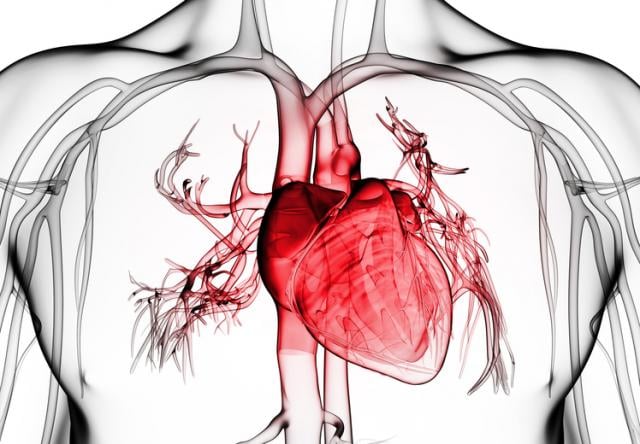
In this module, we will learn a new language. This module will cover basic medical terminology and some tips and tricks for “talking the talk.” This is also where we will cover the basics of anatomy of the human body! We will teach you the basics of human anatomy of the musculoskeletal, cardiovascular, pulmonary, abdominal, neurologic and endocrine system.

WEEK 3
Communication With A Healthcare Provider
Essential to emergency medical services is communication. This module will discuss the various parts of the job that require communication and the different strategies to employ clear and concise communication. You will learn about the SBAR method of hand off reports, learn how to successfully communicate with patients, and we will cover some pearls and pitfalls to communicating within the EMS system.

WEEK 4
Vital Signs and History Taking
Here we will cover vital signs, and learn about why they are vital! We will be teaching you how to take a blood pressure, respiratory rate, pulse, and assess a patient’s skin. We will also learn about taking a history during a patient encounter, and learn some standard approaches to this including the OPQRST and AMPLE templates of history taking.

WEEK 5
Immediately Upon Arrival To The Scene
In this last module, we will be discussing some bread and butter components of EMS. The first is scene safety and assessment of a scene. Then we will cover the complete assessment of a medical patient, and a trauma patient, using the national registry as our guideline. By the end of this, you will know how to communicate with patients and how to perform a thorough assessment of any patient you may encounter.
Go to Class
MOOC List is learner-supported. When you buy through links on our site, we may earn an affiliate commission.

Related Courses

Discover Best Practice Farming for a Sustainable 2050 (Coursera) Coursera
University of Western Australia

Discover Best Practice Farming for a Sustainable 2050 (Coursera)

The Discover Best Practice Farming for a Sustainable 2050 Course is based on a clear vision: imagine best practice farming for 2050, start to implement these strategies now, all the while making sure it will still be profitable. At UWA we're doing just that with the Future Farm 2050 Project, set on a mixed-enterprise farm in Western Australia and we want you to learn how it can be done in your part of the world.

Jun 15th 2026
5-12 Weeks
Clinical Epidemiology (Coursera) Coursera
Universiteit Utrecht

Clinical Epidemiology (Coursera)

Evidence forms the basis of modern medicine. Clinical research provides us with this evidence, guiding health professionals towards solutions to problems that they face in daily practice. Transferring existing problems in medical practice to a research setting is a challenging process that requires careful consideration. The practice of clinical epidemiology aims to address this through the application of established approaches for research in human populations, while at all times focussing on the problem at hand from a clinical perspective.

Jun 16th 2026
5-12 Weeks
Science of Exercise (Coursera) Coursera
University of Colorado Boulder

Science of Exercise (Coursera)

Learners who complete Science of Exercise will have an improved physiological understanding of how your body responds to exercise, and will be able to identify behaviors, choices, and environments that impact your health and training. You will explore a number of significant adjustments required by your body in order to properly respond to the physical stress of exercise, including changes in carbohydrate, fat and protein metabolism, nutritional considerations, causes of muscle soreness & fatigue, and the effectiveness and dangers of performance enhancing drugs.

Jun 15th 2026
4 Weeks
Tropical Parasitology: Protozoans, Worms, Vectors and Human Diseases (Coursera) Coursera
Duke University,Kilimanjaro Christian Medical University College

Tropical Parasitology: Protozoans, Worms, Vectors and Human Diseases (Coursera)

This course provides students an understanding of important human parasitic diseases, including their life cycles, vectors of transmission, distribution and epidemiology, pathophysiology and clinical manifestations, treatment, and prevention and control. Tropical Parasitology is taught by faculty from an area highly impacted by tropical parasites- the Kilimanjaro Christian Medical University College in Moshi, Tanzania. The faculty include Drs. Frank Mosha and Mramba Nyindo (and two lecturers, Drs. Johnson Matowo and Jovin Kitau). Dr. John Bartlett, Professor of Medicine, Global Health and Nursing at Duke University, joins his faculty colleagues in this effort.

Jun 15th 2026
5-12 Weeks
Writing in the Sciences (Coursera) Coursera
Stanford University

Writing in the Sciences (Coursera)

This course teaches scientists to become more effective writers, using practical examples and exercises. Topics include: principles of good writing, tricks for writing faster and with less anxiety, the format of a scientific manuscript, peer review, grant writing, ethical issues in scientific publication, and writing for general audiences.

Jun 15th 2026
5-12 Weeks
Whole genome sequencing of bacterial genomes - tools and applications (Coursera) Coursera
Technical University of Denmark - DTU

Whole genome sequencing of bacterial genomes - tools and applications (Coursera)

This course will cover the topic of Whole genome sequencing (WGS) of bacterial genomes which is becoming more and more relevant for the medical sector. WGS technology and applications are high on international political agenda, as the classical methods are being replaced by WGS technology and therefore bioinformatic tools are extremely important for allowing the people working in this sector to be able to analyze the data and obtain results that can be interpreted and used for different purposes.

Jun 15th 2026
5-12 Weeks
Acute and Chronic Rhinosinusitis: A Comprehensive Review (Coursera) Coursera
Icahn School of Medicine at Mount Sinai

Acute and Chronic Rhinosinusitis: A Comprehensive Review (Coursera)

This course is designed to inform primary care physicians and general otolaryngologists about the differences between acute and chronic rhinosinusitis and how to distinguish and treat them. It is also applicable to individuals who wish to broaden their knowledge and vernacular about this disease process, especially those who may suffer from this condition.

Jun 15th 2026
5-12 Weeks
Understanding Obesity (Coursera) Coursera
University of Edinburgh

Understanding Obesity (Coursera)

In this course, we’ll look at the facts and misconceptions around obesity and discuss key physiological and psychological concepts around the brain’s control of appetite and body weight. We’ll consider the biological and environmental pressures that make it easy to gain weight (and hard to lose it!). Most importantly, we'll give you the opportunity to reflect on your own knowledge and assumptions around the subject.

Jun 15th 2026
4 Weeks
La Solución del Conflicto Ético (Coursera) Coursera
Universidad Nacional Autónoma de México

La Solución del Conflicto Ético (Coursera)

En este curso los participantes lograrán identificar y tomar decisiones sobre casos clínicos con conflictos éticos en el área de la salud por medio de la aplicación del razonamiento ético desde una perspectiva universal y considerando los aspectos médicos y éticos, el marco jurídico y la decisión ética.

Jun 15th 2026
5-12 Weeks
Introduction to Systems Biology (Coursera) Coursera
Icahn School of Medicine at Mount Sinai

Introduction to Systems Biology (Coursera)

This course will introduce the student to contemporary Systems Biology focused on mammalian cells, their constituents and their functions. Biology is moving from molecular to modular. As our knowledge of our genome and gene expression deepens and we develop lists of molecules (proteins, lipids, ions) involved in cellular processes, we need to understand how these molecules interact with each other to form modules that act as discrete functional systems.

Jun 15th 2026
5-12 Weeks
COVID-19 - A clinical update (Coursera) Coursera
University of Florida

COVID-19 - A clinical update (Coursera)

As an expert in infectious diseases, editor of the Journal of Infectious Diseases and author of the textbook Infectious Diseases: A clinical short course, McGraw-Hill April 2020, I have been concerned about the misinformation being shared about the COVID-19 epidemic. How did this disease develop? Where did it come from? How does it cause diseases? The answers to these questions will be answered in the first video of module 1.

Jun 19th 2026
4 Weeks