Antimicrobial resistance - theory and methods (Coursera)

Antimicrobial resistance - theory and methods (Coursera)

The course will cover the topics related to antimicrobial resistance with basic definitions and overview on antimicrobials their use and the emergence and spread of resistance. The course will guide you through the concepts and the importance of resistance spread and dissemination and how that happens. It will show you how bacteria become resistant and which mechanisms they might use for this. And as part of the course you will also receive some training in methods for antimicrobial susceptibility testing (AST) and detection of specific resistance in the microbiological laboratories with the basic methods available and with focus on the obtention of good quality results which can be interpreted and used for different purposes.

Class Deals by MOOC List - Click here and see Coursera's Active Discounts, Deals, and Promo Codes.

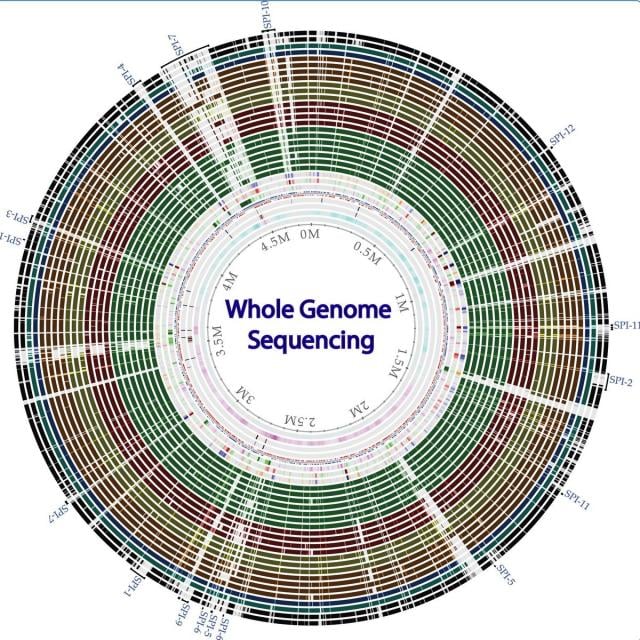
Additionally, it will show you how to use genomic analysis tools to analyze whole genome sequencing data to detect resistance genes (and or other genes of interest) in a simple and easy way using online tools freely available.
After this course you should be able to:

  1. Describe the most important families of antimicrobials and mode of action
  2. Understand the basic concepts of antimicrobial resistance from several perspectives (clinical, research and microbiological)
  3. Enumerate and describe how bacteria can become resistant and the mechanisms that may be involved in that process
  4. Describe how antimicrobial resistance emerges and spreads around the world including concepts of antimicrobial resistance transfer, selection and dissemination
  5. Enumerate the methods used for antimicrobial susceptibility testing (AST)
  6. Compare dilution and diffusion methods and know the basic techniques of agar disk diffusion, broth dilution and agar dilution methods
  7. Have detailed theoretical knowledge on how to perform the main methods in a laboratory
  8. Know the basic concepts about analysis and interpretation of results of AST, including different breakpoints, cut-off setting and their applications.
  9. Understand the importance and related concepts related to quality management and quality assurance method standardization, applied to AST
  10. Relate the information obtained in this course with real cases of resistant bacteria spreading in patients, the community, animals or the environment
  11. Relate the phenotypical results with results from genotyping using molecular techniques for detection of resistance mechanisms
  12. Understand the concept and be able to apply genomic analysis tools used to detect resistance genes and other relevant genes from Whole Genome Sequencing (WGS) data (with demonstration of selected online tools)

Syllabus

WEEK 1
Welcome to the course
This module is basically a welcome to the course were you can find information on the Course structure, the contents you will be learning in the next modules, the grading, and introduction to the instructors and to the teaching material.
Module A- Antimicrobial and antimicrobial action
Antimicrobials and antimicrobial action ( includes two lectures and one quiz). Here you will learn a lot about antibiotics/ antimicrobials and you will know more about:what they are, where do they come from, what are the major groups and how can we classify them, how do they have an effect, how do they act on the bacterial cells

WEEK 2
Module B - Antimicrobials and resistance
This module containd information about antimicrobials and the development of resistance in bacteria including causes for resistance and their mechanisms, as well as an insight in how resistance disseminates and how it can be selected.

WEEK 3
Module C- Antimicrobial susceptibility testing
This module deals with antimicrobial susceptibility testing in the laboratory: its importance and use, descriptions of the methods and their applications and detailed descriptions of the procedures applied for the main methods.

WEEK 4
Module D- Interpretation
This module gives practical insight on how to interpret antimicrobial susceptibility results.
Module E- Quality assurance
This module is dedicated to Quality management and Quality assurance (QA/ Quality control (QC) procedures and use of QC strains to assure the qulaity of results of antimicrobial susceptibility testing: importance, elements and principles.

WEEK 5
Module F- Alternatives to AST- Genome analysis tools
As alternative to the phenotypical methods, the researcher might decide to use genotypically based methods to identify genes of interest. in the lectures of this module we present the Resfinder tool which may be used to find resistance mechanisms ( genes and in the future versions also specific point mutations)from Whole genome sequences of bacteria of interest. The second Lecture is a demonstration of the My DB Finder which can be used to identify genes of interest defined by the user from Whole genome sequence data.
Module G- specific resistances

Go to Class
MOOC List is learner-supported. When you buy through links on our site, we may earn an affiliate commission.

Related Courses

The Social Context of Mental Health and Illness (Coursera) Coursera
University of Toronto

The Social Context of Mental Health and Illness (Coursera)

Learn how social factors promote mental health, influence the onset and course of mental illness, and affect how mental illnesses are diagnosed and treated. This course explores how our understanding of mental health and illness has been influenced by social attitudes and social developments in North America and around the world. The course begins by situating our contemporary mental health practices in historical context, then looks at different aspects of mental health, mental illness and mental health services and their connections to what’s going on in our social environment.

Sep 14th 2026
5-12 Weeks
Training and Learning Programs for Volunteer Community Health Workers (Coursera) Coursera
Johns Hopkins University

Training and Learning Programs for Volunteer Community Health Workers (Coursera)

Volunteer community health workers (CHWs) are a major strategy for increasing access to and coverage of basic health interventions. Our village health worker training course reviews the process of training and continuing education of CHWs as an important component of involving communities in their own health service delivery. Participants will be guided through the steps of planning training and continuing education activities for village volunteers. The course draws on real-life examples from community-directed onchocerciasis control, village health worker programs, community case management efforts, peer educators programs and patent medicine vendor training programs, to name a few.

Sep 14th 2026
5-12 Weeks
Curanderismo: Global & Cultural Influences of Traditional Healing (Coursera) Coursera
University of New Mexico

Curanderismo: Global & Cultural Influences of Traditional Healing (Coursera)

As the last of four courses on Curanderismo, the art of Hispanic/Latino traditional medicine, this course focuses specifically on traditional healing using different techniques of many countries around the world. As an educational and cultural platform, this course will share a number of traditional global perspectives.

Sep 14th 2026
5-12 Weeks
Emergent Phenomena in Science and Everyday Life (Coursera) Coursera
University of California, Irvine

Emergent Phenomena in Science and Everyday Life (Coursera)

Before the advent of quantum mechanics in the early 20th century, most scientists believed that it should be possible to predict the behavior of any object in the universe simply by understanding the behavior of its constituent parts. For instance, if one could write down the equations of motion for every atom in a system, it should be possible to solve those equations (with the aid of a sufficiently large computing device) and make accurate predictions about that system’s future.

Sep 14th 2026
5-12 Weeks
Dopage : Sports, Organisations et Sciences (Coursera) Coursera
University of Lausanne

Dopage : Sports, Organisations et Sciences (Coursera)

L'objectif du cours est de permettre une compréhension distanciée du dopage. C’est pour atteindre cet objectif que le cours s’appuie sur une approche pluridisciplinaire qui constitue une opportunité d'observer comment diverses disciplines abordent un même objet, selon différents angles et de manière complémentaire. Il s'agit également de donner des repères permettant d'appréhender le dopage dans sa complexité.

Sep 14th 2026
4 Weeks
Everyday Chinese Medicine (Coursera) Coursera
The Chinese University of Hong Kong

Everyday Chinese Medicine (Coursera)

This course aims to serve as an education platform on Chinese medicine (CM) for the general public. Our primary goal is to empower healthcare choices by promoting awareness and practical application on CM diagnostic and therapeutic approaches, as well as regulation on CM services and herbal products using international examples.

Sep 14th 2026
5-12 Weeks
Traditional herbal medicine in supportive cancer care: From alternative to integrative (Coursera) Coursera
Technion - Israel Institute of Technology

Traditional herbal medicine in supportive cancer care: From alternative to integrative (Coursera)

Please join us for an exciting and innovative journey, examining one of the most important and often overlooked aspects of the oncology setting: Traditional Herbal Medicine in Supportive Cancer Care. This course is presented with short lectures offering a wide range of issues related to the principles and practice of herbal medicine in cancer care.

Sep 14th 2026
13-24 Weeks
An Introduction to the U.S. Food System: Perspectives from Public Health (Coursera) Coursera
Johns Hopkins University

An Introduction to the U.S. Food System: Perspectives from Public Health (Coursera)

A food system encompasses the activities, people and resources involved in getting food from field to plate. Along the way, it intersects with aspects of public health, equity and the environment. In this course, we will provide a brief introduction to the U.S. food system and how food production practices and what we choose to eat impacts the world in which we live. Through several case studies, we will discuss some key historical and political factors that have helped shape the current food system and consider alternative approaches from farm to fork.

Sep 14th 2026
5-12 Weeks
Clinical Kidney, Pancreas and Islet Transplantation (Coursera) Coursera
Leiden University,Leiden University Medical Center

Clinical Kidney, Pancreas and Islet Transplantation (Coursera)

Kidney transplantation is a major advance of modern medicine which provides high-quality of life for patients with end-stage renal disease. What used to be an experimental, risky, and very limited treatment option more than 50 years ago is now routinely performed in many countries worldwide. The number of renal transplants is expected to rise sharply in the next decade since the proportion of patients with end stage renal disease is increasing.

Sep 14th 2026
4 Weeks
Disease Screening in Public Health (Coursera) Coursera
University of Geneva

Disease Screening in Public Health (Coursera)

Current and future public health is characterized by the increase of chronic and degenerative diseases, corresponding to the worldwide ageing of the population. The increasing prevalence of these conditions together with the long incubation period of the chronic diseases and the restless technological innovations, offer new opportunities to develop strategies for early diagnosis.

Sep 14th 2026
5-12 Weeks