Beer Quality: Color & Clarity (Coursera)

Beer Quality: Color & Clarity (Coursera)

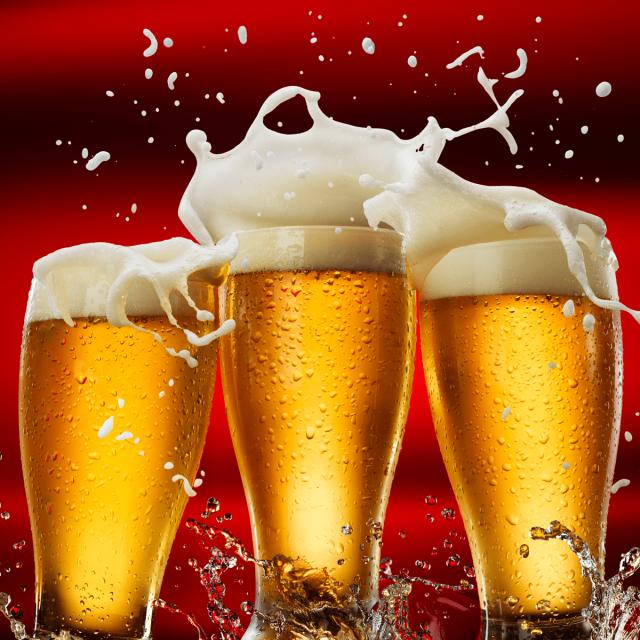
Welcome to Beer Quality: Color and Clarity led by distinguished professor Charles Bamforth, Ph.D. In this course, you will learn about beer color and how it impacts a consumer's perception of beer. Also discussed are the scientific factors affecting beer color and clarity. The methods of measuring and altering beer color are presented, as are ways to troubleshoot problems with beer color.

Class Deals by MOOC List - Click here and see Coursera's Active Discounts, Deals, and Promo Codes.

Course 4 of 5 in the Beer Quality Specialization.

What You Will Learn
Discover the science behind beer color and clarity, how to measure and assess color, and how to achieve ideal color and clarity in beer.

Syllabus

WEEK 1
Getting Started & Color/Clarity
In this module, we begin discussing how beer color and clarity influences the consumer. We'll review some informal research that was conducted regarding consumer perception of beer based on clarity. If you clarify a beer, does it take anything away? We'll discuss this question.

WEEK 2
Measuring and Chemistry of Color
In this module, we'll discuss color, some of the basic science behind it, and how humans perceive it. We'll review the Beer-Lambert law equation as well as well as the ASBC and EBC methods of measuring color and look at light absorbance of various beers. Then, we'll review methods and devices used to measure color and discuss what to consider when choosing a method. We'll go over the main source of color in most beers, the Maillard Reaction. And, you'll understand how the oxidation of polyphenols affects beer color, ways of adjusting beer color, and discuss what to do when your beer color is not what you were expecting.

WEEK 3
Turbidity Problems & Colloidal Stability
In this module, we start our discussion regarding turbidity in beer and the role of bits in beer clarity. We'll discuss what invisible haze is and how it affects beer clarity, compare biological haze with non-biological haze, and compare and contrast chill haze with permanent haze. We'll also look at how we measure, interpret turbidity issues, discuss how bits and haze are measured, and touch on the role of microbiology in beer stability.

WEEK 4
Clarity and Stability & Turbidity
In this module, we discuss how grist, hops, malting, and mashing influence beer clarity and stability. We'll also discuss how wort, fermentation, cold conditioning, filtration, stabilizers, and packaging influence clarity and stability. We'll also offer methods of troubleshooting turbidity and touch on beta-glucan, arabinoxylan, starch, oxalate, and dead bacteria. We'll also offer methods of troubleshooting turbidity involving protein, foam stability, and polyphenols.
Go to Class
MOOC List is learner-supported. When you buy through links on our site, we may earn an affiliate commission.

Related Courses

Ideal Gases (Coursera) Coursera
University of Colorado Boulder

Ideal Gases (Coursera)

Course 3 of Statistical Thermodynamics, Ideal Gases, explores the behavior of systems when intermolecular forces are not important. This done by evaluating the appropriate partition functions for translational, rotational, vibrational and/or electronic motion. We start with pure ideal gases including monatomic, diatomic and polyatomic species.

Jun 8th 2026
3 Weeks
La Química de las Reacciones (Coursera) Coursera
Universidad Autónoma Metropolitana

La Química de las Reacciones (Coursera)

En este curso aprenderás los conocimientos básicos de reacciones químicas, lo cual te permitirá tener una mejor comprensión del estudio de la química, así como de la naturaleza. En general la mayoría de la gente le tiene miedo a la palabra química; sin embargo, debido a que la química es una ciencia central es necesario comprenderla y hacerla nuestra amiga.

May 18th 2026
4 Weeks
Biology Everywhere Foundations (Coursera) Coursera
University of Colorado Boulder

Biology Everywhere Foundations (Coursera)

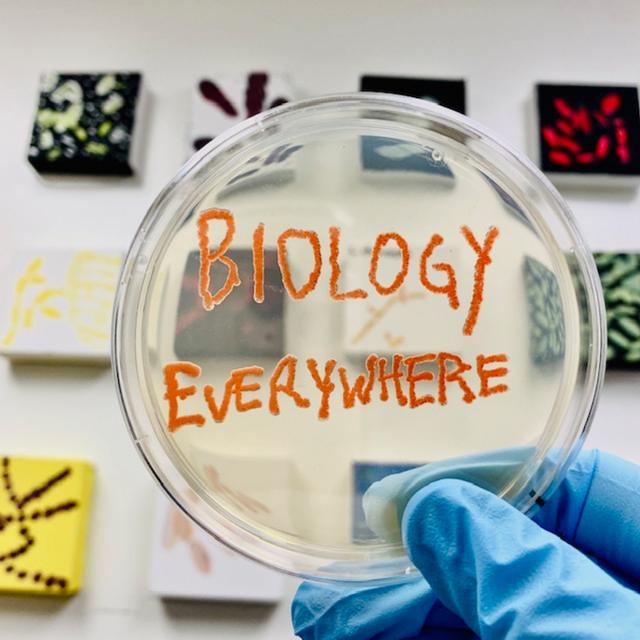
In this course, we will explore the nature of science and biology. We will discuss what the “biology everywhere” philosophy means and the history of the “biology everywhere” project. We will also discuss what science (and biology) are as a discipline of inquiry and how chemistry is foundational to understanding biology.

Jun 1st 2026
4 Weeks
Introduction to Physical Chemistry (Coursera) Coursera
University of Manchester

Introduction to Physical Chemistry (Coursera)

Chemical reactions underpin the production of pretty much everything in our modern world. But, what is the driving force behind reactions? Why do some reactions occur over geological time scales whilst others are so fast that we need femtosecond-pulsed lasers to study them? Ultimately, what is going on at the atomic level? Discover the answers to such fundamental questions and more on this course in introductory physical chemistry.

Jun 1st 2026
5-12 Weeks
Introduction to Forensic Science (Coursera) Coursera
Nanyang Technological University

Introduction to Forensic Science (Coursera)

We have all seen forensic scientists in TV shows, but how do they really work? What is the science behind their work? The course aims to explain the scientific principles and techniques behind the work of forensic scientists and will be illustrated with numerous case studies from Singapore and around the world.

May 4th 2026
5-12 Weeks
Beer Quality: Freshness (Coursera) Coursera
University of California, Davis

Beer Quality: Freshness (Coursera)

In this third course of the Beer Quality Series on beer freshness, led by distinguished professor Charles Bamforth, Ph.D, you will learn about beer flavor preconceptions, expectations, and causes of flavor instability. You'll also learn about the science of flavor change and the study and process impacts of flavor stability. In addition, you will review light instability and how it can lead to skunking.

Jun 1st 2026
4 Weeks
Más que química (Coursera) Coursera
Universidad Nacional de Colombia

Más que química (Coursera)

El objeto de la química, como disciplina científica, se enfoca en el estudio de la materia y de los cambios que ésta experimenta. En tanto disciplina científica, a la que se le atribuye la reputación de ser una ciencia complicada y aburrida. Esta reputación, bastante inmerecida, obedece al poco conocimiento que se tiene sobre ella y sobre sus enormes posibilidades de aplicación en el mundo científico, en diferentes campos de la industria y la producción, así como en la vida cotidiana.

May 18th 2026
5-12 Weeks
Materials Data Sciences and Informatics (Coursera) Coursera
Georgia Institute of Technology

Materials Data Sciences and Informatics (Coursera)

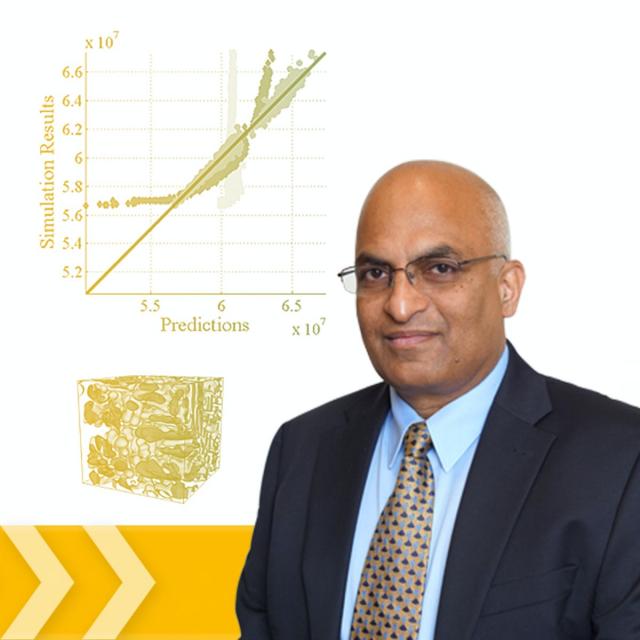
This course aims to provide a succinct overview of the emerging discipline of Materials Informatics at the intersection of materials science, computational science, and information science. Attention is drawn to specific opportunities afforded by this new field in accelerating materials development and deployment efforts.

May 18th 2026
5-12 Weeks
Chemical Engineering Thermodynamics 2 (Coursera) Coursera
Korea Advanced Institute of Science and Technology - KAIST

Chemical Engineering Thermodynamics 2 (Coursera)

An appreciation of thermodynamics is required to become a chemical and biomolecular engineer. Thermodynamics can assess the viability of a process and is one of the curriculum's most essential topics. The principles are utilized in following engineering courses (kinetics, mass transfer, design, materials) and are applicable to numerous engineering disciplines. The increased emphasis on energy usage and transformation as a result of rising demand, diminishing supply, and global warming necessitates that the engineers who will tackle these issues have a firm grasp of thermodynamics.

Jun 8th 2026
5-12 Weeks
Introduction to Chemistry: Reactions and Ratios (Coursera) Coursera
Duke University

Introduction to Chemistry: Reactions and Ratios (Coursera)

This is an introductory course for students with limited background in chemistry; basic concepts involved in chemical reactions, stoichiometry, the periodic table, periodic trends, nomenclature, and chemical problem solving will be emphasized with the goal of preparing students for further study in chemistry as needed for many science, health, and policy professions.

May 18th 2026
5-12 Weeks
Beer Quality Systems (Coursera) Coursera
University of California, Davis

Beer Quality Systems (Coursera)

Ultimately, the difference between success and failure as a brewer is whether you consistently deliver a quality beer. Designed for brewers of all skill levels, this course is part of a comprehensive series where brewing legend Charlie Bamforth, Ph.D. guides you through the key markers of beer quality: flavor, foam, color/clarity, freshness and quality systems. In this last course of the Beer Quality Series, you will examine the systems necessary to produce quality beer.

Jun 1st 2026
4 Weeks