EdX

Atomic and Optical Physics I - Part 2: Atomic structure and atoms in external field (edX)

Offered by MIT, MITx,
Atomic and Optical Physics I - Part 2: Atomic structure and atoms in external field (edX)

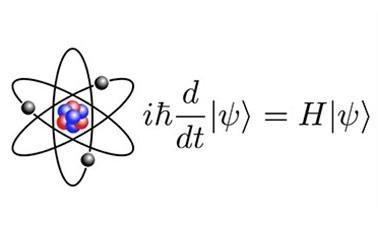
Second part of a course in modern atomic and optical physics: the structure of atoms, and how they behave in static electromagnetic fields.

Class Deals by MOOC List - Click here and see EdX's Active Discounts, Deals, and Promo Codes.

This is the second of five modules to introduce concepts and current frontiers of atomic physics and to prepare you for cutting-edge research:

The second module, 8.421.2x, describes atomic structure, including electronic levels, fine structure, hyperfine structure and Lamb shift. You will then learn about how electric and magnetic fields shift atomic levels. The discussion of time-dependent electric fields prepares you for the interactions of atoms with light and for the dressed atom picture.
At MIT, the content of the five modules makes the first of a two-semester sequence (8.421 and 8.422) for graduate students interested in Atomic, Molecular, and Optical Physics. This sequence is required for Ph.D. students doing research in this field.
In these modules you will learn about the interaction of radiation with atoms: resonance; absorption, stimulated and spontaneous emission; methods of resonance, dressed atom formalism, masers and lasers, cavity quantum electrodynamics; structure of simple atoms, behavior in very strong fields; fundamental tests: time reversal, parity violations, Bell's inequalities; and experimental methods.
Completing the two-course sequence allows you to pursue advanced study and research in cold atoms, as well as specialized topics in condensed matter physics.
What you'll learn:

  • The structure of atoms, and how atoms behave in static magnetic and electric fields
  • The fine structure and the Lamb shift
  • Effects of the nucleus on atomic structure
Go to Class
MOOC List is learner-supported. When you buy through links on our site, we may earn an affiliate commission.

Related Courses

Cellular Polymers: Structure, Properties, Processing, Applications (edX) EdX
University of Bayreuth,BayreuthX

Cellular Polymers: Structure, Properties, Processing, Applications (edX)

Take our MOOC and dive deep into Cellular Polymers. Understand what makes them superior to other materials, how they are processed and why they are used in countless applications in our everyday life. This MOOC is your first step in the pioneering field of Cellular Polymers that connects chemistry, physics, materials science, engineering, and technology. Get yourself ready and enroll now.

Self Paced
Self-Paced
Introducción a las ondas gravitacionales (edX) EdX
Universidad Nacional de Córdoba,UNCordobaX

Introducción a las ondas gravitacionales (edX)

En este curso, junto con la Dra. Gabriela González, vamos a viajar por uno de los descubrimientos científicos recientes más importantes, donde vamos a aprender cómo se producen y cómo se detectan las ondas gravitacionales y por qué lo hacemos. En este curso conocerás sobre las ondas gravitacionales de forma fácil y enseñado por una experta del proyecto LIGO; Gabriela González.

Self Paced
Self-Paced
Quantum Mechanics of Molecular Structures (edX) EdX
The University of Tokyo,UTokyoX

Quantum Mechanics of Molecular Structures (edX)

Learn two methods used to determine molecular structures and their properties in this introduction to Quantum Mechanics. Knowing the geometrical structure of the molecules around us is one of the most important and fundamental issues in the field of chemistry. This course introduces the two primary methods used to determine the geometrical structure of molecules: molecular spectroscopy and gas electron diffraction.

Self Paced
Self-Paced
Cement Chemistry and Sustainable Cementitious Materials (edX) EdX
École Polytechnique Fédérale de Lausanne,EPFLx

Cement Chemistry and Sustainable Cementitious Materials (edX)

Learn the basics of cement chemistry and laboratory best practices for assessment of its key properties. Every day, we see concrete used all around us – to build our houses, offices, schools, bridges, and infrastructure. But few people actually understand what gives concrete its strength, resistance, and utility. The aim of this course is to offer basic cement chemistry to practitioners, as well as new students in the fields of chemistry and engineering.

Self Paced
Self-Paced
Energy and Thermodynamics (edX) EdX
HarvardX,Harvard University

Energy and Thermodynamics (edX)

Learn the fundamentals of chemistry and energy, from the types of energy to atomic mass and matter to enthalpy and thermodynamics. What is energy and why is it so important? How does chemistry inform energy efficiency and sustainability? Energy and Thermochemistry is an interdisciplinary, online course that introduces you to the concept of energy. Providing a foundational understanding of energy, this course shows you how energy at the molecular level forms the basis of nearly every scientific discussion of chemical, physical, and biological change.

Self Paced
Self-Paced
Quantum Mechanics for Scientists and Engineers 1 (edX) EdX
StanfordOnline

Quantum Mechanics for Scientists and Engineers 1 (edX)

This 9 week course aims to teach quantum mechanics to anyone with a reasonable college-level understanding of physical science or engineering. Quantum mechanics was once mostly of interest to physicists, chemists and other basic scientists. Now the concepts and techniques of quantum mechanics are essential in many areas of engineering and science such as materials science, nanotechnology, electronic devices, and photonics.

Self Paced
Self-Paced
On-Ramp to AP* Physics C: Mechanics (edX) EdX
Weston High School

On-Ramp to AP* Physics C: Mechanics (edX)

This course will help the students who have taken intro-level high-school physics to get ready for more advanced courses including AP Physics C: Mechanics. This short course is intended for the high-school students who have taken an introductory-level physics course, acquired some background in Mechanics and intend to take a more advanced course – for instance, AP Physics C.

Self Paced
Self-Paced
Advanced statistical physics (edX) EdX
École Polytechnique Fédérale de Lausanne,EPFLx

Advanced statistical physics (edX)

We explore statistical physics in both classical and open quantum systems. Additionally, we will cover probabilistic data analysis that is extremely useful in many applications. This course covers non-equilibrium statistical processes and the treatment of fluctuation dissipation relations by Einstein, Boltzmann and Kubo. Moreover, the fundamentals of Markov processes, stochastic differential and Fokker Planck equations, mesoscopic master equation, etc will be treated in detail. Prior knowledge of statistical physics is highly recommended but not required.

Self Paced
Self-Paced
Introduction to Quantum Transport (edX) EdX
Purdue University,PurdueX

Introduction to Quantum Transport (edX)

This course introduces the non-equilibrium Green’s function (NEGF) method widely used to describe quantum effects in nanoscale devices, along with its applications to spintronic devices. This course introduces the Schrödinger equation, using the tight-binding method to discuss the concept of bandstructure and E(k) relations, followed by an introduction to the NEGF method with simple illustrative examples. Concept of spinors is introduced along with the application of the NEGF method to spintronic devices.

Feb 12th 2024
5-12 Weeks