Assessing and Improving Community Health (Coursera)

Assessing and Improving Community Health (Coursera)

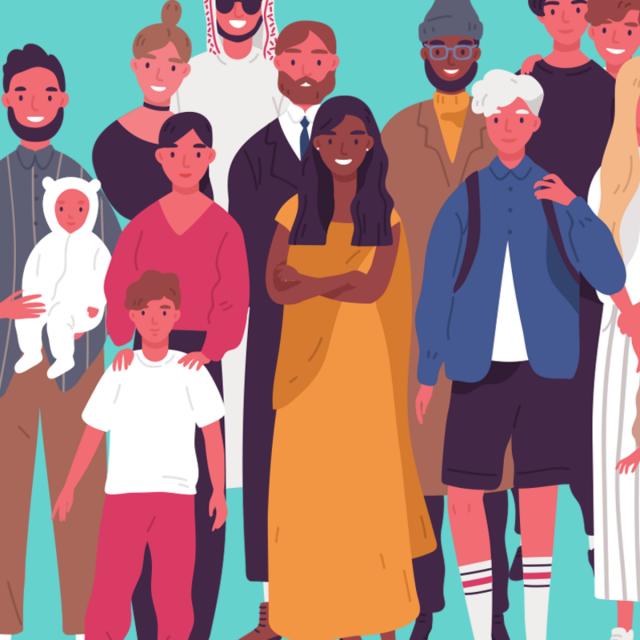
This course is intended to serve as an introduction to population health from both the vantage point of both public health and healthcare. We will examine the key components of community health needs assessments, how they are used, and how to compare population health assessments across subpopulations and time. We will also explore the epidemiological sources and criteria by which to select high quality data sources to estimate population health indicators and to select evidence-based interventions to improve population health. Finally, we will design multi sector collaborations that support the phases of population health improvement.

Class Deals by MOOC List - Click here and see Coursera's Active Discounts, Deals, and Promo Codes.

As a survey of the population health, the course provides an overview for students wishing no more than an introduction to the field, as well as good grounding for students who wish to pursue additional coursework in population health.
After taking this course, you will be able to:

  • Explain differences between population health assessments for public health and healthcare.
  • Outline the key components of community health needs assessments (CHNA).
  • Compare how public health and healthcare will use a CHNA to improve population health.
  • Identify key population health indicators for social determinants of health.
  • Identify key population health indicators for mental health and opioid abuse.
  • Categorize data sources by epidemiologic criteria.
  • Analyze differences between subpopulations and across time trends.
  • Formulate multi sector collaborations that support population health improvement.
  • Outline a plan for population health improvement.
  • Evaluate evidence-based interventions based on epidemiologic criteria and community suitability.

Course 3 of 3 in the The Influence of Social Determinants on Health Specialization.

Syllabus

WEEK 1
Population Health: Healthcare and Public Health
In this introduction to population health, we lay out a comprehensive definition of population health as a process and begin to describe the major approaches to population health improvement. We also outline how the “Triple Aim” of improved population health, improved patient experience, and reduced cost was woven into the U.S. Affordable Care Act through new mandates for population health practices. In healthcare settings, we describe how new patient population management and population medicine approaches are beginning to address two known areas of weaknesses - that is, gaps in care and care transitions - that can have major impacts on a population’s health. We also begin to recognize that healthcare is not designed to address root causes of disease and that new ways of thinking are needed if communities are going to have sustained improvements in their population health.

WEEK 2
Population Health Indicators
In this week’s module, we map the network of partnerships and interconnections that influence a population health. Specifically, we summarize the ‘health impact pyramid’ and examine connections between community health and social, economic, environmental factors. Building on this foundation, we then extend these ideas into a new arena called the ‘One Health’ concept that recognizes the interrelationship between the health of the planet, its animals, and the health of humans. To enable learners to measure the health of a community, we explore the WHO 100 health indicators and describe what makes a really good population health indicator. The ability to measure a population’s health then helps us stratify patient populations or vulnerable subgroups within a community into different risk groups who would benefit from different preventive approaches. We then end the week with an exploration of The Community Guide - a product of the Community Preventive Services Task Force - who provides systematic reviews and recommendations on the best evidence-based community health interventions.

WEEK 3
Improvement and Interventions Strategies
The ability to measure a population’s health then helps us stratify patient populations or vulnerable subgroups within a community into different risk groups who would benefit from different preventive approaches. We then end the week with an exploration of The Community Guide - a product of the Community Preventive Services Task Force - who provides systematic reviews and recommendations on the best evidence-based community health interventions.

WEEK 4
Community Health Needs Assessment
In this last week, we turn our attention to a standard way to assess and begin to plan improvements in community health - that is, the community health needs assessment. We go through the key principles and process steps underlying community health needs assessments, including some good examples. This week the final project to create a evidence-based intervention plan for your community of interest is due.
Go to Class
MOOC List is learner-supported. When you buy through links on our site, we may earn an affiliate commission.

Related Courses

The Social Context of Mental Health and Illness (Coursera) Coursera
University of Toronto

The Social Context of Mental Health and Illness (Coursera)

Learn how social factors promote mental health, influence the onset and course of mental illness, and affect how mental illnesses are diagnosed and treated. This course explores how our understanding of mental health and illness has been influenced by social attitudes and social developments in North America and around the world. The course begins by situating our contemporary mental health practices in historical context, then looks at different aspects of mental health, mental illness and mental health services and their connections to what’s going on in our social environment.

Jun 22nd 2026
5-12 Weeks
Disease Screening in Public Health (Coursera) Coursera
University of Geneva

Disease Screening in Public Health (Coursera)

Current and future public health is characterized by the increase of chronic and degenerative diseases, corresponding to the worldwide ageing of the population. The increasing prevalence of these conditions together with the long incubation period of the chronic diseases and the restless technological innovations, offer new opportunities to develop strategies for early diagnosis.

Jun 22nd 2026
5-12 Weeks
Interprofessional Healthcare Informatics (Coursera) Coursera
University of Minnesota

Interprofessional Healthcare Informatics (Coursera)

Interprofessional Healthcare Informatics is a graduate-level, hands-on interactive exploration of real informatics tools and techniques offered by the University of Minnesota and the University of Minnesota's National Center for Interprofessional Practice and Education. We will be incorporating technology-enabled educational innovations to bring the subject matter to life. Over the 10 modules, we will create a vital online learning community and a working healthcare informatics network.

Jun 22nd 2026
5-12 Weeks
Medical Neuroscience (Coursera) Coursera
Duke University

Medical Neuroscience (Coursera)

Medical Neuroscience explores the functional organization and neurophysiology of the human central nervous system, while providing a neurobiological framework for understanding human behavior. In this course, you will discover the organization of the neural systems in the brain and spinal cord that mediate sensation, motivate bodily action, and integrate sensorimotor signals with memory, emotion and related faculties of cognition. The overall goal of this course is to provide the foundation for understanding the impairments of sensation, action and cognition that accompany injury, disease or dysfunction in the central nervous system. The course will build upon knowledge acquired through prior studies of cell and molecular biology, general physiology and human anatomy, as we focus primarily on the central nervous system.

Jun 22nd 2026
13-24 Weeks
eHealth: More than just an electronic record (Coursera) Coursera
The University of Sydney

eHealth: More than just an electronic record (Coursera)

The MOOC, "eHealth: More than just an electronic record!", is multidisciplinary in nature, and aims to equip the global audience of health clinicians, students, managers, administrators, and researchers to reflect on the overall impact of eHealth on the integration of care. It explores the breadth of technology application, current and emerging trends, and showcases both local and international eHealth practice and research.

Jun 22nd 2026
5-12 Weeks
Curanderismo: Global & Cultural Influences of Traditional Healing (Coursera) Coursera
University of New Mexico

Curanderismo: Global & Cultural Influences of Traditional Healing (Coursera)

As the last of four courses on Curanderismo, the art of Hispanic/Latino traditional medicine, this course focuses specifically on traditional healing using different techniques of many countries around the world. As an educational and cultural platform, this course will share a number of traditional global perspectives.

Jun 22nd 2026
5-12 Weeks
Big Data, Genes, and Medicine (Coursera) Coursera
The State University of New York

Big Data, Genes, and Medicine (Coursera)

This course distills for you expert knowledge and skills mastered by professionals in Health Big Data Science and Bioinformatics. You will learn exciting facts about the human body biology and chemistry, genetics, and medicine that will be intertwined with the science of Big Data and skills to harness the avalanche of data openly available at your fingertips and which we are just starting to make sense of.

Jun 22nd 2026
5-12 Weeks
Training and Learning Programs for Volunteer Community Health Workers (Coursera) Coursera
Johns Hopkins University

Training and Learning Programs for Volunteer Community Health Workers (Coursera)

Volunteer community health workers (CHWs) are a major strategy for increasing access to and coverage of basic health interventions. Our village health worker training course reviews the process of training and continuing education of CHWs as an important component of involving communities in their own health service delivery. Participants will be guided through the steps of planning training and continuing education activities for village volunteers. The course draws on real-life examples from community-directed onchocerciasis control, village health worker programs, community case management efforts, peer educators programs and patent medicine vendor training programs, to name a few.

Jun 22nd 2026
5-12 Weeks
Case Studies in Personalized Medicine (Coursera) Coursera
Vanderbilt University

Case Studies in Personalized Medicine (Coursera)

Learn how advances in biomedicine hold the potential to revolutionize drug development, drug treatments, and disease prevention: where are we now, and what does the future hold? This course will present short primers in genetics and mechanisms underlying variability in drug responses. A series of case studies will be used to illustrate principles of how genetics are being brought to bear on refining diagnoses and on personalizing treatment in rare and common diseases. The ethical and operational issues around how to implement large scale genomic sequencing in clinical practice will be addressed.

Jun 22nd 2026
5-12 Weeks
Clinical Kidney, Pancreas and Islet Transplantation (Coursera) Coursera
Leiden University,Leiden University Medical Center

Clinical Kidney, Pancreas and Islet Transplantation (Coursera)

Kidney transplantation is a major advance of modern medicine which provides high-quality of life for patients with end-stage renal disease. What used to be an experimental, risky, and very limited treatment option more than 50 years ago is now routinely performed in many countries worldwide. The number of renal transplants is expected to rise sharply in the next decade since the proportion of patients with end stage renal disease is increasing.

Jun 22nd 2026
4 Weeks